Myrica
Myrica is a genus of about 35–50 species of small trees and shrubs in the family Myricaceae, order Fagales. The genus has a wide distribution, including Africa, Asia, Europe, North America, and South America, and missing only from Antarctica and Oceania. Some botanists split the genus into two genera on the basis of the catkin and fruit structure, restricting Myrica to a few species, and treating the others in Morella.

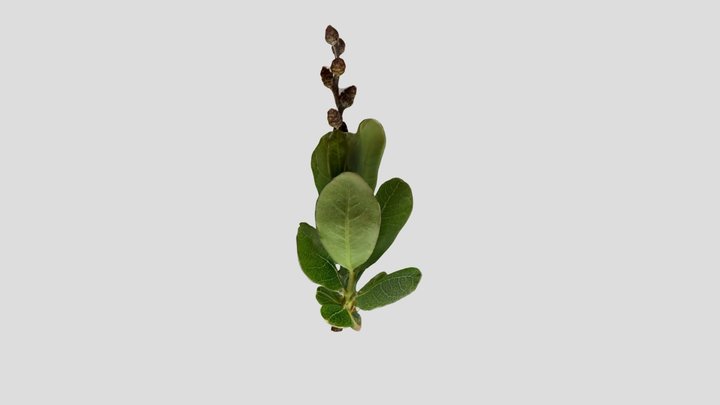
Hajotthu · CC BY 3.0 · via Wikipedia/Commons. May be a photograph of a specimen, or an artist’s reconstruction — an interpretation of a skeleton, since colour and soft tissue are almost never preserved.
On record
Recorded, not inferred- Also called
- bayberryPBDB
- Sits inside
- MyricaceaePBDB
- Diet
- "photoautotroph"PBDB, for Angiospermae
Time the record covers
At least 93 million years on record.
The record covers at least 93.9 Mya to 11.7 ka. No occurrence read is dated outside 100.5 Mya to 0 Mya.
237 occurrences of Myrica on record, most of them in the Miocene. The Paleobiology Database records this as a living group. Bar height is expected occurrences, not a count: each fossil is spread across the span it is dated to, so a tall narrow bar means tight dating and a low wide one means loose.
When
237 occurrencesThese are dates about fossils, not the animal: the record can only begin after it arose and end before it died out, so either end may reach further. Shares are expected occurrences: a fossil dated to a span is counted partly in each period it straddles. More on what this infers.
Found in
33 formations
- Odderup Formation10
- Okinoyama Formation · Ube Group7
- Okhonchevayamskaya Formation4
- Tuscaloosa Formation4
- Renova Formation3
- Sepulcher Formation3
Loading coastlines…
The named rock units Myrica has been recovered from, largest first. Drawn where the rock is now, not where it formed. 9 further formations hold fewer occurrences each and are not listed. 173 occurrences have no formation on record, which is common for older literature.
Myrica and its relatives
MioceneWhere Myrica and its relatives were recorded in the Miocene.
Found in the same rock
1,907 taxa- Quercus35 sites
- Alnus33 sites
- Betula29 sites
- Pinus28 sites
- Carya23 sites
- Juglans23 sites
- Acer22 sites
- Ericaceae22 sites
- Poaceae22 sites
- Asteraceae21 sites
- Salix20 sites
- Ulmus19 sites
- Castanea18 sites
- Apiaceae17 sites
- Osmunda17 sites
- Picea17 sites
- Tsuga17 sites
- Corylus16 sites
- Ilex16 sites
- Liquidambar16 sites
- Nyssa16 sites
- Engelhardia15 sites
- Sphagnum15 sites
- Cyperaceae13 sites
The Paleobiology Database records 89 sites for Myrica, and this reads all of them. The number is how many of those sites it was catalogued from too. The 24 sharing the most are listed.
This is not a list of everything alive at the time. It is only what has come out of the same ground as this animal and been written down.
Entered from
58 references- Die mittelmiozaenen und obermiozaenen Floren aus der Meuroer und Raunoer Folge in der Lausitz. III. Fundstellen und Palaeobiologie62
- Miocene floras in the lower Rhenish basin and their ecological interpretation40
- Niche evolution versus niche conservatism and habitat loss determine persistence and extirpation in late Neogene European Fagaceae11
- The Damgaard flora: A new Middle Miocene flora from Denmark10
- Die Miozaenan Frucht-und Samen-Floren die Oberpfaelzer Braunkohle. I. Funde aus den sandigen zwischenmitteln7
- Die Floren des Haselbacher Serie im Weisselster-Becken (Bezirk Leipzig, DDR)7
- The Eocene flora of the Ube coal-field, southwest Honshu, Japan7
- A catalogue of Cenozoic megafossil plants in China6
- Miocenska Flora ze Starych Gliwic na Slasku (Miocene Flora of Stare Gliwice in Upper Silesia)5
- Upper Cretaceous floras of the eastern Gulf region in Tennessee, Mississippi, Alabama, and Georgia5
- Kleinsäugerstratigraphie in der miozänen Hörnlischüttung (Ostschweiz); (Biostratigraphy of small mammals in the Hörnlischüttung of Miocene age (East Switzerland))4
- A Catalogue of Fossil Plants from India Part 6: Cenozoic (Quaternary) Palynology and Palaeobotany4
Each of the 237 occurrences read was entered from one of these publications, ordered by how many each accounts for. This is not a search for papers mentioning the name. 46 further references are not listed. Entries link to doi.org where the Paleobiology Database holds an identifier, and to its own record where it does not. Relayed as the Paleobiology Database holds them, not checked against what they resolve to.
Media and terms
Media content2

Picture of Myrica
- Source
- Wikipedia/Commons
- Credit
- Hajotthu
- Licence
- CC BY 3.0
- Commercial use
- the licence allows it
Smithsonian Open Access and MorphoSource were not reached for this taxon, so this list is what the others held rather than everything there is.
The description on this site
- Source
- Wikipedia, “Myrica”
- Licence
- CC BY-SA 4.0
This is what the site found, which is not the same as what exists.
Keep going
What may have been alongside itMyricaceae through timeFormations of the MioceneThe world it lived on
Occurrence data from the Paleobiology Database, CC BY 4.0. Linnaeus 1753