Tritia
Tritia is a genus of sea snails, marine gastropod mollusks in the family Nassariidae, the Nassa mud snails or dog whelks.

H. Zell · CC BY-SA 3.0 · via Wikipedia/Commons. May be a photograph of a specimen, or an artist’s reconstruction — an interpretation of a skeleton, since colour and soft tissue are almost never preserved.
On record
Recorded, not inferred- Sits inside
- NassariinaePBDB
- Diet
- carnivorePBDB, for Nassariidae
- Life habit
- low-level epifaunalPBDB, for Nassariidae
- Motility
- slow-movingPBDB, for Nassariidae
- Vision
- limitedPBDB, for Gastropoda
Time the record covers
At least 61 million years on record.
The record covers at least 61.66 Mya to 11.7 ka. No occurrence read is dated outside 66 Mya to 0 Mya.
162 occurrences of Tritia on record, most of them in the Pleistocene. The Paleobiology Database records this as a living group. Bar height is expected occurrences, not a count: each fossil is spread across the span it is dated to, so a tall narrow bar means tight dating and a low wide one means loose.
When
162 occurrencesThese are dates about fossils, not the animal: the record can only begin after it arose and end before it died out, so either end may reach further. Shares are expected occurrences: a fossil dated to a span is counted partly in each period it straddles. More on what this infers.
Found in
34 formations
- Sisquoc Formation16
- Vigo Formation4
- Choptank Formation · Chesapeake Group4
- Gniew Formation3
- Armuelles Formation · Charco Azul Group3
- Canoa Formation3
Loading coastlines…
The named rock units Tritia has been recovered from, largest first. Drawn where the rock is now, not where it formed. 10 further formations hold fewer occurrences each and are not listed. 88 occurrences have no formation on record, which is common for older literature.
Tritia and its relatives
PleistoceneWhere Tritia and its relatives were recorded in the Pleistocene.
Found in the same rock
1,796 taxa- Cardium14 sites
- Conus14 sites
- Cerithium11 sites
- Ostrea11 sites
- Anadara10 sites
- Bittium reticulatum9 sites
- Natica9 sites
- Chlamys8 sites
- Terebra8 sites
- Anomia ephippium7 sites
- Barbatia (Barbatia) barbata7 sites
- Cardita7 sites
- Columbella7 sites
- Erosaria turdus7 sites
- Ostrea edulis7 sites
- Panopea7 sites
- Pecten7 sites
- Rissoa7 sites
- Spondylus7 sites
- Strombus (Gibberulus) gibberulus7 sites
- Turris7 sites
- Turritella7 sites
- Varicorbula gibba7 sites
- Venus7 sites
The Paleobiology Database records 60 sites for Tritia, and this reads all of them. The number is how many of those sites it was catalogued from too. The 24 sharing the most are listed.
This is not a list of everything alive at the time. It is only what has come out of the same ground as this animal and been written down.
Entered from
49 references- Recherches sur le Neogene et le Quaternaire marins de la cote Atlantique du Maroc30
- Geology and paleontology of the Santa Maria District California16
- Revised list of South African late Tertiary and Pleistocene marine Mollusca11
- Mollusken aus posttertiären Schichten von Celebes8
- Mollusques Pleistocenes de la Cote Francaise des Somalis [Pleistocene molluscs from French Somaliland]7
- Biozonation of the Neogene invertebrate megafauna of the Hellenic area6
- Paleobiology from Museum collections: comparing historical and novel data on Upper Miocene molluscs of the Livorno Hills5
- New paleoenvironmental insights on the Miocene condensed phosphatic layer of Salento (southern Italy) unlocked by the coral‑mollusc fossil archive5
- Morza plejstocenskie w Polsce; osady, wiek i paleogeografia [Pleistocene seas in Poland; sediments, age and paleogeography]5
- Stratigraphy, invertebrate taphonomy and depositional history of the Miocene Calvert and Choptank Formations, Atlantic Coastal Plain4
- Age and stratigraphic significance for Lyellian correlation of the fauna of the Vigo Formation, Luzon, Phillipines4
- Geology of southeastern Ventura basin, Los Angeles County, California4
Each of the 162 occurrences read was entered from one of these publications, ordered by how many each accounts for. This is not a search for papers mentioning the name. 37 further references are not listed. Entries link to doi.org where the Paleobiology Database holds an identifier, and to its own record where it does not. Relayed as the Paleobiology Database holds them, not checked against what they resolve to.
Media and terms
Media content2
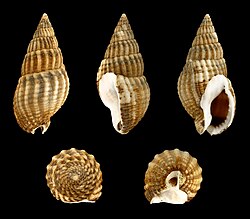
Picture of Tritia
- Source
- Wikipedia/Commons
- Credit
- H. Zell
- Licence
- CC BY-SA 3.0
- Commercial use
- the licence allows it
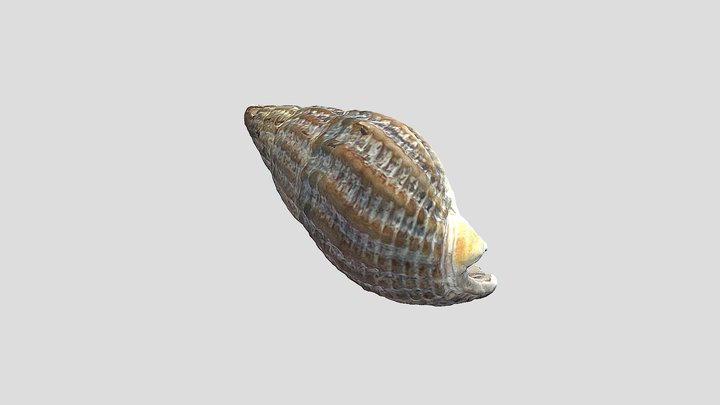
3D model
- Source
- Sketchfab
- Credit
- UoB_SAWhite
- Licence
- CC Attribution
- Commercial use
- cannot be read from the licence given — check the record
Smithsonian Open Access and MorphoSource were not reached for this taxon, so this list is what the others held rather than everything there is.
The description on this site
- Source
- Wikipedia, “Tritia”
- Licence
- CC BY-SA 4.0
This is what the site found, which is not the same as what exists.
Keep going
What may have been alongside itNassariinae through timeFormations of the PleistoceneThe world it lived on
Occurrence data from the Paleobiology Database, CC BY 4.0. Risso 1826