Strombus (Gibberulus) gibberulus
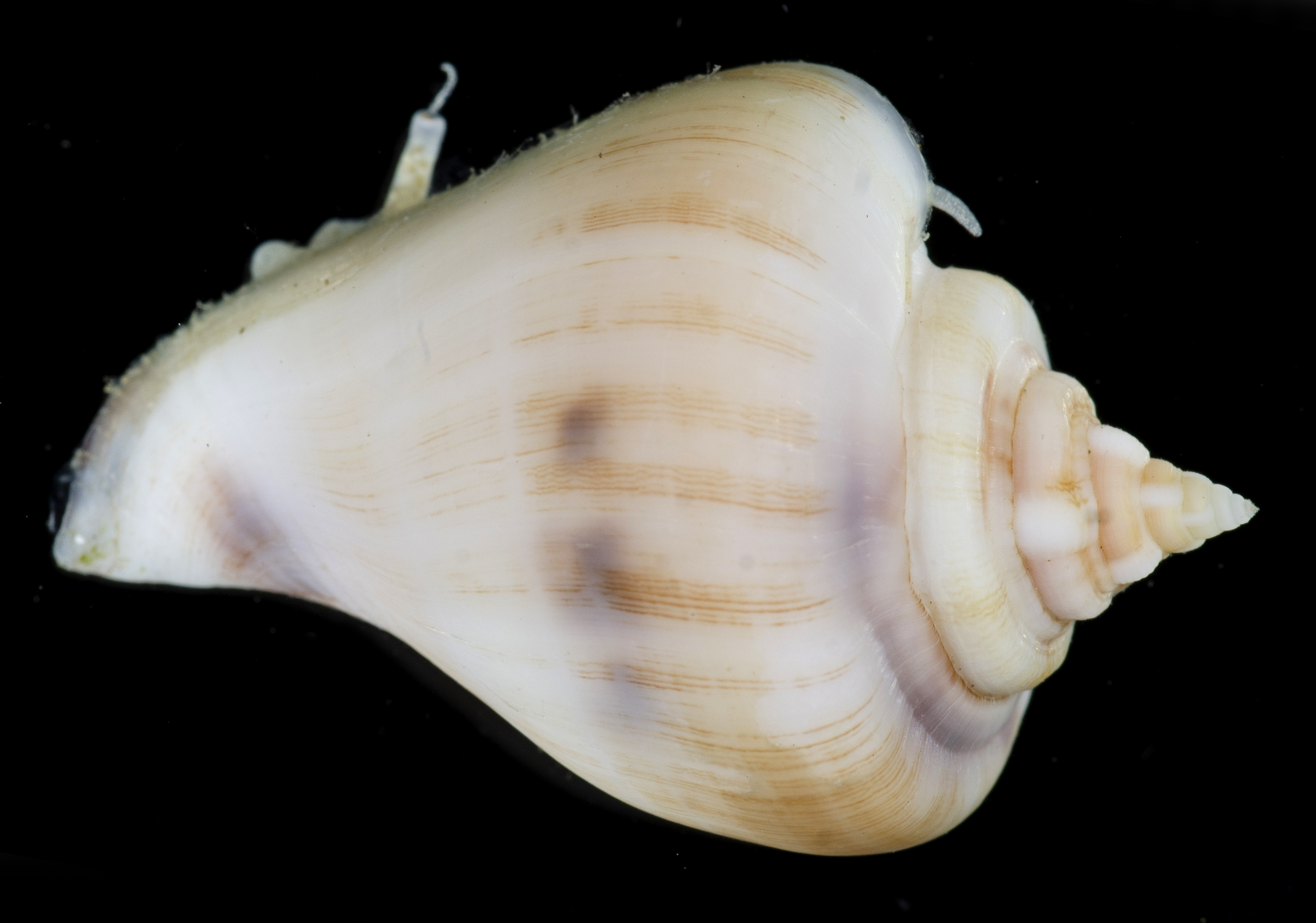
Not Strombus (Gibberulus) gibberulus. This is Strombus gibberulus Linnaeus, 1758, a relative — both are Strombidae.
Paulay, Gustav; Maslakova, Svetlanta; Brown, Shannon; Ueno, Daisuke · CC BY-NC 4.0 · via GBIF. May be a photograph of a specimen, or an artist’s reconstruction — an interpretation of a skeleton, since colour and soft tissue are almost never preserved.
On record
Recorded, not inferred- Sits inside
- Strombus (Gibberulus)PBDB
- Diet
- omnivore, grazerPBDB, for Strombidae
- Life habit
- epifaunalPBDB, for Strombidae
- Motility
- actively mobilePBDB, for Strombidae
- Vision
- limitedPBDB, for Gastropoda
Time the record covers
At least 2.5 million years on record.
The record covers at least 2.58 Mya to 11.7 ka. No occurrence read is dated outside 3.6 Mya to 0 Mya.
34 occurrences of Strombus (Gibberulus) gibberulus on record, most of them in the Pleistocene. The Paleobiology Database records this as a living group. Bar height is expected occurrences, not a count: each fossil is spread across the span it is dated to, so a tall narrow bar means tight dating and a low wide one means loose.
When
34 occurrences- Pliocene3%
- Pleistocene94%
- Holocene3%
These are dates about fossils, not the animal: the record can only begin after it arose and end before it died out, so either end may reach further. Shares are expected occurrences: a fossil dated to a span is counted partly in each period it straddles. More on what this infers.
Found in
5 formations
- Abbas Formation4
- Aldabra Limestone Formation3
- "Old Reef Limestone" Formation1
- Mariana Limestone Formation1
- Tanapag Limestone Formation1
Loading coastlines…
The named rock units Strombus (Gibberulus) gibberulus has been recovered from, largest first. Drawn where the rock is now, not where it formed. 24 occurrences have no formation on record, which is common for older literature.
Strombus (Gibberulus) gibberulus and its relatives
PleistoceneWhere Strombus (Gibberulus) gibberulus and its relatives were recorded in the Pleistocene.
Found in the same rock
327 taxa- Anadara (Anadara) antiquata8 sites
- Conus arenatus8 sites
- Codakia tigerina7 sites
- Tritia7 sites
- Conus6 sites
- Erosaria turdus6 sites
- Turris6 sites
- Barbatia (Barbatia) lacerata5 sites
- Naria erosa5 sites
- Rhinoclavis5 sites
- Terebra5 sites
- Tibia5 sites
- Tridacna5 sites
- Arca4 sites
- Callista4 sites
- Cerithium4 sites
- Cerithium caeruleum4 sites
- Cerithium erythraeonense4 sites
- Chlamys sanguinolenta4 sites
- Circe corrugata4 sites
- Circe pectinata4 sites
- Conus generalis4 sites
- Divaricella macandreae4 sites
- Dosinia histrio4 sites
The Paleobiology Database records 18 sites for Strombus (Gibberulus) gibberulus, and this reads all of them. The number is how many of those sites it was catalogued from too. The 24 sharing the most are listed.
This is not a list of everything alive at the time. It is only what has come out of the same ground as this animal and been written down.
Entered from
11 references- Mollusques Pleistocenes de la Cote Francaise des Somalis [Pleistocene molluscs from French Somaliland]8
- Late Pleistocene molluscan assemblages from the coral reefs of the Kenya coast5
- Molluschi delle spiagge emerse del Mar Rosso e dell'Oceano Indiano, introduzione e parte I (gasteropodi) [Mollusks from raised beaches bordering the Red Sea and the Indian Ocean, introduction and part I (gastropods)]5
- The geology of the Farsan Islands, Oizan and Kamaran Island, Red Sea. Part 2.- Molluscan palaeontology.4
- Faunal response to the instability of reef habitats: Pleistocene molluscan assemblages of Aldabra Atoll3
- Cenozoic fossil mollusks from Western Pacific Islands; Gastropods (Turritellidae through Strombidae)3
- Fossiles Néogénes et Quaternaires des Nouvelles-Hébrides2
- Biofacies and diagenetic alterations of the Pleistocene coral reefs, northwest Red Sea coast, Saudi Arabia1
- Tawadros, 20011
- Tertiary and Quaternary Gastropoda of Okinawa: A comparison of the late Miocene, Pliocene, and Pleistocene Gastropoda of Okinawa with related faunas of East Asia together with a resume of the geological setting of the fossiliferous deposits1
- Geology of Bikini and nearby atolls: Part 1, Geology1
Each of the 34 occurrences read was entered from one of these publications, ordered by how many each accounts for. This is not a search for papers mentioning the name. Entries link to doi.org where the Paleobiology Database holds an identifier, and to its own record where it does not. Relayed as the Paleobiology Database holds them, not checked against what they resolve to.
Media and terms
Media content1
Picture of Strombus gibberulus Linnaeus, 1758
- Source
- GBIF
- Credit
- Paulay, Gustav; Maslakova, Svetlanta; Brown, Shannon; Ueno, Daisuke
- Licence
- CC BY-NC 4.0
- Commercial use
- the licence does not allow it
No 3D scan of Strombus (Gibberulus) gibberulus was found in MorphoSource and Sketchfab.
Smithsonian Open Access was not reached for this taxon, so this list is what the others held rather than everything there is.
This is what the site found, which is not the same as what exists.
Keep going
What may have been alongside itStrombus (Gibberulus) through timeFormations of the PleistoceneThe world it lived on
Occurrence data from the Paleobiology Database, CC BY 4.0. (Linnaeus 1758)