Trionychidae
Searched as Trionychidae indet.. The Paleobiology Database treats Trionychidae as the accepted name.
Trionychidae is a family of turtles, commonly known as softshell turtles or simply softshells. The family was described by Leopold Fitzinger in 1826. Softshells include some of the world's largest freshwater turtles, though many can adapt to living in highly brackish waters. Members of this family occur in Africa, Asia, and North America, with extinct species known from Australia. Most species have traditionally been included in the genus Trionyx, but the vast majority have since been moved to other genera. Among these are the North American Apalone softshells that were placed in Trionyx until 1987.

Uncredited · CC BY-SA 3.0 · via Wikipedia/Commons. May be a photograph of a specimen, or an artist’s reconstruction — an interpretation of a skeleton, since colour and soft tissue are almost never preserved.
On record
Recorded, not inferred- Also called
- softshell turtlePBDB
- Sits inside
- CryptodiraPBDB
- Diet
- piscivore, carnivorePBDB
- Life habit
- aquatic, solitaryPBDB
- Motility
- actively mobilePBDB
- Environment
- brackish,freshwaterPBDB
Time the record covers
At least 113 million years on record.
The record covers at least 113.2 Mya to 11.7 ka. No occurrence read is dated outside 143.1 Mya to 0 Mya.
596 occurrences of Trionychidae on record, most of them in the Late Cretaceous. The Paleobiology Database records this as a living group. Bar height is expected occurrences, not a count: each fossil is spread across the span it is dated to, so a tall narrow bar means tight dating and a low wide one means loose.
When
596 occurrences- Early Cretaceous2%
- Late Cretaceous57%
- Paleocene7%
- Eocene18%
- Oligocene1%
- Miocene10%
- Pliocene3%
- Pleistocene2%
- Holoceneunder 1%
These are dates about fossils, not the animal: the record can only begin after it arose and end before it died out, so either end may reach further. Shares are expected occurrences: a fossil dated to a span is counted partly in each period it straddles. More on what this infers.
Found in
172 formations
- Hell Creek Formation · Montana Group86
- Ferris Formation25
- Denver Formation20
- San Jose Formation20
- Nemegt Formation19
- Kirtland Formation17
Loading coastlines…
The named rock units Trionychidae has been recovered from, largest first. Drawn where the rock is now, not where it formed. 148 further formations hold fewer occurrences each and are not listed. 54 occurrences have no formation on record, which is common for older literature.
Trionychidae and its relatives
Late CretaceousWhere Trionychidae and its relatives were recorded in the Late Cretaceous.
Found in the same rock
2,692 taxa- Trionyx73 sites
- Lepisosteus occidentalis44 sites
- Baenidae42 sites
- Myledaphus bipartitus42 sites
- Ceratopsidae41 sites
- Teleostei39 sites
- Scapherpeton tectum38 sites
- Adocus37 sites
- Crocodylus36 sites
- Geochelone36 sites
- Chelydridae35 sites
- Champsosaurus31 sites
- Opisthotriton kayi31 sites
- Clarias30 sites
- Trionychinae29 sites
- Aves28 sites
- Anura26 sites
- Crocodylia26 sites
- Mammalia26 sites
- Belonostomus longirostris25 sites
- Cyclurus fragosus25 sites
- Euthecodon brumpti25 sites
- Lepisosteus25 sites
- Polypterus25 sites
The Paleobiology Database records 1,211 sites for Trionychidae, and this reads 240 of them. The number is how many of those sites it was catalogued from too. The 24 sharing the most are listed.
This is not a list of everything alive at the time. It is only what has come out of the same ground as this animal and been written down.
Entered from
194 references- Patterns of geographic variation in latest Cretaceous vertebrates: evidence from the turtle component51
- Synonymies and reidentifications of North American fossil vertebrates39
- Vertebrate biostratigraphy of the Hell Creek Formation in southwestern North Dakota and northwestern South Dakota35
- Cretaceous soft-shelled turtles (Trionychidae) of Mongolia: new diversity, records, and a revision29
- Fossil Vertebrate Collections23
- Re-assessment of Late Campanian (Kirtlandian) turtles from the Upper Cretaceous Fruitland and Kirtland formations, San Juan Basin, New Mexico, USA22
- Late Cretaceous and early Paleocene turtles of the Denver Basin, Colorado22
- Turtles of the lower Eocene San Jose Formation, San Juan Basin, New Mexico20
- Vertebrate microsite assemblages (exclusive of mammals) from the Foremost and Oldman Formations of the Judith River Group (Campanian) of southeastern Alberta: an illustrated guide19
- Change of the Cretaceous turtle faunas in Mongolia14
- Summary of known occurrences of terrestrial vertebrates from Eocene strata of southern California14
- Paleoecology of an estuarine, incised-valley fill in the Dinosaur Park Formation (Judith River Group, Upper Cretaceous) of southern Alberta, Canada10
Each of the 596 occurrences read was entered from one of these publications, ordered by how many each accounts for. This is not a search for papers mentioning the name. 182 further references are not listed. Entries link to doi.org where the Paleobiology Database holds an identifier, and to its own record where it does not. Relayed as the Paleobiology Database holds them, not checked against what they resolve to.
Media and terms
Media content2
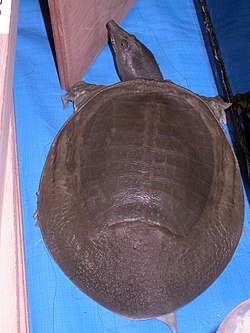
Picture of Trionychidae
- Source
- Wikipedia/Commons
- Credit
- nobody named on the record
- Licence
- CC BY-SA 3.0
- Commercial use
- the licence allows it
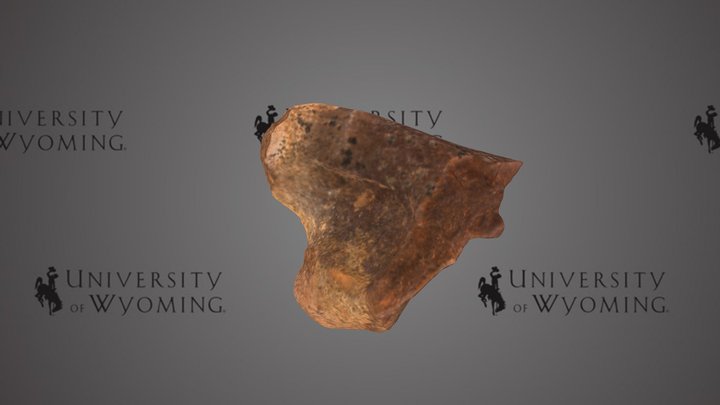
3D model
- Source
- Sketchfab
- Licence
- CC Attribution-NonCommercial
- Commercial use
- the licence does not allow it
Smithsonian Open Access was not reached for this taxon, so this list is what the others held rather than everything there is.
The description on this site
- Licence
- CC BY-SA 4.0
This is what the site found, which is not the same as what exists.
Keep going
What may have been alongside itCryptodira through timeFormations of the Late CretaceousThe world it lived on
Occurrence data from the Paleobiology Database, CC BY 4.0. (Gray 1825)