Suricata suricatta
The meerkat or suricate is a small mongoose found in southern Africa. It is characterised by a broad head, large eyes, a pointed snout, long legs, a thin tapering tail, and a brindled coat pattern. The head-and-body length is around 24–35 cm (9.4–13.8 in), and the weight is typically between 0.62 and 0.97 kg. The coat is light grey to yellowish-brown with alternate, poorly defined light and dark bands on the back. Meerkats have foreclaws adapted for digging and have the ability to thermoregulate to survive in their harsh, dry habitat. Three subspecies are recognised.

Charles J. Sharp · CC BY-SA 4.0 · via Wikipedia/Commons. May be a photograph of a specimen, or an artist’s reconstruction — an interpretation of a skeleton, since colour and soft tissue are almost never preserved.
On record
Recorded, not inferred- Also called
- meerkatPBDB
- Sits inside
- SuricataPBDB
- Diet
- insectivore, carnivorePBDB, for Herpestidae
- Life habit
- ground dwellingPBDB, for Herpestidae
- Motility
- actively mobilePBDB, for Osteichthyes
- Environment
- terrestrialPBDB, for Eutheria
- Mass
- 725 gWikidata
Time the record covers
At least 645 thousand years on record.
The record covers at least 774 ka to 129 ka. No occurrence read is dated outside 2.58 Mya to 11.7 ka.
7 occurrences of Suricata suricatta on record, most of them in the Pleistocene. The Paleobiology Database records this as a living group. Bar height is expected occurrences, not a count: each fossil is spread across the span it is dated to, so a tall narrow bar means tight dating and a low wide one means loose.
When
7 occurrences- Pleistocene100%
These are dates about fossils, not the animal: the record can only begin after it arose and end before it died out, so either end may reach further. Shares are expected occurrences: a fossil dated to a span is counted partly in each period it straddles. More on what this infers.
Found in
1 formation
- Swartkrans Formation · Transvaal Group3
Loading coastlines…
The named rock units Suricata suricatta has been recovered from, largest first. Drawn where the rock is now, not where it formed. 4 occurrences have no formation on record, which is common for older literature.
Suricata suricatta and its relatives
PleistoceneWhere Suricata suricatta and its relatives were recorded in the Pleistocene.
Found in the same rock
159 taxa- Bovidae6 sites
- Raphicerus campestris6 sites
- Lupulella mesomelas5 sites
- Panthera pardus5 sites
- Canidae4 sites
- Cercopithecidae4 sites
- Connochaetes4 sites
- Damaliscus4 sites
- Equus capensis4 sites
- Hyaenidae4 sites
- Hystrix africaeaustralis4 sites
- Leporidae4 sites
- Megalotragus4 sites
- Parahyaena brunnea4 sites
- Taurotragus oryx4 sites
- Vulpes chama4 sites
- Adenota recki3 sites
- Amphibia3 sites
- Antidorcas marsupialis australis3 sites
- Aves3 sites
- Beatragus3 sites
- Chasmaporthetes nitidula3 sites
- Crocuta crocuta3 sites
- Cynictis penicillata3 sites
The Paleobiology Database records 7 sites for Suricata suricatta, and this reads all of them. The number is how many of those sites it was catalogued from too. The 24 sharing the most are listed.
This is not a list of everything alive at the time. It is only what has come out of the same ground as this animal and been written down.
Entered from
7 references- Macromammalian faunas, biochronology and palaeoecology of the early Pleistocene Main Quarry hominin-bearing deposits of the Drimolen Palaeocave System, South Africa1
- Paleoenvironmental and Human Behavioral Implications of the Boegoeberg 1 Late Pleistocene Hyena Den, Northern Cape Province, South Africa1
- Cainozoic mammals from coastal Namaqualand, South Africa1
- Swartkrans: A Cave's Chronicle of Early Man1
- Environmental, Ecological and Paleoanthropological Implications of the Late Pleistocene Mammalian Fauna from Equus Cave, Northern Cape Province, South Africa1
- Palaeoecology of the Pliocene and lower Pleistocene hominids of southern Africa: how good is the chronological and paleoenvironmental evidence?1
- Re-interpretation of the Swartkrans site and its remains1
Each of the 7 occurrences read was entered from one of these publications, ordered by how many each accounts for. This is not a search for papers mentioning the name. Entries link to doi.org where the Paleobiology Database holds an identifier, and to its own record where it does not. Relayed as the Paleobiology Database holds them, not checked against what they resolve to.
Media and terms
Media content3
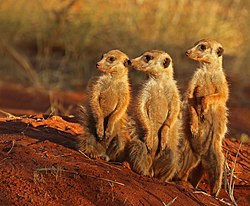
Picture of Suricata suricatta
- Source
- Wikipedia/Commons
- Credit
- Charles J. Sharp
- Licence
- CC BY-SA 4.0
- Commercial use
- the licence allows it
Laser scan
- Source
- MorphoSource
- Licence
- In Copyright
- Commercial use
- cannot be read from the licence given — check the record
- Specimen
- Suricata suricatta · nmv:mammalogy:R2454
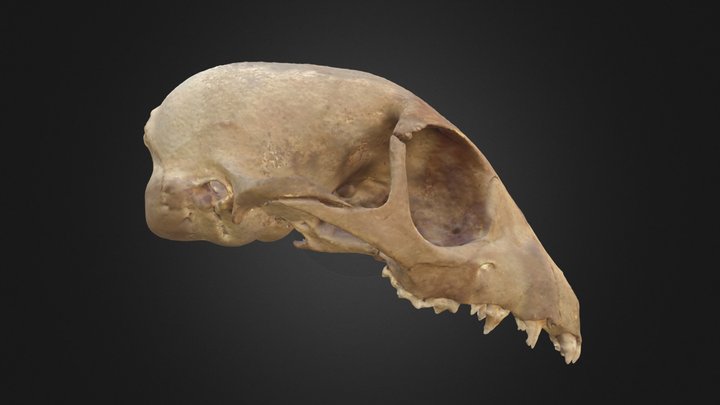
3D model
- Source
- Sketchfab
- Licence
- CC Attribution
- Commercial use
- cannot be read from the licence given — check the record
The description on this site
- Source
- Wikipedia, “Meerkat”
- Licence
- CC BY-SA 4.0
This is what the site found, which is not the same as what exists.
Keep going
What may have been alongside itSuricata through timeFormations of the PleistoceneThe world it lived on
Occurrence data from the Paleobiology Database, CC BY 4.0. (Schreber 1776)