Sterna
Sterna is a genus of terns in the bird family Laridae. The genus used to encompass most "white" terns indiscriminately, but mtDNA sequence comparisons have determined that this arrangement was paraphyletic. It is now restricted to the typical medium-sized white terns with deeply forked tails, which occur near-globally, mostly in coastal regions but several also using freshwater habitats inland.

MPF · CC BY-SA 4.0 · via Wikipedia/Commons. May be a photograph of a specimen, or an artist’s reconstruction — an interpretation of a skeleton, since colour and soft tissue are almost never preserved.
On record
Recorded, not inferred- Also called
- ternPBDB
- Sits inside
- LaridaePBDB
- Diet
- carnivorePBDB, for Coelurosauria
- Life habit
- ground dwelling, solitaryPBDB, for Theropoda
- Motility
- actively mobilePBDB, for Theropoda
- Environment
- marinePBDB, for Charadriiformes
Time the record covers
At least 1.3 million years on record.
The record covers at least 1.4 Mya to 11.7 ka. No occurrence read is dated outside 4.7 Mya to 0 Mya.
26 occurrences of Sterna on record. The Paleobiology Database records this as a living group. Bar height is expected occurrences, not a count: each fossil is spread across the span it is dated to, so a tall narrow bar means tight dating and a low wide one means loose.
When
26 occurrences- Pliocene2%
- Pleistocene28%
- Holocene70%
These are dates about fossils, not the animal: the record can only begin after it arose and end before it died out, so either end may reach further. Shares are expected occurrences: a fossil dated to a span is counted partly in each period it straddles. More on what this infers.
Found in
2 formations
Loading coastlines…
The named rock units Sterna has been recovered from, largest first. Drawn where the rock is now, not where it formed. 24 occurrences have no formation on record, which is common for older literature.
Found in the same rock
611 taxa- Canis5 sites
- Erignathus barbatus5 sites
- Larus5 sites
- Rangifer tarandus5 sites
- Anous stolidus4 sites
- Ardenna grisea4 sites
- Branta4 sites
- Branta canadensis4 sites
- Clangula hyemalis4 sites
- Eudyptula minor4 sites
- Gallus gallus4 sites
- Hemiphaga novaeseelandiae4 sites
- Larus dominicanus4 sites
- Podilymbus podiceps4 sites
- Stercorarius4 sites
- Ursus maritimus4 sites
- Vulpes lagopus4 sites
- Alopecoenas xanthonurus3 sites
- Anas3 sites
- Anas chlorotis3 sites
- Anas platyrhynchos3 sites
- Anas superciliosa3 sites
- Anous ceruleus3 sites
- Anous minutus3 sites
The Paleobiology Database records 25 sites for Sterna, and this reads all of them. The number is how many of those sites it was catalogued from too. The 24 sharing the most are listed.
This is not a list of everything alive at the time. It is only what has come out of the same ground as this animal and been written down.
Entered from
22 references- A remarkable fossil and archaeological avifauna from Marfells Beach, Lake Grassmere, South Island, New Zealand3
- Biogeography and prehistoric exploitation of birds from Fais Island, Yap State, Federated States of Micronesia3
- Polar bear fossil and archaeological records from the Pleistocene and Holocene in relation to sea ice extent and open water polynyas1
- Neo-Inuit strategies for ensuring food security during the Little Ice Age climate change episode, Foxe Basin, Arctic Canada1
- Terminal Pleistocene–Holocene Avifauna of San Miguel and Santa Rosa Islands: Identifications of Previously Unidentified Avian Remains Recovered from Fossil Sites and Prehistoric Cave Deposits1
- Geology and biostratigraphy of the Potomac River Cliffs at Stratford Hall, Westmoreland County, Virginia1
- Brown bear (Ursus arctos) (9880 ± 35 BP) from late-glacial Champlain Sea deposits at Saint-Nicolas, Quebec, Canada, and the dispersal history of brown bears1
- Humans and marine resource interaction reappraised: Archaeofauna remains during the late Pleistocene and Holocene in Cantabrian Spain1
- Birds of the Late Pleistocene and Holocene from the Palaeolithic Djuktai cave site of Yakutia, eastern Siberia1
- Prehistoric exploitation of birds on the Pacific coast of Chiapas, Mexico1
- Mid-Holocene macrofossil-bearing raised marine beaches at Potter Peninsula, King George Island, South Shetland Islands1
- Fossil vertebrates from Palau, Micronesia: a resource assessment1
Each of the 26 occurrences read was entered from one of these publications, ordered by how many each accounts for. This is not a search for papers mentioning the name. 10 further references are not listed. Entries link to doi.org where the Paleobiology Database holds an identifier, and to its own record where it does not. Relayed as the Paleobiology Database holds them, not checked against what they resolve to.
Media and terms
Media content3

Picture of Sterna
- Source
- Wikipedia/Commons
- Credit
- MPF
- Licence
- CC BY-SA 4.0
- Commercial use
- the licence allows it
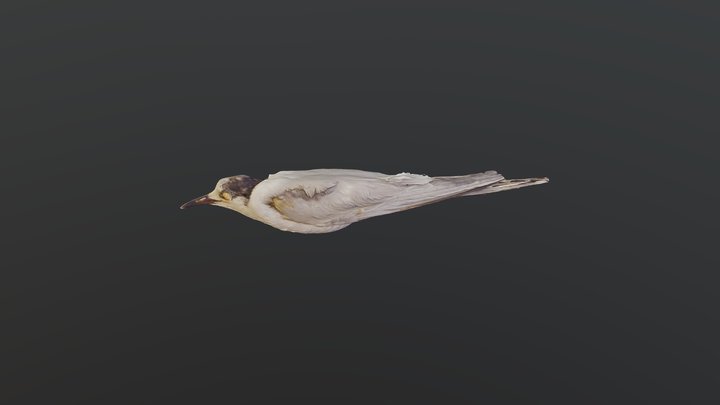
Photogrammetry
- Source
- MorphoSource
- Credit
- Moore Lab of Zoology
- Licence
- not stated by the source
- Commercial use
- cannot be read from the licence given — check the record
- Specimen
- Sterna hirundo · MLZ:Bird:MLZ:Bird:39443
The description on this site
- Source
- Wikipedia, “Sterna”
- Licence
- CC BY-SA 4.0
This is what the site found, which is not the same as what exists.
Keep going
What may have been alongside itLaridae through timeThe world it lived on
Occurrence data from the Paleobiology Database, CC BY 4.0. Linnaeus 1758