Anas superciliosa
The Pacific black duck, commonly known as the PBD, is a dabbling duck found in much of Indonesia, New Guinea, Australia, New Zealand, and many islands in the southwestern Pacific, reaching to the Caroline Islands in the north and French Polynesia in the east. It is usually called the grey duck in New Zealand, where it is also known by its Māori name, pārera.

Charles J. Sharp · CC BY-SA 4.0 · via Wikipedia/Commons. May be a photograph of a specimen, or an artist’s reconstruction — an interpretation of a skeleton, since colour and soft tissue are almost never preserved.
On record
Recorded, not inferred- Also called
- Pacific black duckPBDB
- Sits inside
- AnasPBDB
- Diet
- herbivorePBDB, for Anatinae
- Life habit
- volantPBDB, for Anatinae
- Motility
- actively mobilePBDB, for Theropoda
- Environment
- freshwaterPBDB, for Anatinae
- Mass
- 63 gWikidata
Time the record covers
At most 774 thousand years on record.
Every occurrence read is dated to somewhere between 774 ka and 0 Mya, and nothing in the dating separates them, so that window is what the record shows rather than a span.
17 occurrences of Anas superciliosa on record, most of them in the Holocene. The Paleobiology Database records this as a living group. Bar height is expected occurrences, not a count: each fossil is spread across the span it is dated to, so a tall narrow bar means tight dating and a low wide one means loose.
When
17 occurrences- Pleistocene18%
- Holocene82%
These are dates about fossils, not the animal: the record can only begin after it arose and end before it died out, so either end may reach further. Shares are expected occurrences: a fossil dated to a span is counted partly in each period it straddles. More on what this infers.
Found in
1 formation
Loading coastlines…
The named rock units Anas superciliosa has been recovered from, largest first. Drawn where the rock is now, not where it formed. 16 occurrences have no formation on record, which is common for older literature.
Anas superciliosa and its relatives
HoloceneWhere Anas superciliosa and its relatives were recorded in the Holocene.
Found in the same rock
296 taxa- Gallus gallus6 sites
- Anas chlorotis5 sites
- Apteryx australis4 sites
- Aythya novaeseelandiae4 sites
- Biziura delautouri4 sites
- Circus eylesi4 sites
- Corvus moriorum4 sites
- Coturnix novaezelandiae4 sites
- Cygnus sumnerensis4 sites
- Fulica prisca4 sites
- Gallirallus australis4 sites
- Gallirallus philippensis4 sites
- Harpagornis moorei4 sites
- Hemiphaga novaeseelandiae4 sites
- Mergus australis4 sites
- Nestor meridionalis4 sites
- Puffinus4 sites
- Strigops habroptila4 sites
- Tadorna variegata4 sites
- Turnagra capensis4 sites
- Anthus novaeseelandiae3 sites
- Apteryx3 sites
- Ardenna grisea3 sites
- Callaeas cinereus3 sites
The Paleobiology Database records 16 sites for Anas superciliosa, and this reads all of them. The number is how many of those sites it was catalogued from too. The 24 sharing the most are listed.
This is not a list of everything alive at the time. It is only what has come out of the same ground as this animal and been written down.
Entered from
12 references- A remarkable fossil and archaeological avifauna from Marfells Beach, Lake Grassmere, South Island, New Zealand3
- Prehistoric extinction of birds on Mangaia, Cook Islands, Polynesia3
- The Holocene fossil waterfowl fauna of Lake Poukawa, North Island, New Zealand2
- Avifauna from the Teouma Lapita site, Efate Island, Vanuatu, including a new genus and species of megapode1
- Holocene fossil bird remains from subantarctic Macquarie Island1
- Pleistocene fossil vertebrate sites of the South East region of South Australia II1
- Prehistoric butchery and consumption of birds in the Kingdom of Tonga, south Pacific1
- Quaternary fossil fauna of South Canterbury, South Island, New Zealand1
- Extinct and extirpated birds from Aitutaki and Atiu, southern Cook Islands1
- The Wyandotte Local Fauna: A New, Dated, Pleistocene Vertebrate Fauna from Northern Queensland1
- Extinction, biogeography, and human exploitation of birds on Tikopia and Anuta, Polynesian outliers in the Solomon Islands1
- Late Pleistocene Faunal Remains from Seton Rock Shelter, Kangaroo Island, South Australia1
Each of the 17 occurrences read was entered from one of these publications, ordered by how many each accounts for. This is not a search for papers mentioning the name. Entries link to doi.org where the Paleobiology Database holds an identifier, and to its own record where it does not. Relayed as the Paleobiology Database holds them, not checked against what they resolve to.
Media and terms
Media content2

Picture of Anas superciliosa
- Source
- Wikipedia/Commons
- Credit
- Charles J. Sharp
- Licence
- CC BY-SA 4.0
- Commercial use
- the licence allows it
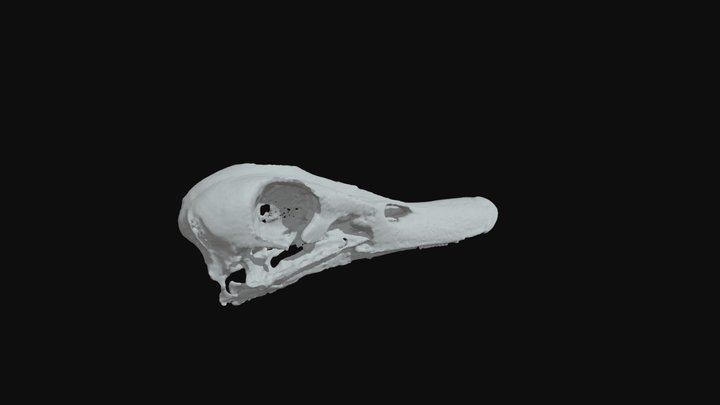
3D model
- Source
- Sketchfab
- Licence
- CC Attribution
- Commercial use
- cannot be read from the licence given — check the record
Smithsonian Open Access and MorphoSource were not reached for this taxon, so this list is what the others held rather than everything there is.
The description on this site
- Licence
- CC BY-SA 4.0
This is what the site found, which is not the same as what exists.
Keep going
What may have been alongside itAnas through timeFormations of the HoloceneThe world it lived on
Occurrence data from the Paleobiology Database, CC BY 4.0. Gmelin 1789