Scolopacidae
Scolopacidae is a large family of shorebirds, or waders, which mainly includes many species known as sandpipers, but also others such as woodcocks, curlews, and snipes. Most of these species eat small invertebrates picked out of the mud or soil. There is no evidence that different lengths of bills enable multiple species to feed in the same habitat, particularly on the coast, without direct competition for food. On sandy beaches, species with different bill lengths feed on the only abundant invertebrate, such as mole crabs Emerita.

lindalotjonen · CC BY 4.0 · via Wikipedia/Commons. May be a photograph of a specimen, or an artist’s reconstruction — an interpretation of a skeleton, since colour and soft tissue are almost never preserved.
On record
Recorded, not inferred- Also called
- snipePBDB
- Sits inside
- CharadriiformesPBDB
- Diet
- carnivorePBDB, for Coelurosauria
- Life habit
- ground dwelling, solitaryPBDB, for Theropoda
- Motility
- actively mobilePBDB, for Theropoda
- Environment
- marinePBDB, for Charadriiformes
Time the record covers
At least 37 million years on record.
The record covers at least 37.71 Mya to 11.7 ka. No occurrence read is dated outside 41.03 Mya to 0 Mya.
507 occurrences of Scolopacidae on record, most of them in the Pleistocene. The Paleobiology Database records this as a living group. Bar height is expected occurrences, not a count: each fossil is spread across the span it is dated to, so a tall narrow bar means tight dating and a low wide one means loose.
When
507 occurrencesThese are dates about fossils, not the animal: the record can only begin after it arose and end before it died out, so either end may reach further. Shares are expected occurrences: a fossil dated to a span is counted partly in each period it straddles. More on what this infers.
Found in
23 formations
- Tamiami Formation8
- Yorktown Formation · Chesapeake Group4
- Indusial Limestone Formation4
- Peace River Formation · Hawthorn Group3
- San Pedro Formation2
- Hillgrove Formation2
Loading coastlines…
The named rock units Scolopacidae has been recovered from, largest first. Drawn where the rock is now, not where it formed. 465 occurrences have no formation on record, which is common for older literature.
Scolopacidae and its relatives
PleistoceneWhere Scolopacidae and its relatives were recorded in the Pleistocene.
Found in the same rock
3,086 taxa- Tyto alba45 sites
- Anas platyrhynchos41 sites
- Anas36 sites
- Passeriformes31 sites
- Corvus corax30 sites
- Larus27 sites
- Anatidae26 sites
- Corvus brachyrhynchos25 sites
- Gallinago25 sites
- Buteo24 sites
- Scolopax rusticola24 sites
- Spatula clypeata24 sites
- Anas crecca23 sites
- Falco sparverius23 sites
- Phalacrocorax penicillatus23 sites
- Podiceps nigricollis23 sites
- Podilymbus podiceps23 sites
- Cyanoramphus22 sites
- Coenocorypha aucklandica21 sites
- Corvus monedula21 sites
- Numenius americanus21 sites
- Turdus21 sites
- Anserinae20 sites
- Aythya20 sites
The Paleobiology Database records 268 sites for Scolopacidae, and this reads 240 of them. Of that, one read hit the database's own return limit, so every count below is a floor rather than a total. The number is how many of those sites it was catalogued from too. The 24 sharing the most are listed.
This is not a list of everything alive at the time. It is only what has come out of the same ground as this animal and been written down.
Entered from
142 references- Prehistoric human impacts on California birds: evidence from the Emeryville shellmoumd avifauna51
- Birds of the Late Pleistocene and Holocene from the Palaeolithic Djuktai cave site of Yakutia, eastern Siberia20
- Late Pleistocene birds from Binagada (Azerbaijan) in collection of the National Museum of Natural History (Kyiv, Ukraine)19
- Quaternary fossil fauna of South Canterbury, South Island, New Zealand17
- The late Pleistocene avifauna of La Carolina, southwestern Ecuador17
- Terminal Pleistocene–Holocene Avifauna of San Miguel and Santa Rosa Islands: Identifications of Previously Unidentified Avian Remains Recovered from Fossil Sites and Prehistoric Cave Deposits16
- The non-passerine Pleistocene avifauna of the Talara Tar Seeps, northwestern Peru15
- Late Pleistocene-Holocene non-passerine avifauna of Liang Bua (Flores, Indonesia)13
- Distribution and provenance of fossil avifauna on San Miguel Island12
- Avian community, climate, and sea-level changes in the Plio-Pleistocene of the Florida Peninsula12
- The diversity and biogeography of late Pleistocene birds from the lowland Neotropics11
- The Quaternary avifauna of Crete, Greece11
Each of the 507 occurrences read was entered from one of these publications, ordered by how many each accounts for. This is not a search for papers mentioning the name. 130 further references are not listed. Entries link to doi.org where the Paleobiology Database holds an identifier, and to its own record where it does not. Relayed as the Paleobiology Database holds them, not checked against what they resolve to.
Media and terms
Media content2

Picture of Scolopacidae
- Source
- Wikipedia/Commons
- Credit
- lindalotjonen
- Licence
- CC BY 4.0
- Commercial use
- the licence allows it
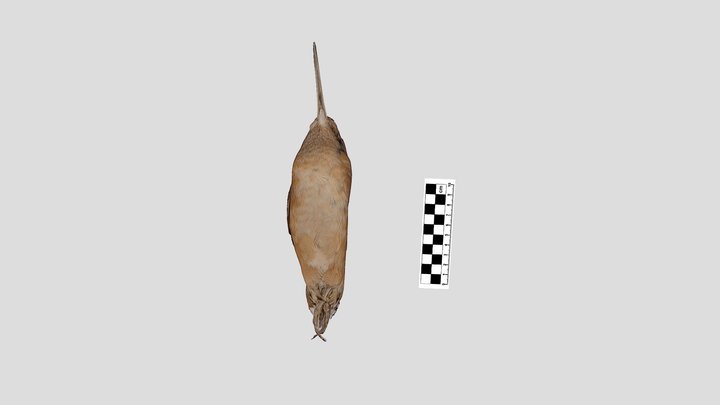
Smithsonian Open Access was not reached for this taxon, so this list is what the others held rather than everything there is.
The description on this site
- Source
- Wikipedia, “Sandpiper”
- Licence
- CC BY-SA 4.0
This is what the site found, which is not the same as what exists.
Keep going
What may have been alongside itCharadriiformes through timeFormations of the PleistoceneThe world it lived on
Occurrence data from the Paleobiology Database, CC BY 4.0. Rafinesque 1815