Phoca
Phoca is a genus of the earless seals, (Phocidae). It now contains just two species, the common seal and the spotted seal. Several species formerly listed under this genus have been split into the genera Pusa, Pagophilus, and Histriophoca. Until recently, Phoca largha has been considered a subspecies of Phoca vitulina but now is considered its own species. For this reason, the fossil history of the genus is unclear, and it has formerly been used as wastebasket taxon for a number of fossils of uncertain affinity.

Uncredited · Public Domain · via Wikipedia/Commons. May be a photograph of a specimen, or an artist’s reconstruction — an interpretation of a skeleton, since colour and soft tissue are almost never preserved.
On record
Recorded, not inferred- Also called
- sealPBDB
- Sits inside
- PhocinaePBDB
- Diet
- piscivore, carnivorePBDB, for Phocidae
- Life habit
- amphibiousPBDB, for Pinnipedia
- Motility
- actively mobilePBDB, for Osteichthyes
- Environment
- marinePBDB, for Pinnipedia
Time the record covers
At least 15 million years on record.
The record covers at least 15.98 Mya to 11.7 ka. No occurrence read is dated outside 23.04 Mya to 0 Mya.
159 occurrences of Phoca on record. The Paleobiology Database records this as a living group. Bar height is expected occurrences, not a count: each fossil is spread across the span it is dated to, so a tall narrow bar means tight dating and a low wide one means loose.
When
159 occurrences- Miocene3%
- Plioceneunder 1%
- Pleistocene35%
- Holocene62%
These are dates about fossils, not the animal: the record can only begin after it arose and end before it died out, so either end may reach further. Shares are expected occurrences: a fossil dated to a span is counted partly in each period it straddles. More on what this infers.
Found in
6 formations
- Palos Verdes Sand Formation4
- Red Crag Formation1
- Port Orford Formation1
- Cromer Forest Bed Formation1
- Gubik Formation1
- Chersonian Formation1
Loading coastlines…
The named rock units Phoca has been recovered from, largest first. Drawn where the rock is now, not where it formed. 150 occurrences have no formation on record, which is common for older literature.
Found in the same rock
913 taxa- Ursus maritimus45 sites
- Odobenus rosmarus36 sites
- Erignathus barbatus34 sites
- Rangifer tarandus28 sites
- Vulpes lagopus24 sites
- Cetacea23 sites
- Pusa hispida23 sites
- Ovibos moschatus22 sites
- Canis17 sites
- Pagophilus groenlandica17 sites
- Balaena mysticetus16 sites
- Delphinapterus leucas14 sites
- Lepus arcticus14 sites
- Branta13 sites
- Canis familiaris12 sites
- Larus12 sites
- Anatidae11 sites
- Callorhinus ursinus10 sites
- Erignathus10 sites
- Monodon monoceros10 sites
- Canis lupus9 sites
- Cepphus grylle9 sites
- Eumetopias jubatus9 sites
- Somateria mollissima9 sites
The Paleobiology Database records 144 sites for Phoca, and this reads all of them. The number is how many of those sites it was catalogued from too. The 24 sharing the most are listed.
This is not a list of everything alive at the time. It is only what has come out of the same ground as this animal and been written down.
Entered from
71 references- Polar bear fossil and archaeological records from the Pleistocene and Holocene in relation to sea ice extent and open water polynyas20
- Appendix 1. The zooarchaeology of Peary Land and adjacent areas9
- Marine mammals of the Champlain Sea, and the problem of whales in Michigan9
- Living in the narrows: subsistence economy and culture change in Labrador Inuit society during the Contact Period8
- The Northernmost Ruins of the Globe6
- The evolution of Arctic marine mammals5
- Late Cenozoic northeast pacific Phocidae5
- Archaeology of St. Lawrence Island, Alaska5
- Quaternary vertebrates from Shiriya area, Shimokita Pininsula, northeastern Japan4
- Archaeological and Historical Evidence for an 18th-Century "Blip" in the Distribution of the Northern Fur Seal at Kodiak Island, Alaska4
- Marine mammals in the Champlain Sea and the Great Lakes4
- Humans and marine resource interaction reappraised: Archaeofauna remains during the late Pleistocene and Holocene in Cantabrian Spain3
Each of the 159 occurrences read was entered from one of these publications, ordered by how many each accounts for. This is not a search for papers mentioning the name. 59 further references are not listed. Entries link to doi.org where the Paleobiology Database holds an identifier, and to its own record where it does not. Relayed as the Paleobiology Database holds them, not checked against what they resolve to.
Media and terms
Media content3

Picture of Phoca
- Source
- Wikipedia/Commons
- Credit
- nobody named on the record
- Licence
- Public Domain
- Commercial use
- the licence allows it
Structured light scan
- Source
- MorphoSource
- Licence
- In Copyright
- Commercial use
- cannot be read from the licence given — check the record
- Specimen
- Phoca vitulina · lepblb:PV-CSL-966-000010
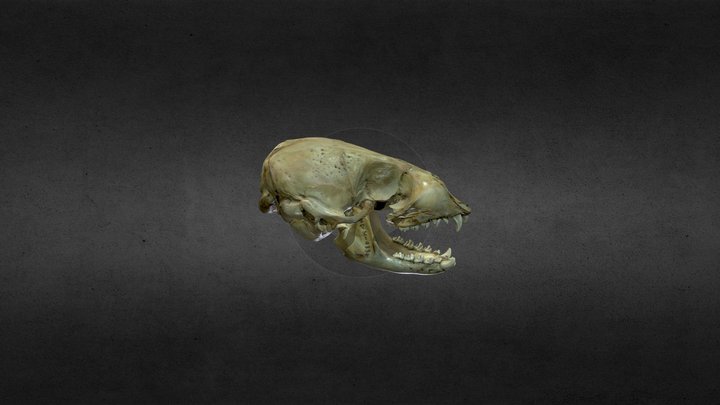
3D model
- Source
- Sketchfab
- Licence
- CC Attribution
- Commercial use
- cannot be read from the licence given — check the record
The description on this site
- Source
- Wikipedia, “Phoca”
- Licence
- CC BY-SA 4.0
This is what the site found, which is not the same as what exists.
Keep going
What may have been alongside itPhocinae through timeThe world it lived on
Occurrence data from the Paleobiology Database, CC BY 4.0. Linnaeus 1758