Nerita
Searched as Nerita undata striata. The Paleobiology Database treats Nerita as the accepted name.
Nerita is a genus of medium-sized to small sea snails with a gill and an operculum, marine gastropod molluscs in the subfamily Neritinae of the family Neritidae, the nerites.

Hans Hillewaert ( Lycaon ) · CC BY-SA 2.5 · via Wikipedia/Commons. May be a photograph of a specimen, or an artist’s reconstruction — an interpretation of a skeleton, since colour and soft tissue are almost never preserved.
On record
Recorded, not inferred- Sits inside
- NeritinaePBDB
- Diet
- omnivore, grazerPBDB, for Neritidae
- Life habit
- epifaunalPBDB, for Neritidae
- Motility
- actively mobilePBDB, for Neritidae
- Vision
- limitedPBDB, for Gastropoda
Time the record covers
At most 2.6 million years on record.
Every occurrence read is dated to somewhere between 2.58 Mya and 11.7 ka, and nothing in the dating separates them, so that window is what the record shows rather than a span.
3 occurrences of Nerita on record, most of them in the Pleistocene. The Paleobiology Database records this as a living group. Bar height is expected occurrences, not a count: each fossil is spread across the span it is dated to, so a tall narrow bar means tight dating and a low wide one means loose.
When
3 occurrences- Pleistocene100%
These are dates about fossils, not the animal: the record can only begin after it arose and end before it died out, so either end may reach further. Shares are expected occurrences: a fossil dated to a span is counted partly in each period it straddles. More on what this infers.
Nerita and its relatives
PleistoceneWhere Nerita and its relatives were recorded in the Pleistocene.
Found in the same rock
4,711 taxa- Turritella35 sites
- Ostrea32 sites
- Conus23 sites
- Natica23 sites
- Tellina21 sites
- Arca20 sites
- Barbatia20 sites
- Cerithium20 sites
- Glycymeris20 sites
- Corbula19 sites
- Architectonica18 sites
- Dentalium18 sites
- Ringicula18 sites
- Anomia17 sites
- Nuculana17 sites
- Polinices17 sites
- Acteon16 sites
- Ampullina16 sites
- Nucula16 sites
- Turricula15 sites
- Crassatella14 sites
- Lucina14 sites
- Serpula14 sites
- Euspira13 sites
The Paleobiology Database records 210 sites for Nerita, and this reads all of them. Of that, one read hit the database's own return limit, so every count below is a floor rather than a total. The number is how many of those sites it was catalogued from too. The 24 sharing the most are listed.
This is not a list of everything alive at the time. It is only what has come out of the same ground as this animal and been written down.
Entered from
1 referenceEach of the 3 occurrences read was entered from one of these publications, ordered by how many each accounts for. This is not a search for papers mentioning the name. Each entry links to the Paleobiology Database's own record for the work.
Media and terms
Media content2

Picture of Nerita
- Source
- Wikipedia/Commons
- Credit
- Hans Hillewaert ( Lycaon )
- Licence
- CC BY-SA 2.5
- Commercial use
- the licence allows it
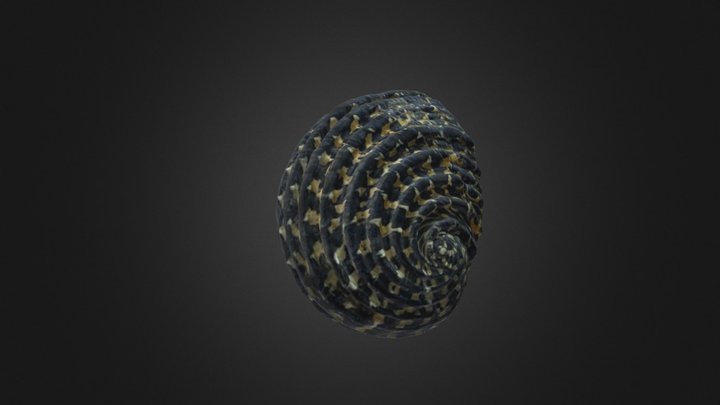
3D model
- Source
- Sketchfab
- Licence
- CC Attribution
- Commercial use
- cannot be read from the licence given — check the record
Smithsonian Open Access and MorphoSource were not reached for this taxon, so this list is what the others held rather than everything there is.
The description on this site
- Source
- Wikipedia, “Nerita”
- Licence
- CC BY-SA 4.0
This is what the site found, which is not the same as what exists.
Keep going
What may have been alongside itNeritinae through timeFormations of the PleistoceneThe world it lived on
Occurrence data from the Paleobiology Database, CC BY 4.0. (Linnaeus 1758)