Micromys
Micromys is a genus of small rodents in the subfamily Murinae. The genus contains two living species: the widespread Eurasian harvest mouse of much of Europe and Asia; and the more restricted Indochinese harvest mouse of Vietnam, southern China, and perhaps nearby regions. Fossils of Micromys date back to the Late Miocene and include at least 10 extinct species, which form several lineages.

Hecke · CC BY-SA 3.0 · via Wikipedia/Commons. May be a photograph of a specimen, or an artist’s reconstruction — an interpretation of a skeleton, since colour and soft tissue are almost never preserved.
On record
Recorded, not inferred- Also called
- harvest mousePBDB
- Sits inside
- MuridaePBDB
- Diet
- herbivore, insectivorePBDB, for Muridae
- Life habit
- ground dwellingPBDB, for Muridae
- Motility
- actively mobilePBDB, for Osteichthyes
- Environment
- terrestrialPBDB, for Eutheria
Time the record covers
At least 5.3 million years on record.
The record covers at least 5.333 Mya to 11.7 ka. No occurrence read is dated outside 11.63 Mya to 0 Mya.
60 occurrences of Micromys on record, most of them in the Pliocene. The Paleobiology Database records this as a living group. Bar height is expected occurrences, not a count: each fossil is spread across the span it is dated to, so a tall narrow bar means tight dating and a low wide one means loose.
When
60 occurrences- Miocene31%
- Pliocene40%
- Pleistocene27%
- Holocene2%
These are dates about fossils, not the animal: the record can only begin after it arose and end before it died out, so either end may reach further. Shares are expected occurrences: a fossil dated to a span is counted partly in each period it straddles. More on what this infers.
Found in
12 formations
- facies à Congeria Formation7
- Lefkon Formation5
- Prolemais Formation4
- Komnina Formation4
- Valdeganga Formation3
- Spilia Formation1
Loading coastlines…
The named rock units Micromys has been recovered from, largest first. Drawn where the rock is now, not where it formed. 30 occurrences have no formation on record, which is common for older literature.
Micromys and its relatives
PlioceneWhere Micromys and its relatives were recorded in the Pliocene.
Found in the same rock
708 taxa- Apodemus32 sites
- Mimomys24 sites
- Prolagus19 sites
- Latonia17 sites
- Occitanomys brailloni16 sites
- Rhagapodemus16 sites
- Allocricetus15 sites
- Chiroptera13 sites
- Eliomys13 sites
- Glis minor13 sites
- Sorex13 sites
- Talpa13 sites
- Apodemus atavus12 sites
- Beremendia fissidens12 sites
- Apodemus gudrunae11 sites
- Lacerta11 sites
- Colubrinae10 sites
- Pliomys10 sites
- Pliopetaurista10 sites
- Rana10 sites
- Soricidae10 sites
- Ursus10 sites
- Anguinae9 sites
- Castor fiber9 sites
The Paleobiology Database records 57 sites for Micromys, and this reads all of them. The number is how many of those sites it was catalogued from too. The 24 sharing the most are listed.
This is not a list of everything alive at the time. It is only what has come out of the same ground as this animal and been written down.
Entered from
28 references- The succession of rodent faunas from the Mio/Pliocene lacustrine deposits of the Florina-Ptolemais-Servia Basin (Greece)9
- Late Messinian mollusks and vertebrates from Moncucco Torinese, north-western Italy. Paleoecological and paleoclimatological implications7
- Smaller mammals from the Upper Miocene and Lower Pliocene of the Strimon basin, Greece. Part 1. Rodentia and Lagomorpha6
- Biochronological implications of the Arvicolidae (Rodentia, Mammalia) from the Lower Pleistocene hominid-bearing level of Trinchera Dolina 6 (TD6, Atapuerca, Spain)5
- Early Ruscinian rodents and lagomorphs (Mammalia) from the lignites near Ptolemais (Macedonia, Greece)4
- Pleistocene vertebrate faunas of Hungary3
- Les Formations continentales du Neogene superieur des vallees du Jucar et du Cabriel au ne d'Albacete (Espagne). Biostratigraphie et environment.3
- The Villafranchian mammalian faunas and biochronology of Greece2
- Biochronology of the Pleistocene deposits at Betfia (Bihor, Romania)2
- The Kor & Bot collection revisited, with a biostratigraphic interpretation of the Early Pleistocene Oosterschelde Fauna (Oosterschelde Estuary, the Netherlands)1
- The First Representative Vertebrate Fauna from the Late Miocene of Southern European Russia1
- Silata, a new locality with micromammals from the Miocene/Pliocene boundary of the Chalkidiki peninsula, Macedonia, Greece1
Each of the 60 occurrences read was entered from one of these publications, ordered by how many each accounts for. This is not a search for papers mentioning the name. 16 further references are not listed. Entries link to doi.org where the Paleobiology Database holds an identifier, and to its own record where it does not. Relayed as the Paleobiology Database holds them, not checked against what they resolve to.
Media and terms
Media content3
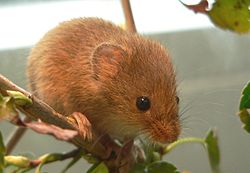
Picture of Micromys
- Source
- Wikipedia/Commons
- Credit
- Hecke
- Licence
- CC BY-SA 3.0
- Commercial use
- the licence allows it
CT scan
- Source
- MorphoSource
- Licence
- In Copyright
- Commercial use
- cannot be read from the licence given — check the record
- Specimen
- Micromys minutus · UMMZ:mammals:108469
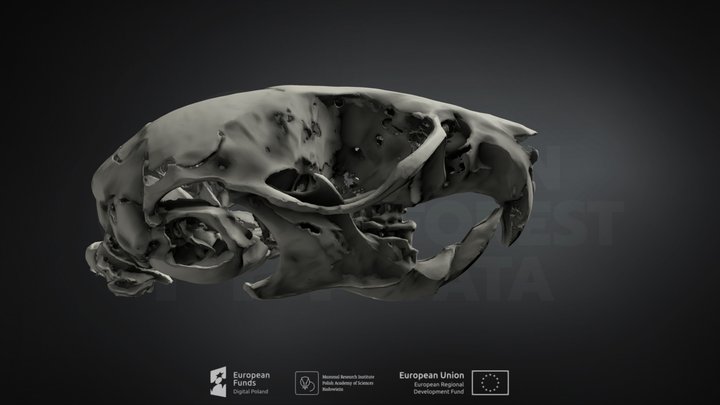
3D model
- Source
- Sketchfab
- Licence
- CC Attribution
- Commercial use
- cannot be read from the licence given — check the record
Smithsonian Open Access was not reached for this taxon, so this list is what the others held rather than everything there is.
The description on this site
- Source
- Wikipedia, “Micromys”
- Licence
- CC BY-SA 4.0
This is what the site found, which is not the same as what exists.
Keep going
What may have been alongside itMuridae through timeFormations of the PlioceneThe world it lived on
Occurrence data from the Paleobiology Database, CC BY 4.0. Dehne 1841