Prolagus
Prolagus is an extinct genus of lagomorph. Over 20 species have been named, and the genus was abundant and widespread in Europe during the Neogene. However, by the end of the Middle Pleistocene, it was confined to a single species, the Sardinian pika, on Corsica, Sardinia, and their surrounding islands, where it survived into historical times. In North Africa and Western Asia, the genus is known from the Miocene and Pliocene. The scientific name may mean "before hares" or "primitive hares". Its taxonomy is disputed, with it either being considered a member of the family Ochotonidae, which includes living pikas, or the only member of the family Prolagidae.

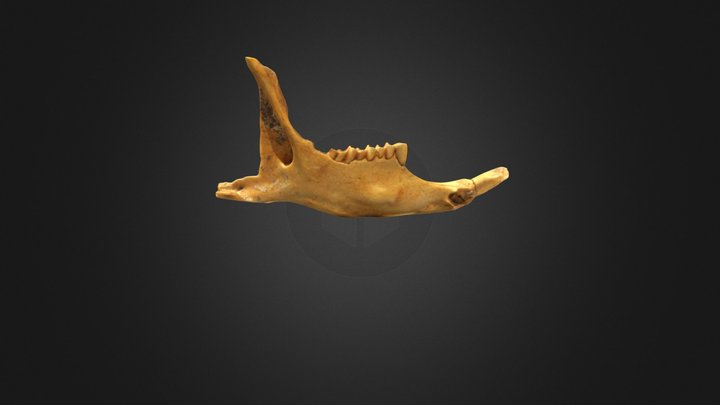
Unknown author Unknown author · Public Domain · via Wikipedia/Commons. May be a photograph of a specimen, or an artist’s reconstruction — an interpretation of a skeleton, since colour and soft tissue are almost never preserved.
On record
Recorded, not inferred- Sits inside
- OchotonidaePBDB
- Diet
- herbivorePBDB, for Ochotonidae
- Life habit
- ground dwellingPBDB, for Ochotonidae
- Motility
- actively mobilePBDB, for Osteichthyes
- Environment
- terrestrialPBDB, for Eutheria
Time the record covers
At least 37 million years on record.
The record covers at least 37.71 Mya to 11.7 ka. No occurrence read is dated outside 41.03 Mya to 0 Mya.
194 occurrences of Prolagus on record, most of them in the Miocene. Bar height is expected occurrences, not a count: each fossil is spread across the span it is dated to, so a tall narrow bar means tight dating and a low wide one means loose.
When
194 occurrences- Eoceneunder 1%
- Miocene67%
- Pliocene17%
- Pleistocene15%
- Holocene2%
These are dates about fossils, not the animal: the record can only begin after it arose and end before it died out, so either end may reach further. Shares are expected occurrences: a fossil dated to a span is counted partly in each period it straddles. More on what this infers.
Found in
28 formations
- facies à Congeria Formation7
- Lefkon Formation6
- Lower Freshwater Molasse Formation6
- Upper Freshwater Molasse Formation · Molasse Group5
- Esbarrondadoiro Formation3
- Spilia Formation2
Loading coastlines…
The named rock units Prolagus has been recovered from, largest first. Drawn where the rock is now, not where it formed. 4 further formations hold fewer occurrences each and are not listed. 139 occurrences have no formation on record, which is common for older literature.
Prolagus and its relatives
MioceneWhere Prolagus and its relatives were recorded in the Miocene.
Found in the same rock
1,745 taxa- Soricidae33 sites
- Ophisaurus32 sites
- Testudo28 sites
- Lacerta27 sites
- Heteroxerus26 sites
- Apodemus24 sites
- Galerix24 sites
- Spermophilinus bredai24 sites
- Megacricetodon minor23 sites
- Democricetodon mutilus20 sites
- Aves19 sites
- Osteichthyes19 sites
- Chiroptera18 sites
- Lagopsis18 sites
- Microdyromys18 sites
- Mimomys18 sites
- Miodyromys aegercii18 sites
- Oryctolagus18 sites
- Paraethomys18 sites
- Talpidae18 sites
- Bufo viridis17 sites
- Rhagamys orthodon17 sites
- Stephanomys17 sites
- Anura16 sites
The Paleobiology Database records 181 sites for Prolagus, and this reads all of them. The number is how many of those sites it was catalogued from too. The 24 sharing the most are listed.
This is not a list of everything alive at the time. It is only what has come out of the same ground as this animal and been written down.
Entered from
95 references- Kleinsäugerstratigraphie in der miozänen Hörnlischüttung (Ostschweiz); (Biostratigraphy of small mammals in the Hörnlischüttung of Miocene age (East Switzerland))19
- Plio-Pleistocene fossil vertebrates of Monte Tuttavista (Orosei, Eastern Sardinia, Italy), an overview15
- Neue Ergebnisse zur Stratigraphie der mittleren Serie der Oberen Süßwassermolasse Bayerns (New results on the stratigraphy of the middle series of upper Freshwater Molasse, Bavaria)9
- Smaller mammals from the Upper Miocene and Lower Pliocene of the Strimon basin, Greece. Part 1. Rodentia and Lagomorpha8
- Late Messinian mollusks and vertebrates from Moncucco Torinese, north-western Italy. Paleoecological and paleoclimatological implications7
- Les Formations continentales du Neogene superieur des vallees du Jucar et du Cabriel au ne d'Albacete (Espagne). Biostratigraphie et environment.6
- A new Late Agenian (MN2a, Early Miocene) fossil assemblage from Wallenried (Molasse Basin, Canton Fribourg, Switzerland)5
- Biostratigraphy of amphibians, reptiles, birds and mammals in Corsica and the role of man in the Holocene faunal turnover5
- Le gisement a mammiferes miocenes de Castelnau-d'Arbieu (Gers). Donnees nouvelles et implications biostratigraphiques4
- Elementi di paleobiogeographia dei mammiferi Terziari dell Italia.4
- Vertebrate microfossils from the Upper Freshwater Molasse in the Swiss Molasse Basin: Implications for the evolution of the North Alpine Foreland Basin during the Miocene Climate Optimum3
- La succession des faunes de mammiferes miocenes de Pontigne (Maine-et-Loire, France)3
Each of the 194 occurrences read was entered from one of these publications, ordered by how many each accounts for. This is not a search for papers mentioning the name. 83 further references are not listed. Entries link to doi.org where the Paleobiology Database holds an identifier, and to its own record where it does not. Relayed as the Paleobiology Database holds them, not checked against what they resolve to.
Media and terms
Media content3

Picture of Prolagus
- Source
- Wikipedia/Commons
- Credit
- Unknown author Unknown author
- Licence
- Public Domain
- Commercial use
- the licence allows it
Photogrammetry
- Source
- MorphoSource
- Licence
- not stated by the source
- Commercial use
- cannot be read from the licence given — check the record
- Specimen
- Prolagus sp. · UNIBO:aDNA:PR6
Smithsonian Open Access was not reached for this taxon, so this list is what the others held rather than everything there is.
The description on this site
- Source
- Wikipedia, “Prolagus”
- Licence
- CC BY-SA 4.0
This is what the site found, which is not the same as what exists.
Keep going
What may have been alongside itOchotonidae through timeFormations of the MioceneThe world it lived on
Occurrence data from the Paleobiology Database, CC BY 4.0. Pomel 1853