Pinctada
Searched as Margaritifera. The Paleobiology Database treats Pinctada as the accepted name.
Margaritifera is a genus of freshwater mussels, aquatic bivalve molluscs in the family Margaritiferidae, the freshwater pearl mussels.

Tom Meijer · CC BY-SA 3.0 · via Wikipedia/Commons. May be a photograph of a specimen, or an artist’s reconstruction — an interpretation of a skeleton, since colour and soft tissue are almost never preserved.
On record
Recorded, not inferred- Sits inside
- PteriidaePBDB
- Diet
- suspension feederPBDB
- Life habit
- epifaunalPBDB
- Motility
- stationary, attachedPBDB
- Vision
- blindPBDB, for Bivalvia
- Environment
- coastal,inner shelf,outer shelf,oceanicPBDB, for Pteriidae
Time the record covers
At least 201 million years on record.
The record covers at least 201.4 Mya to 11.7 ka. No occurrence read is dated outside 237 Mya to 0 Mya.
68 occurrences of Pinctada on record, most of them in the Miocene. The Paleobiology Database records this as a living group. Bar height is expected occurrences, not a count: each fossil is spread across the span it is dated to, so a tall narrow bar means tight dating and a low wide one means loose.
When
68 occurrences- Late Triassic1%
- Middle Jurassic1%
- Late Jurassic1%
- Early Cretaceous6%
- Late Cretaceous3%
- Eocene13%
- Oligocene3%
- Miocene36%
- Pliocene8%
- Pleistocene21%
- Holocene4%
These are dates about fossils, not the animal: the record can only begin after it arose and end before it died out, so either end may reach further. Shares are expected occurrences: a fossil dated to a span is counted partly in each period it straddles. More on what this infers.
Found in
26 formations
- Dry Creek Sands Formation4
- Elrhaz Formation · Tegama Group4
- Upper Freshwater Molasse Formation · Molasse Group3
- Yubari Formation · Ishikari Group2
- Wakkanabi Formation · Ishikari Group2
- Lillo Formation2
Loading coastlines…
The named rock units Pinctada has been recovered from, largest first. Drawn where the rock is now, not where it formed. 2 further formations hold fewer occurrences each and are not listed. 30 occurrences have no formation on record, which is common for older literature.
Pinctada and its relatives
MioceneWhere Pinctada and its relatives were recorded in the Miocene.
Found in the same rock
907 taxa- Spondylus6 sites
- Chlamys5 sites
- Limopsis5 sites
- Anomia4 sites
- Cardita4 sites
- Chlamys antiaustralis4 sites
- Cucullaea corioensis4 sites
- Diodora4 sites
- Divalucina cumingi4 sites
- Eucrassatella4 sites
- Glycymeris4 sites
- Hiatella arctica4 sites
- Notocorbula ephamilla4 sites
- Tucetona4 sites
- Turbo4 sites
- Acar domingensis3 sites
- Anadara3 sites
- Anadara (Anadara) antiquata3 sites
- Asaphis deflorata3 sites
- Cardium3 sites
- Cerithium3 sites
- Chama3 sites
- Charonia3 sites
- Clanculus3 sites
The Paleobiology Database records 22 sites for Pinctada, and this reads all of them. The number is how many of those sites it was catalogued from too. The 24 sharing the most are listed.
This is not a list of everything alive at the time. It is only what has come out of the same ground as this animal and been written down.
Entered from
35 references- The fossil continental mollusks in the upper freshwater molasse (Middle Miocene) of the districts of Biberach, Ravensburg and Neu-Ulm, Germany12
- Summary of the Paleogene molluscan faunas in North Japan8
- The molluscan fauna of the Pliocene strata underlying the Adelaide Plains. Part II - Pelecypoda4
- Palaeoecology of well-preserved coral communities in a siliciclastic environment from the Late Pleistocene (MIS 7), Kish Island, Persian Gulf (Iran): the development of low-relief reef frameworks (biostromes) in increasingly restricted environments3
- The Neogene Amphineura and Bivalvia (Protobranchia and Pteriomorphia) from Kallo and Doel (Oost Vlaanderen, Belgium)3
- Étude paléontologique de Lamellibranches limniques récoltés dans le Crétacé inférieur du Niger (Afrique) [Paleontological study of the limnic lamellibranchs recovered in the Lower Cretaceous of Niger (Africa)]3
- Molluschi delle spiagge emerse del Mar Rosso e dell'Oceano Indiano, parte II (Lamellibranchi) [Mollusks from raised beaches bordering the Red Sea and the Indian Ocean, part II (bivalves)]3
- Neue Ergebnisse zur Stratigraphie der mittleren Serie der Oberen Süßwassermolasse Bayerns (New results on the stratigraphy of the middle series of upper Freshwater Molasse, Bavaria)2
- A new fossil Cypraea (Gastropoda, Prosobranchia) from South Africa with notes on the Alexandria Formation2
- A Paleogene molluscan fauna from Hokkaido, northern Japan2
- Mollusca from the raised beach deposits of the Kwantô region2
- Stratigraphy of an early-middle Miocene sequence near Antwerp in Northern Belgium (Southern North Sea Basin)1
Each of the 68 occurrences read was entered from one of these publications, ordered by how many each accounts for. This is not a search for papers mentioning the name. 23 further references are not listed. Entries link to doi.org where the Paleobiology Database holds an identifier, and to its own record where it does not. Relayed as the Paleobiology Database holds them, not checked against what they resolve to.
Media and terms
Media content2

Picture of Pinctada
- Source
- Wikipedia/Commons
- Credit
- Tom Meijer
- Licence
- CC BY-SA 3.0
- Commercial use
- the licence allows it
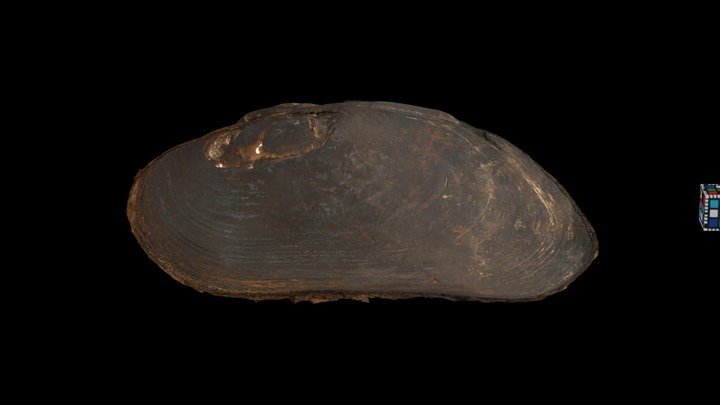
3D model
- Source
- Sketchfab
- Licence
- CC0 Public Domain
- Commercial use
- the licence allows it
Smithsonian Open Access and MorphoSource were not reached for this taxon, so this list is what the others held rather than everything there is.
The description on this site
- Licence
- CC BY-SA 4.0
This is what the site found, which is not the same as what exists.
Keep going
What may have been alongside itPteriidae through timeFormations of the MioceneThe world it lived on
Occurrence data from the Paleobiology Database, CC BY 4.0. Jameson 1901