Hungarosaurus
Hungarosaurus is an extinct genus of nodosaurid ankylosaurian dinosaur from the Upper Cretaceous (Santonian) Csehbánya Formation of the Bakony Mountains, western Hungary. The type species is H. tormai, and represents the most completely known ankylosaur from the Cretaceous of Europe. Hungarosaurus walked on four legs and its body was covered with hundreds of osteoderms. The length of mature specimens was about 4–4.8 metres (13–16 ft).

Zoltan Csiki-Sava, Eric Buffetaut, Attila Ősi, Xabier Pereda-Suberbiola, Stephen L. Brusatte · CC BY 3.0 · via Wikipedia/Commons. May be a photograph of a specimen, or an artist’s reconstruction — an interpretation of a skeleton, since colour and soft tissue are almost never preserved.
On record
Recorded, not inferred- Sits inside
- NodosauridaePBDB
- Diet
- herbivorePBDB, for Ornithischia
- Life habit
- ground dwelling, gregariousPBDB, for Ornithischia
- Motility
- actively mobilePBDB, for Ornithischia
- Environment
- terrestrialPBDB, for Ornithischia
Time the record covers
At most 2.1 million years on record.
Every occurrence read is dated to somewhere between 85.7 Mya and 83.6 Mya, and nothing in the dating separates them, so that window is what the record shows rather than a span.
2 occurrences of Hungarosaurus on record, most of them in the Late Cretaceous. Bar height is expected occurrences, not a count: each fossil is spread across the span it is dated to, so a tall narrow bar means tight dating and a low wide one means loose.
When
2 occurrences- Late Cretaceous100%
These are dates about fossils, not the animal: the record can only begin after it arose and end before it died out, so either end may reach further. Shares are expected occurrences: a fossil dated to a span is counted partly in each period it straddles. More on what this infers.
Found in
1 formation
Loading coastlines…
The named rock units Hungarosaurus has been recovered from, largest first. Drawn where the rock is now, not where it formed.
Hungarosaurus and its relatives
Late CretaceousWhere Hungarosaurus and its relatives were recorded in the Late Cretaceous.
Found in the same rock
42 taxa- Abelisauridae1 site
- Ajkaceratops kozmai1 site
- Albanerpetontidae1 site
- Aves1 site
- Azhdarchidae1 site
- Bakonybatrachus fedori1 site
- Bakonydraco galaczi1 site
- Bauxitornis1 site
- Bauxitornis mindszentyae1 site
- Bicuspidon hatzegiensis1 site
- Bothremydidae1 site
- Chromatogenys tiliquoides1 site
- Crocodylia1 site
- Distortodon rhomboideus1 site
- Doratodon carcharidens1 site
- Dortokidae1 site
- Enantiornithes1 site
- Eusuchia1 site
- Foxemys trabanti1 site
- Hungarobatrachus szukacsi1 site
- Iharkutosuchus makadii1 site
- Kallokibotion1 site
- Lacertilia1 site
- Lepisosteidae1 site
The Paleobiology Database records 1 site for Hungarosaurus, and this reads all of them. The number is how many of those sites it was catalogued from too. The 24 sharing the most are listed.
This is not a list of everything alive at the time. It is only what has come out of the same ground as this animal and been written down.
Entered from
2 references- Partial skull and endocranial cast of the ankylosaurian dinosaur Hungarosaurus from the Late Cretaceous of Hungary: implications for locomotion1
- Hungarosaurus tormai, a new ankylosaur (Dinosauria) from the Upper Cretaceous of Hungary1
Each of the 2 occurrences read was entered from one of these publications, ordered by how many each accounts for. This is not a search for papers mentioning the name. Each entry links to doi.org. Relayed as the Paleobiology Database holds them, not checked against what they resolve to.
Media and terms
Media content3

Picture of Hungarosaurus
- Source
- Wikipedia/Commons
- Credit
- Zoltan Csiki-Sava, Eric Buffetaut, Attila Ősi, Xabier Pereda-Suberbiola, Stephen L. Brusatte
- Licence
- CC BY 3.0
- Commercial use
- the licence allows it
CT scan
- Source
- MorphoSource
- Licence
- not stated by the source
- Commercial use
- cannot be read from the licence given — check the record
- Specimen
- Hungarosaurus tormai · mtm:pal:2020.33.1
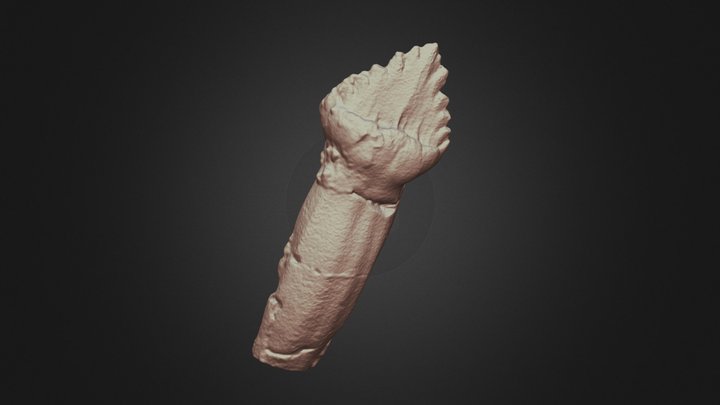
3D model
- Source
- Sketchfab
- Licence
- CC Attribution
- Commercial use
- cannot be read from the licence given — check the record
Smithsonian Open Access was not reached for this taxon, so this list is what the others held rather than everything there is.
The description on this site
- Licence
- CC BY-SA 4.0
This is what the site found, which is not the same as what exists.
Keep going
What may have been alongside itNodosauridae through timeFormations of the Late CretaceousThe world it lived on
Occurrence data from the Paleobiology Database, CC BY 4.0. Osi 2005