Hiodon
Hiodontidae, commonly called mooneyes, is a family of ray-finned fish with a single included genus Hiodon. The genus comprise two extant species native to North America and three to five extinct species recorded from Paleocene to Eocene age fossils. They are large-eyed, fork-tailed fish that superficially resemble shads. The vernacular name comes from the metallic shine of their eyes.

NOAA · Public Domain · via Wikipedia/Commons. May be a photograph of a specimen, or an artist’s reconstruction — an interpretation of a skeleton, since colour and soft tissue are almost never preserved.
On record
Recorded, not inferred- Sits inside
- HiodontidaePBDB
- Motility
- actively mobilePBDB, for Osteichthyes
Time the record covers
At least 33 million years on record.
The record covers at least 33.9 Mya to 11.7 ka. No occurrence read is dated outside 56 Mya to 0 Mya.
3 occurrences of Hiodon on record. The Paleobiology Database records this as a living group. Bar height is expected occurrences, not a count: each fossil is spread across the span it is dated to, so a tall narrow bar means tight dating and a low wide one means loose.
When
3 occurrencesThese are dates about fossils, not the animal: the record can only begin after it arose and end before it died out, so either end may reach further. Shares are expected occurrences: a fossil dated to a span is counted partly in each period it straddles. More on what this infers.
Found in
2 formations
Loading coastlines…
The named rock units Hiodon has been recovered from, largest first. Drawn where the rock is now, not where it formed. 1 occurrence has no formation on record, which is common for older literature.
Found in the same rock
89 taxa- Accipitridae1 site
- Acipenser fulvescens1 site
- Aix sponsa1 site
- Alces alces1 site
- Alosa sapidissima1 site
- Ambloplites rupestris1 site
- Amia1 site
- Amia calva1 site
- Amyzon1 site
- Anas acuta1 site
- Anas rubripes1 site
- Anatidae1 site
- Anguilla1 site
- Anserinae1 site
- Aplodinotus grunniens1 site
- Ardea herodias1 site
- Ardeidae1 site
- Bonasa umbellus1 site
- Branta bernicla1 site
- Branta canadensis1 site
- Bubo virginianus1 site
- Bufo americanus1 site
- Canidae1 site
- Canis familiaris1 site
The Paleobiology Database records 3 sites for Hiodon, and this reads all of them. The number is how many of those sites it was catalogued from too. The 24 sharing the most are listed.
This is not a list of everything alive at the time. It is only what has come out of the same ground as this animal and been written down.
Entered from
3 references- After Hopewell in Southern Québec1
- An Eocene Species of Hiodon from Montana, Its Phylogenetic Relationships, and the Evolution of the Postcranial Skeleton in the Hiodontidae (Teleostei)1
- Freshwater fish remains from the Clarno Formation Ochoco Mountains of north-central Oregon1
Each of the 3 occurrences read was entered from one of these publications, ordered by how many each accounts for. This is not a search for papers mentioning the name. Entries link to doi.org where the Paleobiology Database holds an identifier, and to its own record where it does not. Relayed as the Paleobiology Database holds them, not checked against what they resolve to.
Media and terms
Media content3
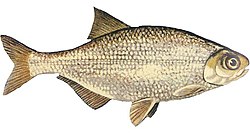
Picture of Hiodon
- Source
- Wikipedia/Commons
- Credit
- NOAA
- Licence
- Public Domain
- Commercial use
- the licence allows it
CT scan
- Source
- MorphoSource
- Licence
- In Copyright
- Commercial use
- cannot be read from the licence given — check the record
- Specimen
- Hiodon alosoides · TCWC:Ichthyology:5433.02
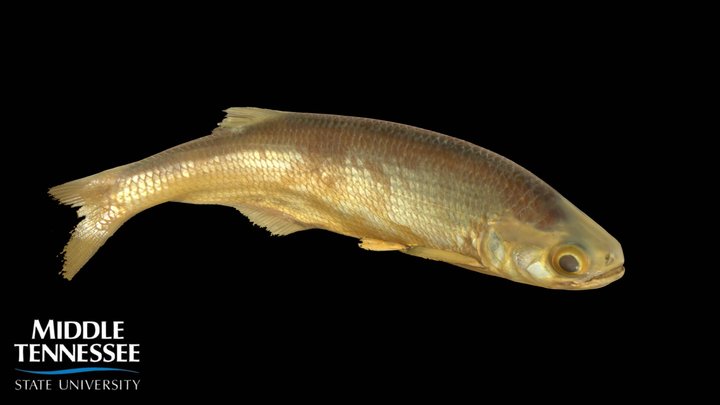
3D model
- Source
- Sketchfab
- Credit
- MTSUichthyology
- Licence
- CC Attribution
- Commercial use
- cannot be read from the licence given — check the record
The description on this site
- Source
- Wikipedia, “Mooneye”
- Licence
- CC BY-SA 4.0
This is what the site found, which is not the same as what exists.
Keep going
What may have been alongside itHiodontidae through timeThe world it lived on
Occurrence data from the Paleobiology Database, CC BY 4.0. Guo-Qing and Wilson 1994