Cynomys ludovicianus
The black-tailed prairie dog is a rodent of the family Sciuridae found in the Great Plains of North America from about the United States–Canada border to the United States–Mexico border. Unlike some other prairie dogs, these animals do not truly hibernate. The black-tailed prairie dog can be seen above ground in midwinter. A black-tailed prairie dog town in Texas was reported to cover 25,000 mi2 (64,000 km2) and included 400,000,000 individuals. Prior to habitat destruction, the species may have been the most abundant prairie dog in central North America. It was one of two prairie dogs described by the Lewis and Clark Expedition in the journals and diaries of their expedition.

Christian Ursilva from København, Danmark · CC BY-SA 4.0 · via Wikipedia/Commons. May be a photograph of a specimen, or an artist’s reconstruction — an interpretation of a skeleton, since colour and soft tissue are almost never preserved.
On record
Recorded, not inferred- Also called
- black-tailed prairie dogPBDB
- Sits inside
- CynomysPBDB
- Diet
- granivore, frugivorePBDB, for Sciuridae
- Life habit
- semifossorialPBDB, for Cynomys
- Motility
- actively mobilePBDB, for Osteichthyes
- Environment
- terrestrialPBDB, for Eutheria
- Mass
- 15 gWikidata
Time the record covers
At least 81 thousand years on record.
The record covers at least 210 ka to 129 ka. No occurrence read is dated outside 1.4 Mya to 11.7 ka.
25 occurrences of Cynomys ludovicianus on record, most of them in the Pleistocene. The Paleobiology Database records this as a living group. Bar height is expected occurrences, not a count: each fossil is spread across the span it is dated to, so a tall narrow bar means tight dating and a low wide one means loose.
When
25 occurrences- Pleistocene100%
These are dates about fossils, not the animal: the record can only begin after it arose and end before it died out, so either end may reach further. Shares are expected occurrences: a fossil dated to a span is counted partly in each period it straddles. More on what this infers.
Found in
5 formations
Loading coastlines…
The named rock units Cynomys ludovicianus has been recovered from, largest first. Drawn where the rock is now, not where it formed. 18 occurrences have no formation on record, which is common for older literature.
Cynomys ludovicianus and its relatives
PleistoceneWhere Cynomys ludovicianus and its relatives were recorded in the Pleistocene.
Found in the same rock
286 taxa- Camelops12 sites
- Mammuthus columbi6 sites
- Neotoma6 sites
- Spermophilus tridecemlineatus6 sites
- Sylvilagus6 sites
- Canis latrans5 sites
- Microtus pennsylvanicus5 sites
- Odocoileus virginianus5 sites
- Reithrodontomys megalotis5 sites
- Thomomys5 sites
- Chaetodipus hispidus4 sites
- Equus4 sites
- Lepus4 sites
- Microtus meadensis4 sites
- Microtus paroperarius4 sites
- Ondatra annectens4 sites
- Parageomys tobinensis4 sites
- Sylvilagus floridanus4 sites
- Thomomys talpoides4 sites
- Bison antiquus3 sites
- Dipodomys3 sites
- Equus conversidens3 sites
- Equus mexicanus3 sites
- Geomys bursarius3 sites
The Paleobiology Database records 25 sites for Cynomys ludovicianus, and this reads all of them. The number is how many of those sites it was catalogued from too. The 24 sharing the most are listed.
This is not a list of everything alive at the time. It is only what has come out of the same ground as this animal and been written down.
Entered from
16 references- Dalquest and Schultz, 19924
- New Quaternary mammal localities in the upper Clark Fork River valley, western Montana4
- Geologic history, stratigraphy, and paleontology of SAM Cave, north-central New Mexico3
- The Good Creek Formation, Pleistocene of Texas, and Its Fauna2
- First fossil manatees in Texas, USA: Trichechus manatus bakerorum from Pleistocene beach deposits along the Gulf of Mexico1
- Some Late Pleistocene Fossils from Washita Local Fauna1
- Mammals of the Elm Creek Local Fauna, Late Pleistocene of Beaver County, Oklahoma1
- Early Pleistocene (Irvingtonian) mammals from the Seymour Formation, Knox and Baylor Counties, Texas, exclusive of Camelidae1
- Late Pleistocene and early Recent mammals from Fowlkes Cave, southern Culberson County, Texas1
- Mammals of the Holloman Local Fauna, Pleistocene of Oklahoma1
- Cryptotis parva from the Pleistocene of New Mexico1
- Stratigraphy and Paleontology of the McPherson Equus Beds (Sandahl Local Fauna), McPherson County, Kansas1
Each of the 25 occurrences read was entered from one of these publications, ordered by how many each accounts for. This is not a search for papers mentioning the name. 4 further references are not listed. Entries link to doi.org where the Paleobiology Database holds an identifier, and to its own record where it does not. Relayed as the Paleobiology Database holds them, not checked against what they resolve to.
Media and terms
Media content3

Picture of Cynomys ludovicianus
- Source
- Wikipedia/Commons
- Credit
- Christian Ursilva from København, Danmark
- Licence
- CC BY-SA 4.0
- Commercial use
- the licence allows it
CT scan
- Source
- MorphoSource
- Credit
- AMNH Mammal Collections
- Licence
- not stated by the source
- Commercial use
- cannot be read from the licence given — check the record
- Specimen
- Cynomys ludovicianus · amnh:mammals:114522
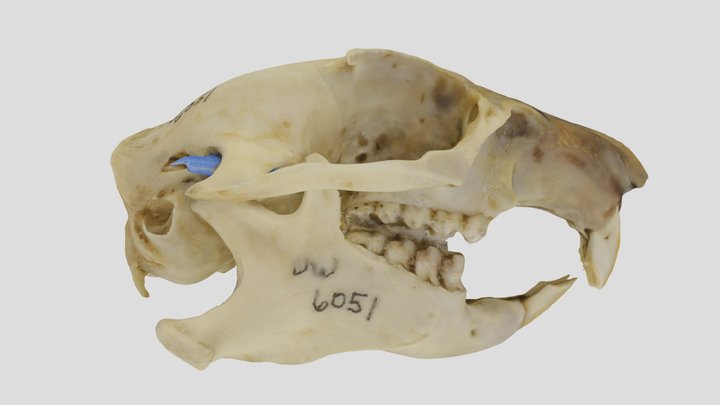
3D model
- Source
- Sketchfab
- Licence
- CC Attribution
- Commercial use
- cannot be read from the licence given — check the record
Smithsonian Open Access was not reached for this taxon, so this list is what the others held rather than everything there is.
The description on this site
- Licence
- CC BY-SA 4.0
This is what the site found, which is not the same as what exists.
Keep going
What may have been alongside itCynomys through timeFormations of the PleistoceneThe world it lived on
Occurrence data from the Paleobiology Database, CC BY 4.0. (Ord 1815)