Clypeaster
Clypeaster, common name "cake urchins" or "sea biscuits", is a genus of echinoderms belonging to the family Clypeasteridae.

Frédéric Ducarme · CC BY-SA 4.0 · via Wikipedia/Commons. May be a photograph of a specimen, or an artist’s reconstruction — an interpretation of a skeleton, since colour and soft tissue are almost never preserved.
On record
Recorded, not inferred- Sits inside
- ClypeasteridaePBDB
- Diet
- detritivorePBDB, for Clypeasteroida
- Life habit
- semi-infaunalPBDB, for Clypeasteroida
- Motility
- slow-movingPBDB, for Clypeasteroida
- Vision
- limitedPBDB, for Echinoidea
- Environment
- marinePBDB, for Echinodermata
Time the record covers
At least 37 million years on record.
The record covers at least 37.71 Mya to 129 ka. No occurrence read is dated outside 41.03 Mya to 11.7 ka.
293 occurrences of Clypeaster on record, most of them in the Miocene. The Paleobiology Database records this as a living group. Bar height is expected occurrences, not a count: each fossil is spread across the span it is dated to, so a tall narrow bar means tight dating and a low wide one means loose.
When
293 occurrences- Eocene1%
- Oligocene17%
- Miocene62%
- Pliocene15%
- Pleistocene5%
These are dates about fossils, not the animal: the record can only begin after it arose and end before it died out, so either end may reach further. Shares are expected occurrences: a fossil dated to a span is counted partly in each period it straddles. More on what this infers.
Found in
64 formations
- Tortonian Limestone Formation48
- Imperial Formation11
- Suwannee Limestone Formation · Vicksburg Group8
- Pirabas Formation8
- Upper Coralline Limestone Formation7
- Moneague Formation · White Limestone Group6
Loading coastlines…
The named rock units Clypeaster has been recovered from, largest first. Drawn where the rock is now, not where it formed. 40 further formations hold fewer occurrences each and are not listed. 99 occurrences have no formation on record, which is common for older literature.
Clypeaster and its relatives
MioceneWhere Clypeaster and its relatives were recorded in the Miocene.
Found in the same rock
1,616 taxa- Pecten54 sites
- Bryozoa49 sites
- Heterostegina38 sites
- Corallinophycidae31 sites
- Tarbellastraea31 sites
- Mesophyllum30 sites
- Spongites27 sites
- Titanoderma25 sites
- Amphistegina23 sites
- Lithothamnion22 sites
- Echinolampas21 sites
- Lithophyllum21 sites
- Conus19 sites
- Elphidium19 sites
- Chlamys18 sites
- Cibicides17 sites
- Homotrema13 sites
- Ostrea12 sites
- Strombus11 sites
- Glycymeris10 sites
- Oliva10 sites
- Prionocidaris10 sites
- Turritella10 sites
- Aequipecten9 sites
The Paleobiology Database records 209 sites for Clypeaster, and this reads all of them. The number is how many of those sites it was catalogued from too. The 24 sharing the most are listed.
This is not a list of everything alive at the time. It is only what has come out of the same ground as this animal and been written down.
Entered from
89 references- Palaeoenvironmental reconstruction based on non-geniculate coralline red algal assemblages in Miocene limestone of central Crete48
- Los Equiodermos fosiles de Cuba18
- Cenozoic echinoids of eastern United States11
- Diversity patterns and biostratigraphy of Cenozoic echinodems from Florida10
- Neogene and Quaternary geology of Aruba, Curaçao and Bonaire10
- Localidades fossiliferas da Formacao Pirabas (Mioceno Inferior)8
- Bemerkungen zur neogenen Fischfauna Kretas und Beschreibung zweier Fundstellen mit miozänen Mollusken, Echiniiden etc., Insel Kreta, Griechenland.8
- Tertiary echinoids of the Carrizo Creek region in the Colorado Desert8
- Ecospace variability along a carbonate platform at the northern boundary of the Miocene reef belt (Upper Langhian, Austria)7
- Echinoid assemblages as a tool for palaeoenvironmental reconstruction - an example from the Early Miocene of Egypt7
- Neogene Paleontology in the Northern Dominican Republic. 13. The Class Echinoidea (Echinodermata)7
- Sedimentology and palaeoecology of a Miocene coralline algal biostrome from the Maltese Islands7
Each of the 293 occurrences read was entered from one of these publications, ordered by how many each accounts for. This is not a search for papers mentioning the name. 77 further references are not listed. Entries link to doi.org where the Paleobiology Database holds an identifier, and to its own record where it does not. Relayed as the Paleobiology Database holds them, not checked against what they resolve to.
Media and terms
Media content2

Picture of Clypeaster
- Source
- Wikipedia/Commons
- Credit
- Frédéric Ducarme
- Licence
- CC BY-SA 4.0
- Commercial use
- the licence allows it
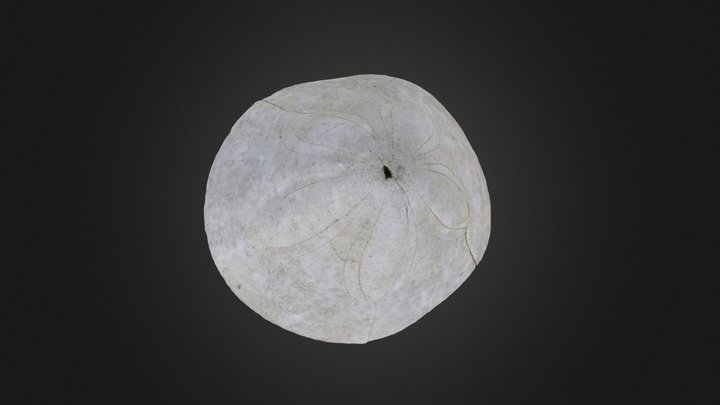
3D model
- Source
- Sketchfab
- Licence
- CC0 Public Domain
- Commercial use
- the licence allows it
The description on this site
- Source
- Wikipedia, “Clypeaster”
- Licence
- CC BY-SA 4.0
This is what the site found, which is not the same as what exists.
Keep going
What may have been alongside itClypeasteridae through timeFormations of the MioceneThe world it lived on
Occurrence data from the Paleobiology Database, CC BY 4.0. Lamarck 1801