Bassariscus
Bassariscus is a genus in the family Procyonidae. There are two extant species in the genus: the ringtail or ring-tailed cat and the cacomistle. Genetic studies have indicated that the closest relatives of Bassariscus are raccoons, from which they diverged about 10 million years ago in the Tortonian Age of the Miocene. The two lineages of Bassariscus are thought to have separated after only another two million years, making it the extant procyonid genus with the earliest diversification. Later diversification in the genus in the Pliocene and Pleistocene saw the emergence of two extinct species, Bassariscus casei and Bassariscus sonoitensis, respectively. Due to the more digitigrade stance of their legs compared to the plantigrade stance of other members of Procyonidae, some taxonomies place the genus as a separate family, Bassaricidae.. The name is a Greek word for fox ("bassaris") with a Latinized diminutive ending ("-iscus"). The genus was named by Elliott Coues in 1887, having previously been described by Lichtenstein in 1830 under the name Bassaris. Coues proposed the word "bassarisk" as the English term for animals in this genus. Its habitat includes semi-arid areas in the southwestern United States, the whole of Mexico, as well as moist tropical forests in Central America.

Uncredited · Public Domain · via Wikipedia/Commons. May be a photograph of a specimen, or an artist’s reconstruction — an interpretation of a skeleton, since colour and soft tissue are almost never preserved.
On record
Recorded, not inferred- Also called
- ringtailPBDB
- Sits inside
- ProcyoniniPBDB
- Diet
- frugivore, carnivorePBDB, for Procyonidae
- Life habit
- arborealPBDB
- Motility
- actively mobilePBDB, for Osteichthyes
- Environment
- terrestrialPBDB, for Eutheria
Time the record covers
At least 16 million years on record.
The record covers at least 16.3 Mya to 11.7 ka. No occurrence read is dated outside 23.04 Mya to 0 Mya.
51 occurrences of Bassariscus on record, most of them in the Miocene. The Paleobiology Database records this as a living group. Bar height is expected occurrences, not a count: each fossil is spread across the span it is dated to, so a tall narrow bar means tight dating and a low wide one means loose.
When
51 occurrences- Miocene48%
- Pliocene14%
- Pleistocene29%
- Holocene8%
These are dates about fossils, not the animal: the record can only begin after it arose and end before it died out, so either end may reach further. Shares are expected occurrences: a fossil dated to a span is counted partly in each period it straddles. More on what this infers.
Found in
17 formations
- Valentine Formation · Ogallala Group5
- Wood Mountain Formation3
- Mascall Formation3
- Rexroad Formation2
- Palm Spring Formation2
- Olcott Formation2
Loading coastlines…
The named rock units Bassariscus has been recovered from, largest first. Drawn where the rock is now, not where it formed. 22 occurrences have no formation on record, which is common for older literature.
Bassariscus and its relatives
MioceneWhere Bassariscus and its relatives were recorded in the Miocene.
Found in the same rock
945 taxa- Sylvilagus9 sites
- Equus8 sites
- Odocoileus8 sites
- Antrozous pallidus7 sites
- Canis latrans7 sites
- Hypohippus osborni7 sites
- Metechinus amplior7 sites
- Platygonus7 sites
- Plesippus simplicidens7 sites
- Thamnophis7 sites
- Aphelops megalodus6 sites
- Blastomeryx gemmifer6 sites
- Camelidae6 sites
- Camelops6 sites
- Eucastor tortus6 sites
- Gomphotheriidae6 sites
- Neotoma6 sites
- Otospermophilus variegatus6 sites
- Peromyscus6 sites
- Rana6 sites
- Sceloporus6 sites
- Sigmodon minor6 sites
- Spermophilus6 sites
- Tomarctus hippophaga6 sites
The Paleobiology Database records 50 sites for Bassariscus, and this reads all of them. The number is how many of those sites it was catalogued from too. The 24 sharing the most are listed.
This is not a list of everything alive at the time. It is only what has come out of the same ground as this animal and been written down.
Entered from
36 references- Bassariscus and Probassariscus (Mammalia, Carnivora, Procyonidae) from the early Barstovian (Middle Miocene)7
- Synonymies and reidentifications of North American fossil mammals5
- Vertebrate biostratigraphy of the Ogallala Group in Nebraska4
- Biostratigraphy of Blancan and Irvingtonian mammals in the Fish Creek-Vallecito Creek section, southern California, and a review of the Blancan-Irvingtonian boundary2
- Late Tertiary basins and vertebrate faunas along the Nevada-Utah border2
- Mid to late Holocene mammals from Bighorn Cave, Arizona1
- New record of Bassariscus ogallalae (Carnivora: Procyonidae) from the Ogallala Group (Miocene) of Ellis County, Kansas, with comments on variation within Bassariscus1
- Preliminary taphonomic analyses of the mammalian microfauna.1
- Magnetic stratigraphy of the late Pliocene mammal-bearing deposits from Gypsum Ridge, San Bernardino County, California1
- A New Species of Capromeryx (Mammalia: Artiodactyla) from the Taunton Local Fauna of Washington, and the Correlation with Other Blancan Faunas of Washington and Idaho1
- A catalogue of late Quaternary Vertebrates from California: Part Two, Mammals1
- Sigmodont rodents (Mammalia; Muroidea; Sigmodontinae) from the Pliocene (early Blancan) Verde Formation, Arizona1
Each of the 51 occurrences read was entered from one of these publications, ordered by how many each accounts for. This is not a search for papers mentioning the name. 24 further references are not listed. Entries link to doi.org where the Paleobiology Database holds an identifier, and to its own record where it does not. Relayed as the Paleobiology Database holds them, not checked against what they resolve to.
Media and terms
Media content2

Picture of Bassariscus
- Source
- Wikipedia/Commons
- Credit
- nobody named on the record
- Licence
- Public Domain
- Commercial use
- the licence allows it
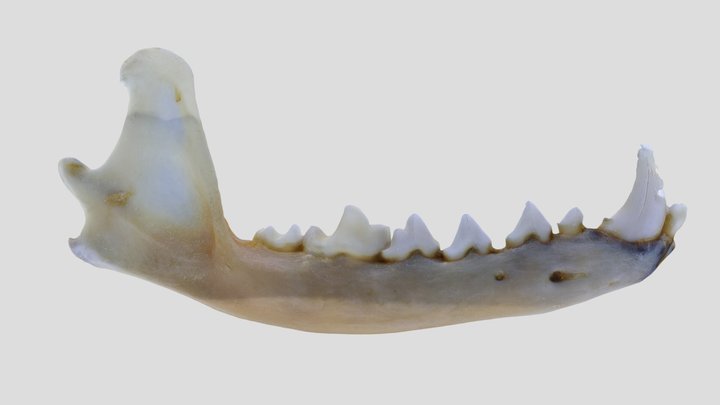
3D model
- Source
- Sketchfab
- Licence
- CC Attribution
- Commercial use
- cannot be read from the licence given — check the record
Smithsonian Open Access and MorphoSource were not reached for this taxon, so this list is what the others held rather than everything there is.
The description on this site
- Source
- Wikipedia, “Bassariscus”
- Licence
- CC BY-SA 4.0
This is what the site found, which is not the same as what exists.
Keep going
What may have been alongside itProcyonini through timeFormations of the MioceneThe world it lived on
Occurrence data from the Paleobiology Database, CC BY 4.0. Coues 1887