Acer negundo
Acer negundo, also known as the box elder, boxelder maple, Manitoba maple or ash-leaved maple, is a species of maple native to North America from Canada to Honduras. It is a fast-growing, short-lived tree with opposite, ash-like compound leaves. It is sometimes considered a weedy or invasive species, and has been naturalized throughout much of the world, including South America, Australia, New Zealand, South Africa, much of Europe, and parts of Asia.

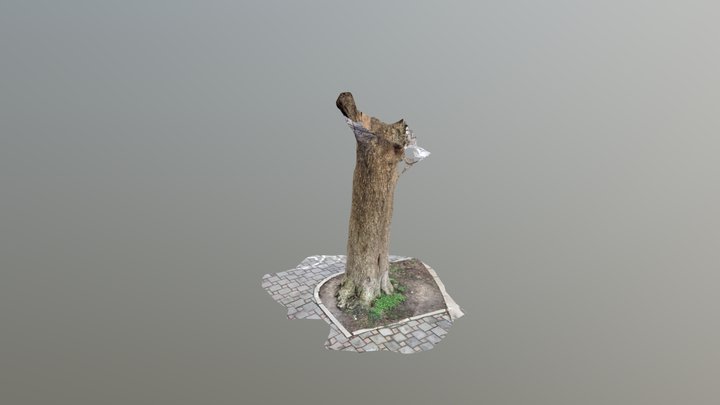
CK Kelly · CC BY 4.0 · via Wikipedia/Commons. May be a photograph of a specimen, or an artist’s reconstruction — an interpretation of a skeleton, since colour and soft tissue are almost never preserved.
On record
Recorded, not inferred- Sits inside
- AcerPBDB
- Diet
- "photoautotroph"PBDB, for Angiospermae
Time the record covers
At least 28 million years on record.
The record covers at least 33.9 Mya to 5.333 Mya. No occurrence read is dated outside 37.71 Mya to 2.58 Mya.
5 occurrences of Acer negundo on record. The Paleobiology Database records this as a living group, and the chart stops with its fossils rather than at the present. Bar height is expected occurrences, not a count: each fossil is spread across the span it is dated to, so a tall narrow bar means tight dating and a low wide one means loose.
When
5 occurrencesThese are dates about fossils, not the animal: the record can only begin after it arose and end before it died out, so either end may reach further. Shares are expected occurrences: a fossil dated to a span is counted partly in each period it straddles. More on what this infers.
Found in the same rock
92 taxa- <not identified>3 sites
- Alnus3 sites
- Apiaceae3 sites
- Carya3 sites
- Cistaceae3 sites
- Engelhardia3 sites
- Ericaceae3 sites
- Liquidambar3 sites
- Myrica3 sites
- Oleaceae3 sites
- Osmunda3 sites
- Pinus3 sites
- Polypodium3 sites
- Pterocarya3 sites
- Quercus3 sites
- Anthoceros2 sites
- Asteraceae2 sites
- Castanea2 sites
- Cathaya2 sites
- Cladrastis2 sites
- Cupressaceae2 sites
- Dicotyledoneae2 sites
- Dicotylophyllum2 sites
- Fabaceae2 sites
The Paleobiology Database records 5 sites for Acer negundo, and this reads all of them. The number is how many of those sites it was catalogued from too. The 24 sharing the most are listed.
This is not a list of everything alive at the time. It is only what has come out of the same ground as this animal and been written down.
Entered from
2 references- Niche evolution versus niche conservatism and habitat loss determine persistence and extirpation in late Neogene European Fagaceae3
- Paleoecological and Floristic Heterogeneity in the Plant-Fossil Record - An Analysis Based on the Eocene of Washington2
Each of the 5 occurrences read was entered from one of these publications, ordered by how many each accounts for. This is not a search for papers mentioning the name. Entries link to doi.org where the Paleobiology Database holds an identifier, and to its own record where it does not. Relayed as the Paleobiology Database holds them, not checked against what they resolve to.
Media and terms
Media content2

Picture of Acer negundo
- Source
- Wikipedia/Commons
- Credit
- CK Kelly
- Licence
- CC BY 4.0
- Commercial use
- the licence allows it
Smithsonian Open Access and MorphoSource were not reached for this taxon, so this list is what the others held rather than everything there is.
The description on this site
- Licence
- CC BY-SA 4.0
This is what the site found, which is not the same as what exists.
Keep going
What may have been alongside itAcer through timeThe world it lived on
Occurrence data from the Paleobiology Database, CC BY 4.0. Linnaeus 1753