Viperidae
Vipers are snakes in the family Viperidae, found in most parts of the world, except for Antarctica, Australia, Hawaii, Madagascar, Ireland, and various other isolated islands. All vipers are venomous, and have long, hinged fangs that permit deep envenomation of their prey. Three subfamilies are currently recognized. They are also known as viperids. The name "viper" is derived from the Latin word vipera, -ae, also meaning viper, possibly from vivus ("living") and parere, referring to the trait viviparity common in vipers like most of the species of Boidae. The earliest known vipers are believed to have diverged from the rest of the clade Caenophidia in the early Eocene.

MathKnight · CC BY-SA 4.0 · via Wikipedia/Commons. May be a photograph of a specimen, or an artist’s reconstruction — an interpretation of a skeleton, since colour and soft tissue are almost never preserved.
On record
Recorded, not inferred- Also called
- viperPBDB
- Sits inside
- ColubroideaPBDB
- Diet
- carnivorePBDB
- Life habit
- ground dwelling, solitaryPBDB
- Motility
- actively mobilePBDB, for Osteichthyes
- Environment
- terrestrialPBDB
Time the record covers
At least 23 million years on record.
The record covers at least 23.04 Mya to 11.7 ka. No occurrence read is dated outside 27.3 Mya to 0 Mya.
56 occurrences of Viperidae on record, most of them in the Miocene. The Paleobiology Database records this as a living group. Bar height is expected occurrences, not a count: each fossil is spread across the span it is dated to, so a tall narrow bar means tight dating and a low wide one means loose.
When
56 occurrences- Oligocene2%
- Miocene63%
- Pliocene14%
- Pleistocene19%
- Holocene2%
These are dates about fossils, not the animal: the record can only begin after it arose and end before it died out, so either end may reach further. Shares are expected occurrences: a fossil dated to a span is counted partly in each period it straddles. More on what this infers.
Found in
17 formations
- Upper Freshwater Molasse Formation · Molasse Group3
- Fleming Formation2
- Monte Hermoso Formation2
- Olduvai Formation1
- Valentine Formation · Ogallala Group1
- Dam Formation1
Loading coastlines…
The named rock units Viperidae has been recovered from, largest first. Drawn where the rock is now, not where it formed. 35 occurrences have no formation on record, which is common for older literature.
Viperidae and its relatives
MioceneWhere Viperidae and its relatives were recorded in the Miocene.
Found in the same rock
1,374 taxa- Colubridae17 sites
- Lacertidae13 sites
- Colubrinae12 sites
- Lacerta11 sites
- Ophisaurus10 sites
- Copemys8 sites
- Latonia gigantea8 sites
- Natricinae8 sites
- Pseudopus8 sites
- Scolecophidia8 sites
- Vipera8 sites
- Blackia miocaenica7 sites
- Elapidae7 sites
- Emydidae7 sites
- Pelobates7 sites
- Pelophylax7 sites
- Pseudotheridomys7 sites
- Anguis fragilis6 sites
- Anura6 sites
- Democricetodon mutilus6 sites
- Rana6 sites
- Serpentes6 sites
- Soricidae6 sites
- Testudo6 sites
The Paleobiology Database records 53 sites for Viperidae, and this reads all of them. The number is how many of those sites it was catalogued from too. The 24 sharing the most are listed.
This is not a list of everything alive at the time. It is only what has come out of the same ground as this animal and been written down.
Entered from
46 references- Amphibians and Squamates from the Miocene of Felsőtárkány Basin, N-Hungary4
- The Early Miocene herpetofauna (Amphibia and Squamata) from Sibnica, Serbia3
- Biostratigraphy and sedimentology of the Fluviatile Untere Serie (Early and Middle Miocene) in the central part of the North Alpine Foreland Basin: implications for palaeoenvironment and climate2
- Amphibians and squamate reptiles from the late early Miocene (MN 4) of Béon 1 (Montréal-du-Gers, southwestern France)2
- Papago Springs Cave revisited, part II: vertebrate paleofauna2
- Cainozoic mammals from coastal Namaqualand, South Africa2
- Notes on the amphibian and reptilian fauna of the Polish Pliocene and Early Pleistocene2
- A new Miocene fauna of snakes from eastern Siberia, Russia. Was the snake fauna largely homogenous in Eurasia during the Miocene1
- Snake fangs from the Lower Miocene of Germany: evolutionary stability of perfect weapons1
- Squamate reptiles from the early Miocene of Arrisdrift (Namibia)1
- Première découverte de Viperidae (Reptilia, Serpentes) dans les îles Baléares (Espagne): des vipères du Néogène de Minorque. Description d’une nouvelle espèce du Pliocène [The first record of viperid snakes (Reptilia, Serpentes) from the Balearic Islands (Spain): fossils from the Neogene, with description of a new species from the Pliocene]1
- The Tucker Borrow Pit: Paleontology and Stratigraphy of a Plio-Pleistocene fossil site in Brevard County, Florida1
Each of the 56 occurrences read was entered from one of these publications, ordered by how many each accounts for. This is not a search for papers mentioning the name. 34 further references are not listed. Entries link to doi.org where the Paleobiology Database holds an identifier, and to its own record where it does not. Relayed as the Paleobiology Database holds them, not checked against what they resolve to.
Media and terms
Media content2

Picture of Viperidae
- Source
- Wikipedia/Commons
- Credit
- MathKnight
- Licence
- CC BY-SA 4.0
- Commercial use
- the licence allows it
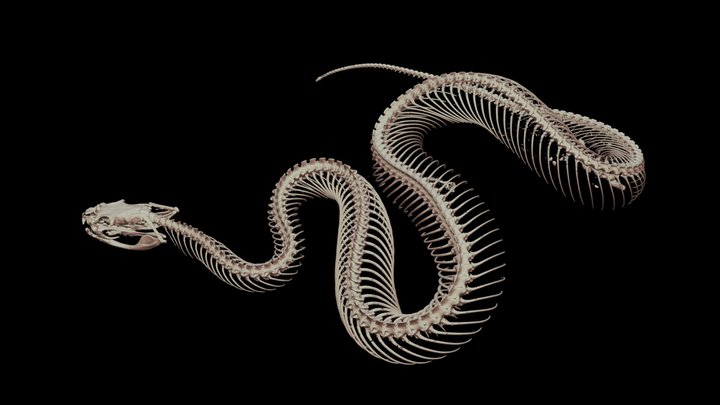
3D model
- Source
- Sketchfab
- Licence
- CC Attribution-NonCommercial-ShareAlike
- Commercial use
- the licence does not allow it
Smithsonian Open Access was not reached for this taxon, so this list is what the others held rather than everything there is.
The description on this site
- Source
- Wikipedia, “Viper”
- Licence
- CC BY-SA 4.0
This is what the site found, which is not the same as what exists.
Keep going
What may have been alongside itColubroidea through timeFormations of the MioceneThe world it lived on
Occurrence data from the Paleobiology Database, CC BY 4.0. Oppel 1811