Triloculina trigonula

via iDigBio · CC BY · via iDigBio. May be a photograph of a specimen, or an artist’s reconstruction — an interpretation of a skeleton, since colour and soft tissue are almost never preserved.
On record
Recorded, not inferred- Sits inside
- TriloculinaPBDB
- Diet
- omnivorePBDB, for Foraminifera
- Life habit
- semi-infaunalPBDB, for Foraminifera
- Motility
- stationaryPBDB, for Foraminifera
Time the record covers
At least 55 million years on record.
The record covers at least 56 Mya to 11.7 ka. No occurrence read is dated outside 66 Mya to 0 Mya.
44 occurrences of Triloculina trigonula on record, most of them in the Oligocene. The Paleobiology Database records this as a living group. Bar height is expected occurrences, not a count: each fossil is spread across the span it is dated to, so a tall narrow bar means tight dating and a low wide one means loose.
When
44 occurrencesThese are dates about fossils, not the animal: the record can only begin after it arose and end before it died out, so either end may reach further. Shares are expected occurrences: a fossil dated to a span is counted partly in each period it straddles. More on what this infers.
Found in
6 formations
- Qom Formation Formation25
- Bathurst Formation1
- Escudo de Veraguas Formation · Bocas del Toro Group1
- Qom Formation1
- Timms Point Silt Formation1
- Puch Formation1
Loading coastlines…
The named rock units Triloculina trigonula has been recovered from, largest first. Drawn where the rock is now, not where it formed. 14 occurrences have no formation on record, which is common for older literature.
Triloculina trigonula and its relatives
OligoceneWhere Triloculina trigonula and its relatives were recorded in the Oligocene.
Found in the same rock
330 taxa- Quinqueloculina30 sites
- Elphidium28 sites
- Pyrgo28 sites
- Borelis27 sites
- Triloculina tricarinata27 sites
- Dendritina26 sites
- Neorotalia26 sites
- Textularia26 sites
- Anthozoa25 sites
- Archaias25 sites
- Austrotrillina25 sites
- Bryozoa25 sites
- Haplophragmium25 sites
- Peneroplis25 sites
- Mollusca24 sites
- Corallinophycidae23 sites
- Rotalia6 sites
- Globigerina4 sites
- Polystrata alba4 sites
- Acicularia3 sites
- Acicularia antiqua3 sites
- Discorbis3 sites
- Distichoplax biserialis3 sites
- Epiphaxum3 sites
The Paleobiology Database records 35 sites for Triloculina trigonula, and this reads all of them. The number is how many of those sites it was catalogued from too. The 24 sharing the most are listed.
This is not a list of everything alive at the time. It is only what has come out of the same ground as this animal and been written down.
Entered from
13 references- Sedimentary facies and depositional environments of the Oligocene–early Miocene marine Qom Formation, Central Iran Back-Arc Basin, Iran (northeastern margin of the Tethyan Seaway)25
- Micropaleontology of four sections south of Qoseir, Egypt5
- Contribution to the knowledge of the Palaeogene reef-complexes of the Myjava-Hricov-Haligovka Zone (West Carpathians)3
- The Fossil Coral Reefs of Al-Aqaba, Jordan2
- Lower Oligocene coralline algae of the Uromieh section (Qom Formation, NW Iran) and the oldest record of Titanoderma pustulatum (Corallinophycidae, Rhodophyta)1
- Sites U1428 and U14291
- Facies and faunal assemblage changes in response to the Holocene transgression in the Lagoon of Mayotte (Comoro Archipelago, SW Indian Ocean)1
- A paleobiotic survey of Caribbean faunas from the Neogene of the Isthmus of Panama1
- Middle Eocene foraminifer, mollusc and ostracod fauna from the Csordakut Basin (Gerecse Mountains, Hungary): palaeoenvironments recorded in a transgressive sequence1
- Les formations recifales coralliennes du Miocene superieur d'Algerie et du Maroc [Upper Miocene coral reef formations from Algeria and Morocco]1
- The Tertiary limestone of the southern coastal regions of Cape Province, South Africa1
- Hunting Survey Corporation, LTD, 19611
Each of the 44 occurrences read was entered from one of these publications, ordered by how many each accounts for. This is not a search for papers mentioning the name. 1 further reference is not listed. Entries link to doi.org where the Paleobiology Database holds an identifier, and to its own record where it does not. Relayed as the Paleobiology Database holds them, not checked against what they resolve to.
Media and terms
Media content2
Picture of Triloculina trigonula
- Source
- iDigBio
- Credit
- via iDigBio
- Licence
- CC BY
- Commercial use
- the licence allows it
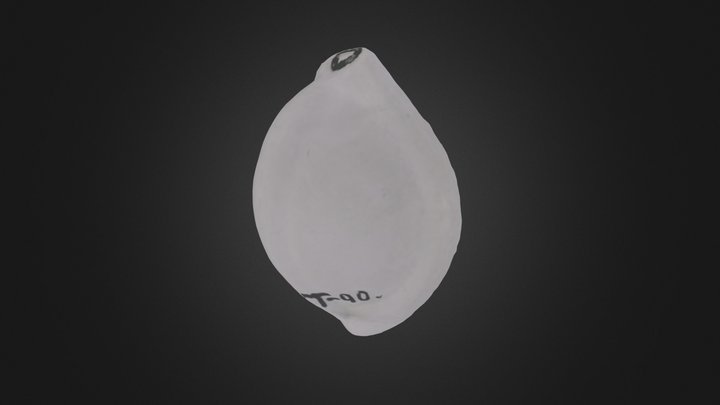
3D model
- Source
- Sketchfab
- Licence
- CC0 Public Domain
- Commercial use
- the licence allows it
Smithsonian Open Access and MorphoSource were not reached for this taxon, so this list is what the others held rather than everything there is.
This is what the site found, which is not the same as what exists.
Keep going
What may have been alongside itTriloculina through timeFormations of the OligoceneThe world it lived on
Occurrence data from the Paleobiology Database, CC BY 4.0. Lamarck 1804