Terebratulida
Terebratulids are one of only three living orders of articulate brachiopods, the others being the Rhynchonellida and the Thecideida. Craniida and Lingulida include living brachiopods, but are inarticulates. The name, Terebratula, may be derived from the Latin "terebra", meaning "hole-borer". The perceived resemblance of terebratulid shells to ancient Roman oil lamps gave the brachiopods their common name "lamp shell".

wilson44691 · CC0 · via Wikipedia/Commons. May be a photograph of a specimen, or an artist’s reconstruction — an interpretation of a skeleton, since colour and soft tissue are almost never preserved.
On record
Recorded, not inferred- Sits inside
- RhynchonellataPBDB
- Diet
- suspension feederPBDB
- Life habit
- low-level epifaunalPBDB
- Motility
- stationaryPBDB
- Vision
- blindPBDB, for Rhynchonellata
- Environment
- marinePBDB, for Lophophorata
Time the record covers
At least 419 million years on record.
The record covers at least 419.62 Mya to 129 ka. No occurrence read is dated outside 426.7 Mya to 0 Mya.
12,000+ occurrences of Terebratulida on record. The Paleobiology Database records this as a living group. Bar height is expected occurrences, not a count: each fossil is spread across the span it is dated to, so a tall narrow bar means tight dating and a low wide one means loose.
When
12,000 occurrences read- Silurianunder 1%
- Devonian7%
- Carboniferous4%
- Permian26%
- Early Triassicunder 1%
- Middle Triassic3%
- Late Triassic6%
- Early Jurassic16%
- Middle Jurassic13%
- Late Jurassic6%
- Early Cretaceous7%
- Late Cretaceous3%
- Paleocene2%
- Eocene3%
- Oligoceneunder 1%
- Miocene2%
- Plioceneunder 1%
- Pleistoceneunder 1%
- Holoceneunder 1%
These are dates about fossils, not the animal: the record can only begin after it arose and end before it died out, so either end may reach further. Shares are expected occurrences: a fossil dated to a span is counted partly in each period it straddles. The read hit its cap, so every figure above is a floor and the shares are of the occurrences read. More on what this infers.
Found in
at least 1010 formations
- Wargal Formation579
- Dhruma Formation · Shaqra Group373
- Hierlatz Formation190
- Bell Canyon Formation187
- Word Formation179
- Turmiel Formation163
Loading coastlines…
The named rock units Terebratulida has been recovered from, largest first. Drawn where the rock is now, not where it formed. The read hit its cap, so each count is a floor. 986 further formations hold fewer occurrences each and are not listed. 3,675 occurrences have no formation on record, which is common for older literature.
Found in the same rock
1,488 taxa- Taimyrothyris64 sites
- Camptonectes62 sites
- Entolium orbiculare61 sites
- Ammonoidea60 sites
- Isognomon60 sites
- Astarte56 sites
- Pleuromya51 sites
- Bryozoa44 sites
- Pinna44 sites
- Belemnitida42 sites
- Buchia mosquensis42 sites
- Fenestella42 sites
- Porifera37 sites
- Grammatodon35 sites
- Serpula intestinalis33 sites
- Hartwellia32 sites
- Liostrea31 sites
- Dielasma29 sites
- Pleuromya uniformis29 sites
- Grammatodon (Cosmetodon) keyserlingii28 sites
- Isocyprina28 sites
- Spirifer28 sites
- Lima27 sites
- Crinoidea26 sites
The Paleobiology Database records at least 1,094 sites for Terebratulida, and this reads 240 of them. The number is how many of those sites it was catalogued from too. The 24 sharing the most are listed.
This is not a list of everything alive at the time. It is only what has come out of the same ground as this animal and been written down.
Entered from
at least 1,046 references- Permian Brachiopods of West Texas, VI798
- Brachiopoda and Mollusca from the Productus limestones of the Salt Range747
- The Pliensbachian brachiopods of the Bakony Mountains (Hungary)476
- End-Cretaceous brachiopod extinctions in the chalk of Denmark268
- Jurassic brachiopods of Saudi Arabia222
- El Jurasico Inferior en la seccion de Almonacid de la Cuba (sector central de la Cordillera Iberica, Zaragoza, Espana) [Lower Jurassic at the Almonacid de la Cuba section (central sector of the Iberian Range, Zaragoza, Spain)]211
- Le Jurassique D`Arabie Centrale199
- Palokologie und zeitliche Verbreitung benthischer Faunengemeinschaften im Unterjura von Chile186
- Los braquiópodos del tránsito Jurásico Inferior-Jurásico Medio de la Cuenca Lusitánica (Portugal)148
- Australian Permian terebratuloids143
- Succession of the Tithonian to Berriasian brachiopod faunas at Rogoznik, Pieniny Klippen Belt137
- Palökologie benthischer Faunen aus dem Unter-Toarc SW-Europas136
Each of the 12,000 occurrences read was entered from one of these publications, ordered by how many each accounts for. This is not a search for papers mentioning the name. That read hit its cap, so each count is a floor. 1,034 further references are not listed. Entries link to doi.org where the Paleobiology Database holds an identifier, and to its own record where it does not. Relayed as the Paleobiology Database holds them, not checked against what they resolve to.
Media and terms
Media content2

Picture of Terebratulida
- Source
- Wikipedia/Commons
- Credit
- wilson44691
- Licence
- CC0
- Commercial use
- the licence allows it
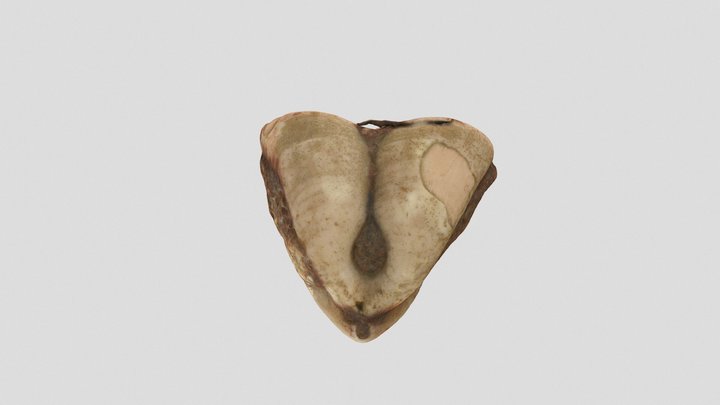
3D model
- Source
- Sketchfab
- Licence
- CC Attribution
- Commercial use
- cannot be read from the licence given — check the record
Smithsonian Open Access was not reached for this taxon, so this list is what the others held rather than everything there is.
The description on this site
- Licence
- CC BY-SA 4.0
This is what the site found, which is not the same as what exists.
Keep going
What may have been alongside itRhynchonellata through timeThe world it lived on
Occurrence data from the Paleobiology Database, CC BY 4.0. Waagen 1883