Sillago
Sillago is a genus of fish in the family Sillaginidae and the only non-monotypic genus in the family. Distinguishing the species can be difficult, with many similar in appearance and colour, forcing the use of swim bladder morphology as a definitive feature. All species are benthic in nature and generally coastal fish, living in shallow, protected waters although there are exceptions. Minor fisheries exist around various species of Sillago, making them of minor importance in most of their range. This genus has the widest distribution of any smelt-whiting genus, spanning much of the Indo-Pacific. The genus ranges from the east coast of Africa to Japan in the east and Southern Australia in the south, with most species concentrated around South East Asia, the Indonesian Archipelago and Australia. Many species have overlapping distribution, often making positive identification hard.

kamakura · CC BY-SA 3.0 · via Wikipedia/Commons. May be a photograph of a specimen, or an artist’s reconstruction — an interpretation of a skeleton, since colour and soft tissue are almost never preserved.
On record
Recorded, not inferred- Sits inside
- SillaginidaePBDB
- Motility
- actively mobilePBDB, for Osteichthyes
Time the record covers
At least 38 million years on record.
The record covers at least 39.1 Mya to 129 ka. No occurrence read is dated outside 42.6 Mya to 0 Mya.
44 occurrences of Sillago on record, most of them in the Miocene. The Paleobiology Database records this as a living group. Bar height is expected occurrences, not a count: each fossil is spread across the span it is dated to, so a tall narrow bar means tight dating and a low wide one means loose.
When
44 occurrencesThese are dates about fossils, not the animal: the record can only begin after it arose and end before it died out, so either end may reach further. Shares are expected occurrences: a fossil dated to a span is counted partly in each period it straddles. More on what this infers.
Found in
15 formations
- Port Campbell Limestone Formation3
- Jan Juc Formation2
- Southburn Sand Formation2
- Yokosuka Formation2
- Miri Formation2
- Black Rock Sandstone Formation1
Loading coastlines…
The named rock units Sillago has been recovered from, largest first. Drawn where the rock is now, not where it formed. 23 occurrences have no formation on record, which is common for older literature.
Sillago and its relatives
MioceneWhere Sillago and its relatives were recorded in the Miocene.
Found in the same rock
740 taxa- Conger6 sites
- Engraulis japonicus6 sites
- Apogonidae5 sites
- Pomadasys5 sites
- Acropoma serrata4 sites
- Ariidae4 sites
- Auchenoceros bicaudatus4 sites
- Carapus praecursor4 sites
- Carcharias taurus4 sites
- Diaphus4 sites
- Euclichthys novaezeelandiae4 sites
- Gobiidae4 sites
- Gobius4 sites
- Gobius copiosus4 sites
- Gobius urbanus4 sites
- Hemerocoetes minutus4 sites
- Myliobatis4 sites
- Nibea4 sites
- Nolfophidion refertus4 sites
- Pomadasyidarum longicaudatus4 sites
- Advenasciaena bruneiana3 sites
- Amblychaeturichthys sciistius3 sites
- Ammodytes3 sites
- Apogon3 sites
The Paleobiology Database records 41 sites for Sillago, and this reads all of them. The number is how many of those sites it was catalogued from too. The 24 sharing the most are listed.
This is not a list of everything alive at the time. It is only what has come out of the same ground as this animal and been written down.
Entered from
15 references- Reconstruction of the fossil marine bony fish fauna (Teleostei) from the Eocene to Pleistocene of New Zealand by means of otoliths. With studies of Recent congroid, morid and trachinoid otoliths9
- 541. Some Pleistocene fish-otoliths from the Boso and Miura peninsulas7
- Fish otoliths from the Tertiary strata of Victoria, Australia7
- Tertiäre Otolithen aus South Australia und Victoria (Australien)6
- Late Miocene teleost fish otoliths from Brunei Darussalam (Borneo) and their implications for palaeoecology and palaeoenvironmental conditions3
- Fish otolith record reveals possible tropical-subtropical fish community in temperate Japan during the exceptionally warm Last Interglacial period2
- Otolithes de poissons du paléocanyon de saubrigues (chattien à langhien), aquitaine méridionale, France2
- Late Miocene otoliths from northern Taiwan: insights into the rarely known Neogene coastal fish community of the subtropical northwest Pacific1
- Fossil fish otoliths from the Chibanian Miyata Formation, Kanagawa Prefecture, Japan, with comments on the paleoenvironment1
- Common early Pleistocene fish otoliths from Niubu in Chia-Yi County, southwestern Taiwan1
- Lower Badenian fish otoliths of the Styrian and Lavanttal basins, with a revision of Weinfurter's type material1
- Die Alzey-Formation der klassichen Lokalitat Wlschberg bei Waldbockelheim (Rupelium, Oligozan, Mainzer Becken) - Ergebnisse neuer Grabungen1
Each of the 44 occurrences read was entered from one of these publications, ordered by how many each accounts for. This is not a search for papers mentioning the name. 3 further references are not listed. Entries link to doi.org where the Paleobiology Database holds an identifier, and to its own record where it does not. Relayed as the Paleobiology Database holds them, not checked against what they resolve to.
Media and terms
Media content2

Picture of Sillago
- Source
- Wikipedia/Commons
- Credit
- kamakura
- Licence
- CC BY-SA 3.0
- Commercial use
- the licence allows it
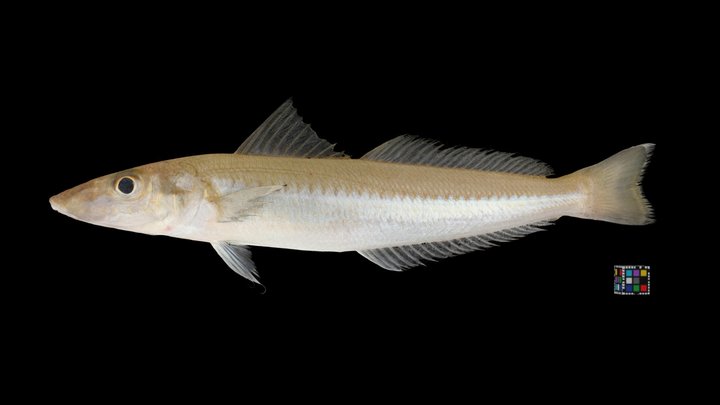
3D model
- Source
- Sketchfab
- Licence
- CC0 Public Domain
- Commercial use
- the licence allows it
Smithsonian Open Access and MorphoSource were not reached for this taxon, so this list is what the others held rather than everything there is.
The description on this site
- Source
- Wikipedia, “Sillago”
- Licence
- CC BY-SA 4.0
This is what the site found, which is not the same as what exists.
Keep going
What may have been alongside itSillaginidae through timeFormations of the MioceneThe world it lived on
Occurrence data from the Paleobiology Database, CC BY 4.0. Cuvier 1817