Scalaria

via iDigBio · CC0 · via iDigBio. May be a photograph of a specimen, or an artist’s reconstruction — an interpretation of a skeleton, since colour and soft tissue are almost never preserved.
On record
Recorded, not inferred- Sits inside
- EpitoniidaePBDB
- Diet
- carnivorePBDB, for Epitoniidae
- Life habit
- low-level epifaunalPBDB, for Epitoniidae
- Motility
- slow-movingPBDB, for Epitoniidae
- Vision
- limitedPBDB, for Gastropoda
Time the record covers
At least 236 million years on record.
The record covers at least 237 Mya to 129 ka. No occurrence read is dated outside 247 Mya to 0 Mya.
84 occurrences of Scalaria on record, most of them in the Late Cretaceous. The Paleobiology Database records this as a living group. Bar height is expected occurrences, not a count: each fossil is spread across the span it is dated to, so a tall narrow bar means tight dating and a low wide one means loose.
When
84 occurrences- Middle Triassic1%
- Late Triassic12%
- Early Cretaceous13%
- Late Cretaceous20%
- Paleocene10%
- Eocene19%
- Oligocene5%
- Miocene9%
- Pliocene5%
- Pleistocene6%
- Holoceneunder 1%
These are dates about fossils, not the animal: the record can only begin after it arose and end before it died out, so either end may reach further. Shares are expected occurrences: a fossil dated to a span is counted partly in each period it straddles. More on what this infers.
Found in
35 formations
- Cassian Formation6
- Kirkwood Formation3
- Okarahia Sandstone Formation · Mata Group3
- Coralline Crag Formation3
- Czarnorzeki Beds Formation2
- Unnamed Formation2
Loading coastlines…
The named rock units Scalaria has been recovered from, largest first. Drawn where the rock is now, not where it formed. 11 further formations hold fewer occurrences each and are not listed. 28 occurrences have no formation on record, which is common for older literature.
Scalaria and its relatives
Late CretaceousWhere Scalaria and its relatives were recorded in the Late Cretaceous.
Found in the same rock
3,117 taxa- Natica18 sites
- Ostrea17 sites
- Dentalium14 sites
- Fusus13 sites
- Arca12 sites
- Astarte12 sites
- Cardium12 sites
- Lima12 sites
- Aporrhais11 sites
- Mytilus11 sites
- Nucula11 sites
- Pecten11 sites
- Turbo11 sites
- Lucina10 sites
- Turritella10 sites
- Cerithium9 sites
- Pleurotomaria9 sites
- Thracia9 sites
- Cucullaea8 sites
- Panopea8 sites
- Terebratula8 sites
- Trigonia8 sites
- Corbula7 sites
- Nuculana7 sites
The Paleobiology Database records 66 sites for Scalaria, and this reads all of them. The number is how many of those sites it was catalogued from too. The 24 sharing the most are listed.
This is not a list of everything alive at the time. It is only what has come out of the same ground as this animal and been written down.
Entered from
46 references- Jura Vaudois et Neuchatelois8
- Suite des mémoires sur les fossiles des environs de Paris6
- Die Gastropoden der Schichten von St. Cassian der südalpinen Trias. II. Theil4
- Note sur la géologie et la paléontologie de la Patagonie3
- On the fossil Reptilia of New Zealand3
- Geologically oldest Pediomyoidea (Mammalia, Marsupialiformes) from the Late Cretaceous of North America, with implications for taxonomy and diet of earliest Late Cretaceous mammals2
- The Piripauan and Haumurian stratotypes (Mata Series, Upper Cretaceous) and correlative sequences in the Haumuri Bluff district, South Marlborough (S56)2
- Catalogue of the Paleocene and Eocene mollusca of the southern and eastern United States. Part 1. Pelecypoda, Amphineura, Pteropoda, Scaphopoda and Cephalopoda2
- Mollusca of the Babica Clays (Paleocene) of the Middle Carpathians. Pt. I. Gastropoda2
- Geology of San Nicolas Island, California2
- Zgornjeeocenska favna iz okolice Drnisa [Upper Eocene fauna from Drnis area]2
- The stratigraphy of the southern Cameroons2
Each of the 84 occurrences read was entered from one of these publications, ordered by how many each accounts for. This is not a search for papers mentioning the name. 34 further references are not listed. Entries link to doi.org where the Paleobiology Database holds an identifier, and to its own record where it does not. Relayed as the Paleobiology Database holds them, not checked against what they resolve to.
Media and terms
Media content2
Picture of Scalaria
- Source
- iDigBio
- Credit
- via iDigBio
- Licence
- CC0
- Commercial use
- the licence allows it
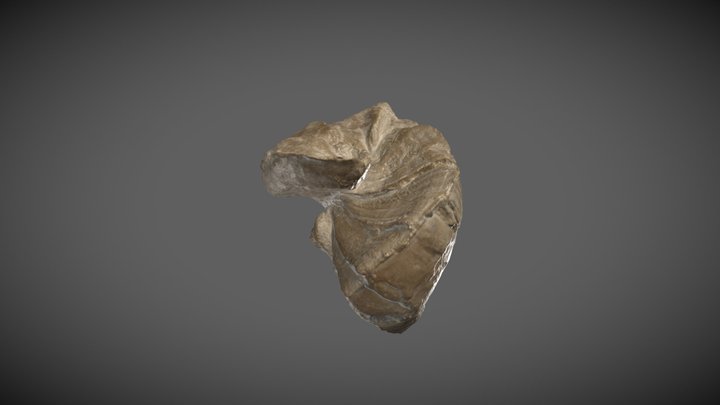
3D model
- Source
- Sketchfab
- Credit
- EDDyLab @ULiege
- Licence
- CC Attribution-NonCommercial
- Commercial use
- the licence does not allow it
MorphoSource was not reached for this taxon, so this list is what the others held rather than everything there is.
This is what the site found, which is not the same as what exists.
Keep going
What may have been alongside itEpitoniidae through timeFormations of the Late CretaceousThe world it lived on
Occurrence data from the Paleobiology Database, CC BY 4.0. Lamarck 1801