Pleurodeles waltl
The Iberian ribbed newt, also known commonly as the Spanish ribbed newt and gallipato in Spanish, is a species of salamander in the subfamily Pleurodelinae of the family Salamandridae. The species is native to the central and southern Iberian Peninsula and northern Morocco. It is the largest European newt species. It is known for its defense mechanisms where their sharp ribs puncture through its sides when in a defensive state, and as such is also called the sharp-ribbed newt and the sharp-ribbed salamander.

Uncredited · CC BY-SA 3.0 · via Wikipedia/Commons. May be a photograph of a specimen, or an artist’s reconstruction — an interpretation of a skeleton, since colour and soft tissue are almost never preserved.
On record
Recorded, not inferred- Also called
- Iberian ribbed newtPBDB
- Sits inside
- PleurodelesPBDB
- Diet
- carnivorePBDB, for Temnospondyli
- Life habit
- amphibiousPBDB, for Temnospondyli
- Motility
- actively mobilePBDB, for Temnospondyli
- Environment
- brackish,freshwater,terrestrialPBDB, for Tetrapoda
Time the record covers
At most 1.1 million years on record.
The one occurrence read is dated to somewhere between 3.6 Mya and 2.58 Mya, which is a dating window rather than a span.
1 occurrence of Pleurodeles waltl on record, most of them in the Pliocene. The Paleobiology Database records this as a living group, and the chart stops with its fossils rather than at the present. Bar height is expected occurrences, not a count: each fossil is spread across the span it is dated to, so a tall narrow bar means tight dating and a low wide one means loose.
When
1 occurrences- Pliocene100%
These are dates about fossils, not the animal: the record can only begin after it arose and end before it died out, so either end may reach further. Shares are expected occurrences: a fossil dated to a span is counted partly in each period it straddles. More on what this infers.
Pleurodeles waltl and its relatives
PlioceneWhere Pleurodeles waltl and its relatives were recorded in the Pliocene.
Found in the same rock
19 taxa- Acanthopterygii1 site
- Anura1 site
- Blanus cinereus1 site
- Bufo bufo1 site
- Chondrostoma1 site
- Colubrinae1 site
- Lacertidae1 site
- Leuciscus1 site
- Luciobarbus sp.1 site
- Malpolon monspessulanus1 site
- Mauremys1 site
- Natrix maura1 site
- Pelobates1 site
- Pelophylax1 site
- Serpentes1 site
- Stephanomys1 site
- Titanochelon1 site
- Vipera (Pelias) berus1 site
- Viperidae1 site
The Paleobiology Database records 1 site for Pleurodeles waltl, and this reads all of them. The number is how many of those sites it was catalogued from too.
This is not a list of everything alive at the time. It is only what has come out of the same ground as this animal and been written down.
Entered from
1 referenceEach of the 1 occurrence read was entered from one of these publications, ordered by how many each accounts for. This is not a search for papers mentioning the name. Each entry links to doi.org. Relayed as the Paleobiology Database holds them, not checked against what they resolve to.
Media and terms
Media content3

Picture of Pleurodeles waltl
- Source
- Wikipedia/Commons
- Credit
- nobody named on the record
- Licence
- CC BY-SA 3.0
- Commercial use
- the licence allows it
CT scan
- Source
- MorphoSource
- Licence
- not stated by the source
- Commercial use
- cannot be read from the licence given — check the record
- Specimen
- Pleurodeles waltl · UF:Herp:93517
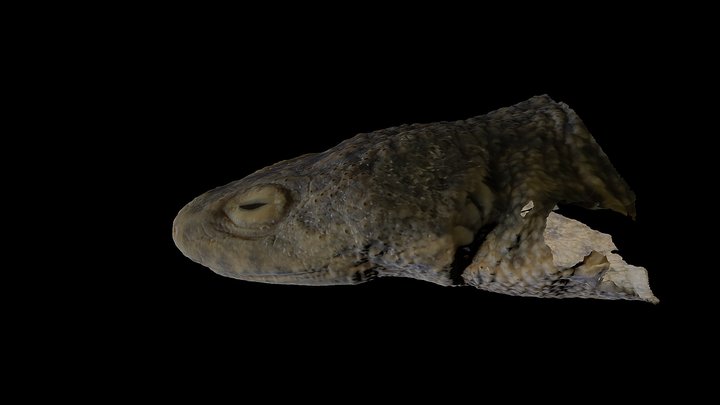
3D model
- Source
- Sketchfab
- Credit
- 3DVirtualHerp
- Licence
- CC Attribution
- Commercial use
- cannot be read from the licence given — check the record
Smithsonian Open Access was not reached for this taxon, so this list is what the others held rather than everything there is.
The description on this site
- Licence
- CC BY-SA 4.0
This is what the site found, which is not the same as what exists.
Keep going
What may have been alongside itPleurodeles through timeFormations of the PlioceneThe world it lived on
Occurrence data from the Paleobiology Database, CC BY 4.0. Michahelles 1830