Phoenicopterus ruber
The American flamingo is a large species of flamingo native to the West Indies, northern South America and the Yucatán Peninsula. It is closely related to the greater flamingo and Chilean flamingo, and was formerly considered conspecific with the greater flamingo, but that treatment is now widely viewed as incorrect due to a lack of evidence. It is also known as the Caribbean flamingo, although it is also present in the Galápagos Islands. It is the only flamingo that naturally inhabits North America.

JeffreyGammon · CC BY 4.0 · via Wikipedia/Commons. May be a photograph of a specimen, or an artist’s reconstruction — an interpretation of a skeleton, since colour and soft tissue are almost never preserved.
On record
Recorded, not inferred- Also called
- American flamingoPBDB
- Sits inside
- PhoenicopterusPBDB
- Diet
- carnivorePBDB, for Coelurosauria
- Life habit
- ground dwelling, solitaryPBDB, for Theropoda
- Motility
- actively mobilePBDB, for Theropoda
- Environment
- terrestrialPBDB, for Theropoda
- Mass
- 3.58 kgWikidata
Time the record covers
At least 3.5 million years on record.
The record covers at least 3.6 Mya to 11.7 ka. No occurrence read is dated outside 5.333 Mya to 0 Mya.
8 occurrences of Phoenicopterus ruber on record. The Paleobiology Database records this as a living group. Bar height is expected occurrences, not a count: each fossil is spread across the span it is dated to, so a tall narrow bar means tight dating and a low wide one means loose.
When
8 occurrences- Pliocene13%
- Pleistocene25%
- Holocene63%
These are dates about fossils, not the animal: the record can only begin after it arose and end before it died out, so either end may reach further. Shares are expected occurrences: a fossil dated to a span is counted partly in each period it straddles. More on what this infers.
Found in
3 formations
Loading coastlines…
The named rock units Phoenicopterus ruber has been recovered from, largest first. Drawn where the rock is now, not where it formed. 5 occurrences have no formation on record, which is common for older literature.
Found in the same rock
231 taxa- Pelecanus occidentalis5 sites
- Sula sula4 sites
- Larus atricilla3 sites
- Sula3 sites
- Corvus leucognaphalus2 sites
- Equus2 sites
- Ionornis martinica2 sites
- Mareca americana2 sites
- Nesotrochis debooyi2 sites
- Patagioenas squamosa2 sites
- Platalea ajaja2 sites
- Podilymbus podiceps2 sites
- Polyborus plancus2 sites
- Thalasseus maximus2 sites
- Zenaida aurita zenaida2 sites
- Aetobatus narinari1 site
- Agamidae1 site
- Agkistrodon piscivorous1 site
- Alligator mississippiensis1 site
- Anabernicula gracilenta1 site
- Anas bahamensis1 site
- Anas crecca1 site
- Anas platyrhynchos1 site
- Anguilla1 site
The Paleobiology Database records 8 sites for Phoenicopterus ruber, and this reads all of them. The number is how many of those sites it was catalogued from too. The 24 sharing the most are listed.
This is not a list of everything alive at the time. It is only what has come out of the same ground as this animal and been written down.
Entered from
6 references- Avian remains from late pre-colonial Amerindian sites on islands of the Venezuelan Caribbean3
- An early Irvingtonian avifauna from Leisey Shell Pit, Florida1
- Birds from the Bluffs Downs Local Fauna, Allingham Formation, Queensland1
- Avian fossils from three Pleistocene sites in central Mexico1
- Bird remains from the West Indies1
- Ancient records of birds from the island of St. Croix with observations on extinct and living birds of Puerto Rico1
Each of the 8 occurrences read was entered from one of these publications, ordered by how many each accounts for. This is not a search for papers mentioning the name. Entries link to doi.org where the Paleobiology Database holds an identifier, and to its own record where it does not. Relayed as the Paleobiology Database holds them, not checked against what they resolve to.
Media and terms
Media content2

Picture of Phoenicopterus ruber
- Source
- Wikipedia/Commons
- Credit
- JeffreyGammon
- Licence
- CC BY 4.0
- Commercial use
- the licence allows it
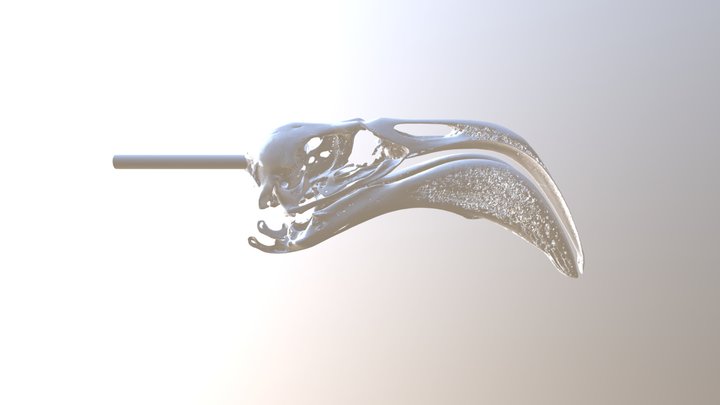
3D model
- Source
- Sketchfab
- Credit
- GigaScience
- Licence
- CC Attribution
- Commercial use
- cannot be read from the licence given — check the record
Smithsonian Open Access and MorphoSource were not reached for this taxon, so this list is what the others held rather than everything there is.
The description on this site
- Licence
- CC BY-SA 4.0
This is what the site found, which is not the same as what exists.
Keep going
What may have been alongside itPhoenicopterus through timeThe world it lived on
Occurrence data from the Paleobiology Database, CC BY 4.0. Linnaeus 1758