Phareodus
Phareodus is a genus of freshwater fish from the Paleocene to Eocene of North America and Australia.

Daderot · Public Domain · via Wikipedia/Commons. May be a photograph of a specimen, or an artist’s reconstruction — an interpretation of a skeleton, since colour and soft tissue are almost never preserved.
On record
Recorded, not inferred- Sits inside
- OsteoglossinaePBDB
- Diet
- carnivorePBDB, for Osteoglossiformes
- Life habit
- nektonicPBDB, for Osteoglossiformes
- Motility
- actively mobilePBDB, for Osteoglossiformes
- Environment
- freshwaterPBDB, for Osteoglossiformes
Time the record covers
At least 14 million years on record.
The record covers at least 66 Mya to 51.1 Mya. No occurrence read is dated outside 72.2 Mya to 23.04 Mya.
16 occurrences of Phareodus on record, most of them in the Eocene. Bar height is expected occurrences, not a count: each fossil is spread across the span it is dated to, so a tall narrow bar means tight dating and a low wide one means loose.
When
16 occurrences- Late Cretaceous38%
- Paleocene14%
- Eocene47%
- Oligocene2%
These are dates about fossils, not the animal: the record can only begin after it arose and end before it died out, so either end may reach further. Shares are expected occurrences: a fossil dated to a span is counted partly in each period it straddles. More on what this infers.
Found in
6 formations
- Green River Formation6
- Santa Lucía Formation1
- Bridger Formation1
- Tenejapa-Lacandon Formation1
- Infratrappean Beds Formation1
- Lameta Formation1
Loading coastlines…
The named rock units Phareodus has been recovered from, largest first. Drawn where the rock is now, not where it formed. 5 occurrences have no formation on record, which is common for older literature.
Phareodus and its relatives
EoceneWhere Phareodus and its relatives were recorded in the Eocene.
Found in the same rock
190 taxa- Igdabatis indicus5 sites
- Lepisosteus indicus5 sites
- Stephanodus5 sites
- Anura4 sites
- Apateodus striatus4 sites
- Lacertilia4 sites
- Crocodyliformes3 sites
- Dyrosauridae3 sites
- Eohiodon3 sites
- Pycnodus3 sites
- Serpentes3 sites
- Theropoda3 sites
- Belonostomus2 sites
- Charophyta2 sites
- Deccanolestes2 sites
- Diplomystus2 sites
- Enchodus2 sites
- Knightia2 sites
- Lepisosteus2 sites
- Leptodactylidae2 sites
- Mioplosus2 sites
- Ostracoda2 sites
- Pelobatidae2 sites
- Pycnodus bicresta2 sites
The Paleobiology Database records 15 sites for Phareodus, and this reads all of them. The number is how many of those sites it was catalogued from too. The 24 sharing the most are listed.
This is not a list of everything alive at the time. It is only what has come out of the same ground as this animal and been written down.
Entered from
11 references- Vertebrate fauna from the infra- and inter-trappean beds of Andhra Pradesh: age implications3
- A comparison of fish community structure along several paleoenvironments of Eocene Fossil Lake, Wyoming: a preliminary report2
- The species of †Phareodus (Teleostei: Osteoglossidae) from the Eocene of North America and their phylogenetic relationships2
- Paleontology of the Green River Formation, with a review of the fish fauna2
- The First Discovery of a Fish Fossil (Phareodus sp.) from Paleogene Fluvial Deposits in Western Washington State, USA1
- Faunal elements from the Deccan volcano-sedimentary sequences of India: a reappraisal of biostratigraphic, palaeoecologic, and palaeobiogeographic aspects1
- The fishes of the Farson Cutoff Fishbed, Bridger Formation (Eocene), greater Green River Basin, Wyoming, U. S. A1
- Paleocene fishes from Palenque, Chiapas, southeastern Mexico1
- Age implications of the Jabalpur Lameta Formation and intertrappean biotas1
- Cretaceous-Paleocene terrestrial faunas of India: lack of endemism during drifting of the Indian Plate1
- Late Cretaceous vertebrates, including mammals, from Tiupampa, Southcentral Bolivia1
Each of the 16 occurrences read was entered from one of these publications, ordered by how many each accounts for. This is not a search for papers mentioning the name. Entries link to doi.org where the Paleobiology Database holds an identifier, and to its own record where it does not. Relayed as the Paleobiology Database holds them, not checked against what they resolve to.
Media and terms
Media content3

Picture of Phareodus
- Source
- Wikipedia/Commons
- Credit
- Daderot
- Licence
- Public Domain
- Commercial use
- the licence allows it
Synchrotron Imaging scan
- Source
- MorphoSource
- Licence
- In Copyright
- Commercial use
- cannot be read from the licence given — check the record
- Specimen
- Phareodus encaustus · nhmuk:pal:PV P 64636I
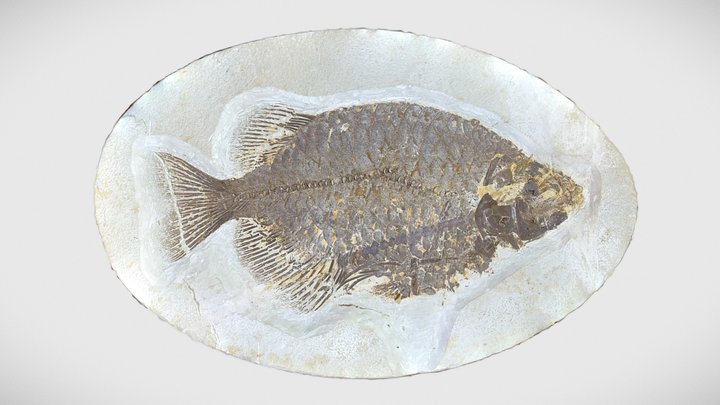
3D model
- Source
- Sketchfab
- Licence
- Free Standard
- Commercial use
- cannot be read from the licence given — check the record
The description on this site
- Source
- Wikipedia, “Phareodus”
- Licence
- CC BY-SA 4.0
This is what the site found, which is not the same as what exists.
Keep going
What may have been alongside itOsteoglossinae through timeFormations of the EoceneThe world it lived on
Occurrence data from the Paleobiology Database, CC BY 4.0. Leidy 1873