Phacops (Phacops)
No picture of Phacops (Phacops) was found. Wikidata and iDigBio were searched and had none. Wikipedia and Smithsonian Open Access did not answer, so this is what the others held rather than everything there is. GBIF was asked, and what came back is not recorded: nothing, or a picture this site could not tie to Phacops (Phacops), or no answer at all. This entry cannot say which.
On record
Recorded, not inferred- Sits inside
- PhacopsPBDB
- Diet
- carnivorePBDB, for Phacopina
- Life habit
- low-level epifaunalPBDB, for Trilobita
- Motility
- fast-movingPBDB, for Trilobita
- Vision
- well-developedPBDB, for Phacopidae
- Environment
- marinePBDB, for Trilobita
Time the record covers
At least 45 million years on record.
The record covers at least 410.62 Mya to 365.2 Mya. No occurrence read is dated outside 413.02 Mya to 358.86 Mya.
28 occurrences of Phacops (Phacops) on record, most of them in the Devonian. Bar height is expected occurrences, not a count: each fossil is spread across the span it is dated to, so a tall narrow bar means tight dating and a low wide one means loose.
When
28 occurrences- Devonian100%
These are dates about fossils, not the animal: the record can only begin after it arose and end before it died out, so either end may reach further. Shares are expected occurrences: a fossil dated to a span is counted partly in each period it straddles. More on what this infers.
Found in
17 formations
- Portilla Formation3
- Pal Grande Formation3
- Daihua Formation3
- Papilio Mudstone Formation3
- Stourscombe Formation2
- Akrech Formation1
Loading coastlines…
The named rock units Phacops (Phacops) has been recovered from, largest first. Drawn where the rock is now, not where it formed. 2 occurrences have no formation on record, which is common for older literature.
Phacops (Phacops) and its relatives
DevonianWhere Phacops (Phacops) and its relatives were recorded in the Devonian.
Found in the same rock
243 taxa- Polygnathus5 sites
- Scutellum5 sites
- Bispathodus4 sites
- Palmatolepis4 sites
- Pseudopolygnathus4 sites
- Branmehla3 sites
- Chaunoproetus (Chaunoproetus) carnicus3 sites
- Chaunoproetus (Chaunoproetus) palensis3 sites
- Cymaclymenia striata3 sites
- Cyphaspis3 sites
- Helioproetus carintiacus3 sites
- Helioproetus subcarintiacus3 sites
- Kalloclymenia3 sites
- Omegops accipitrinus3 sites
- Otarion3 sites
- Parawocklumeria3 sites
- Proetus (Proetus)3 sites
- Rabienops wedekindi3 sites
- Radiaspis3 sites
- Typhloproetus (Silesiops) korni3 sites
- Acutimitoceras intermedium2 sites
- Alveolites2 sites
- Asteropyge comes2 sites
- Astycoryphe senckenbergiana2 sites
The Paleobiology Database records 27 sites for Phacops (Phacops), and this reads all of them. The number is how many of those sites it was catalogued from too. The 24 sharing the most are listed.
This is not a list of everything alive at the time. It is only what has come out of the same ground as this animal and been written down.
Entered from
17 references- Trilobite fauna at the Devonian-Carboniferous boundary in South China (S-Guizhou and N-Guangxi)4
- Devonian trilobites from the Broken River region of northeastern Australia3
- Facies and diagenesis of the Devonian Portilla Limestone Formation between the River Esla and the embalse de la Luna, Cantabrian Mountains, Spain3
- Ammonoids and trilobites from the Upper Devonian and Lowest Carboniferous of the Launceston area of Cornwall3
- Trilobiten aus dem Devon/Karbon-Grenzprofil an der Grünen Schneid (Zentrale Karnische Alpen, Österreich)2
- The Devonian/Carboniferous Boundary in the Carnic Alps (Austria) - A Multidisciplinary Approach2
- Review of Devonian-Carboniferous Boundary sections in the Rhenish Slate Mountains (Germany)1
- Class Trilobita in the Wocklum Limestone of the northern Rhenish Massif east of the Rhine (late Famennian, Late Devonian) – Part 1. Phillipsiidae and Proetidae1
- Taxonomy and biostratigraphy of some proetid trilobites in the Middle Devonian of the Ardennes and Eifel (Rhenohercynian Zone)1
- Ecological Change during the early Emsian (Devonian) in the Tafilalt (Morocco),the Origin of the Ammonoidea,and the First African Pyrgocystid Edrioasteroids,Machaerids and Phyllocarids1
- Eifel-Trilobiten III. Corynexochida, Proetida (2), Harpetida, Phacopida (2), Lichida1
- Modalités d'évolution phylétique sous contrôle du milleu chez quelques phacopinés (trilobites) néodévoniens1
Each of the 28 occurrences read was entered from one of these publications, ordered by how many each accounts for. This is not a search for papers mentioning the name. 5 further references are not listed. Entries link to doi.org where the Paleobiology Database holds an identifier, and to its own record where it does not. Relayed as the Paleobiology Database holds them, not checked against what they resolve to.
Media and terms
Media content2
Photogrammetry
- Source
- MorphoSource
- Licence
- not stated by the source
- Commercial use
- cannot be read from the licence given — check the record
- Specimen
- phacops rana · MST:PALEO:MST-SP-7232
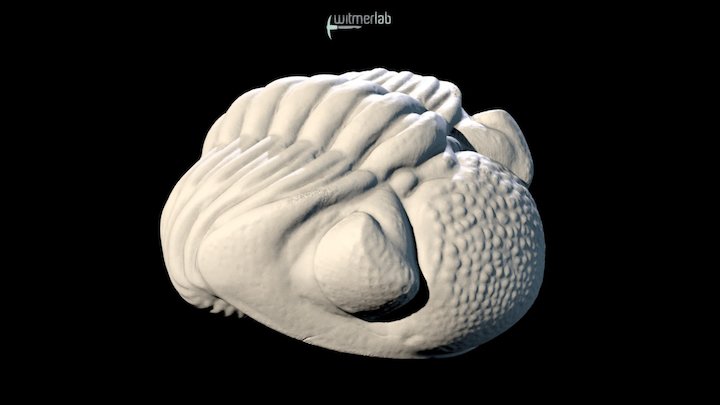
3D model
- Source
- Sketchfab
- Licence
- CC Attribution
- Commercial use
- cannot be read from the licence given — check the record
No picture of Phacops (Phacops) was found. Wikidata and iDigBio were searched and had none.
Wikipedia and Smithsonian Open Access did not answer, so this is what the others held rather than everything there is.
GBIF was asked, and what came back is not recorded: nothing, or a picture this site could not tie to Phacops (Phacops), or no answer at all. This entry cannot say which.
Smithsonian Open Access was not reached for this taxon, so this list is what the others held rather than everything there is.
This is what the site found, which is not the same as what exists.
Keep going
What may have been alongside itPhacops through timeFormations of the DevonianThe world it lived on
Occurrence data from the Paleobiology Database, CC BY 4.0. Emmrich 1839