Palmatolepis
Palmatolepis is an extinct conodont genus in the family Palmatolepidae. It was the most abundant genus of conodonts of the Late Devonian, disappearing during the Devonian/Carboniferous crisis.
No picture of Palmatolepis was found. Wikipedia, Wikidata and iDigBio were searched and had none. Smithsonian Open Access did not answer, so this is what the others held rather than everything there is. GBIF was asked, and what came back is not recorded: nothing, or a picture this site could not tie to Palmatolepis, or no answer at all. This entry cannot say which.
On record
Recorded, not inferred- Sits inside
- PalmatolepidaePBDB
- Diet
- carnivorePBDB, for Conodonta
- Life habit
- nektonicPBDB, for Conodonta
- Motility
- actively mobilePBDB, for Conodonta
- Vision
- well-developedPBDB, for Conodonta
Time the record covers
At least 23 million years on record.
The record covers at least 382.31 Mya to 358.86 Mya. No occurrence read is dated outside 443.1 Mya to 237 Mya.
1,987 occurrences of Palmatolepis on record, most of them in the Devonian. Bar height is expected occurrences, not a count: each fossil is spread across the span it is dated to, so a tall narrow bar means tight dating and a low wide one means loose.
When
1,987 occurrences- Silurianunder 1%
- Devonian95%
- Carboniferous4%
- Permianunder 1%
- Early Triassicunder 1%
- Middle Triassicunder 1%
These are dates about fossils, not the animal: the record can only begin after it arose and end before it died out, so either end may reach further. Shares are expected occurrences: a fossil dated to a span is counted partly in each period it straddles. More on what this infers.
Found in
52 formations
- Wuzhishan Formation346
- Beul Formation143
- Toc Tat Formation103
- Xiangtian Formation57
- Evtropina Formation56
- Upper Olentangy Shale Formation45
Loading coastlines…
The named rock units Palmatolepis has been recovered from, largest first. Drawn where the rock is now, not where it formed. 28 further formations hold fewer occurrences each and are not listed. 917 occurrences have no formation on record, which is common for older literature.
Palmatolepis and its relatives
DevonianWhere Palmatolepis and its relatives were recorded in the Devonian.
Found in the same rock
549 taxa- Polygnathus114 sites
- Ozarkodina35 sites
- Icriodus28 sites
- Icriodus symmetricus21 sites
- Spathognathodus20 sites
- Cyrtospirifer19 sites
- Pseudopolygnathus19 sites
- Ancyrodella18 sites
- Icriodus alternatus18 sites
- Polygnathus nodocostatus17 sites
- Neopolygnathus communis16 sites
- Athyris15 sites
- Conodonta14 sites
- Icriodus cornutus14 sites
- Oulodus13 sites
- Polygnathus semicostatus13 sites
- Polygnathus webbi13 sites
- Ancyrodella nodosa12 sites
- Ancyrognathus12 sites
- Ancyrodella curvata11 sites
- Branmehla11 sites
- Siphonodella11 sites
- Homoctenus10 sites
- Leiorhynchus10 sites
The Paleobiology Database records 459 sites for Palmatolepis, and this reads 240 of them. The number is how many of those sites it was catalogued from too. The 24 sharing the most are listed.
This is not a list of everything alive at the time. It is only what has come out of the same ground as this animal and been written down.
Entered from
69 references- Physical and biological events across the Frasnian-Famennian boundary (Late Devonian) in continuous oxic carbonate successions in the western Tethys (Carnic Alps of Italy and Austria)492
- The Lali Section: An Excellent Reference Section for Upper Devonian in South China426
- Drowning, extinction, and subsequent facies development of the Devonian Hönne Valley Reef (northern Rhenish Massif, Germany)149
- The Fossil Record of Conodonts in Greece141
- Facies, magnetic susceptibility and timing of the Late Devonian Frasnian/Famennian boundary interval (Xom Nha Formation, Central Vietnam)101
- The Kellwasser events in the Upper Devonian Frasnian to Famennian transition in the Toc Tat Formation, northern Vietnam98
- A lower Famennian fauna from the top of the reefoid limestones of Mokra (Moravia, Czechoslovakia)65
- Natural Assemblages of Palmatolepis from the Upper Devonian of the Northern Urals56
- Brachiopods and conodont biostratigraphy of the Famennian from the Debnik anticline, southern Poland48
- Conodonts from the Upper Olentangy Shale (Upper Devonian, Central Ohio) and Stratigraphy across the Frasnian-Famennian Boundary45
- Upper Devonian goniatites and co-occurring conodonts from the Holy Cross Mountains: studies of the Polish Geological Institute collections35
- Woodford conodonts and biostratigraphy (upper Devonian-Carboniferous) in the subsurface of eastern New Mexico and Texas33
Each of the 1,987 occurrences read was entered from one of these publications, ordered by how many each accounts for. This is not a search for papers mentioning the name. 57 further references are not listed. Entries link to doi.org where the Paleobiology Database holds an identifier, and to its own record where it does not. Relayed as the Paleobiology Database holds them, not checked against what they resolve to.
Media and terms
Media content1
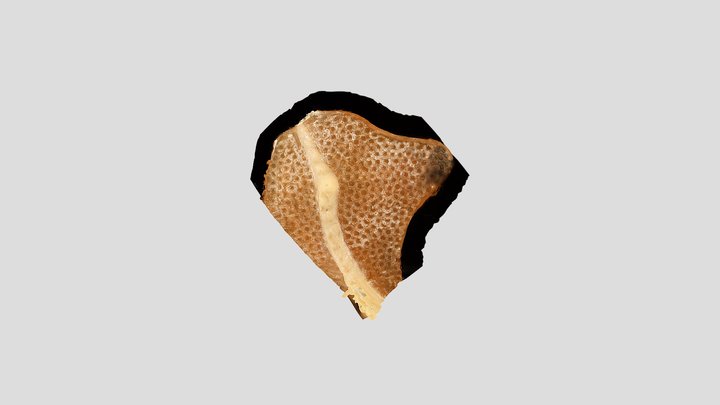
3D model
- Source
- Sketchfab
- Credit
- drjackiepaleo
- Licence
- CC Attribution
- Commercial use
- cannot be read from the licence given — check the record
No picture of Palmatolepis was found. Wikipedia, Wikidata and iDigBio were searched and had none.
Smithsonian Open Access did not answer, so this is what the others held rather than everything there is.
GBIF was asked, and what came back is not recorded: nothing, or a picture this site could not tie to Palmatolepis, or no answer at all. This entry cannot say which.
Smithsonian Open Access and MorphoSource were not reached for this taxon, so this list is what the others held rather than everything there is.
The description on this site
- Licence
- CC BY-SA 4.0
This is what the site found, which is not the same as what exists.
Keep going
What may have been alongside itPalmatolepidae through timeFormations of the DevonianThe world it lived on
Occurrence data from the Paleobiology Database, CC BY 4.0. Müller 1956