Polygnathus
Polygnathus is an extinct genus of conodonts.

Uncredited · Public Domain · via Wikipedia/Commons. May be a photograph of a specimen, or an artist’s reconstruction — an interpretation of a skeleton, since colour and soft tissue are almost never preserved.
Time the record covers
At least 169 million years on record.
The record covers at least 410.62 Mya to 241.464 Mya. No occurrence read is dated outside 419.62 Mya to 237 Mya.
3,457 occurrences of Polygnathus on record, most of them in the Devonian. Bar height is expected occurrences, not a count: each fossil is spread across the span it is dated to, so a tall narrow bar means tight dating and a low wide one means loose.
When
3,457 occurrences- Devonian96%
- Carboniferous4%
- Permianunder 1%
- Early Triassicunder 1%
- Middle Triassicunder 1%
These are dates about fossils, not the animal: the record can only begin after it arose and end before it died out, so either end may reach further. Shares are expected occurrences: a fossil dated to a span is counted partly in each period it straddles. More on what this infers.
Found in
183 formations
- Comabella Formation331
- Delay limestone Formation184
- Lime Creek Formation92
- Bouia Formation · Achguig Group75
- Beul Formation70
- Sheffield-Maple Mill Formation69
Loading coastlines…
The named rock units Polygnathus has been recovered from, largest first. Drawn where the rock is now, not where it formed. 159 further formations hold fewer occurrences each and are not listed. 1,249 occurrences have no formation on record, which is common for older literature.
Polygnathus and its relatives
DevonianWhere Polygnathus and its relatives were recorded in the Devonian.
Found in the same rock
1,101 taxa- Palmatolepis76 sites
- Icriodus51 sites
- Ozarkodina46 sites
- Belodella38 sites
- Pseudopolygnathus30 sites
- Palmatolepis minuta27 sites
- Spathognathodus27 sites
- Fasciculophyllum25 sites
- Palmatolepis glabra23 sites
- Nowakia22 sites
- Pandorinellina21 sites
- Pelekysgnathus21 sites
- Ancyrodella20 sites
- Caninia cornucopiae19 sites
- Gnathodus18 sites
- Hindeodus18 sites
- Icriodus symmetricus18 sites
- Panderodus17 sites
- Rugosa17 sites
- Siphonodella17 sites
- Brachiopoda16 sites
- Gypidula16 sites
- Schizophoria16 sites
- Warrenella16 sites
The Paleobiology Database records 730 sites for Polygnathus, and this reads 240 of them. The number is how many of those sites it was catalogued from too. The 24 sharing the most are listed.
This is not a list of everything alive at the time. It is only what has come out of the same ground as this animal and been written down.
Entered from
146 references- Das "Taghanic Event" im höheren Mittel-Devon von West-Europa und Marokko304
- Physical and biological events across the Frasnian-Famennian boundary (Late Devonian) in continuous oxic carbonate successions in the western Tethys (Carnic Alps of Italy and Austria)247
- Early Middle Devonian conodont faunas (Eifelian, costatus-kockelianus zones) from the Roberts Mountains and adjacent areas in central Nevada186
- Upper Devonian (Frasnian-Famennian) conodont biostratigraphy in the subsurface of north-central Iowa and southeastern Nebraska178
- Eifelian (Middle Devonian) to lower Frasnian (Upper Devonian) conodont biostratigraphy in the Villech section, Spanish Central Pyrenees168
- Givetian and early Frasnian conodonts from the Compte section (Middle–Upper Devonian, Spanish Central Pyrenees)163
- The Lali Section: An Excellent Reference Section for Upper Devonian in South China162
- Distribution comparée de Conodontes et Goniatites dévoniens des plaines du Dra, du Ma'der et du Tafilalt151
- Conodonts from a potential Eifelian/Givetian boundary stratotype at Jbel Ou Driss, southern Ma'der, Morocco130
- Conodont biostratigraphy of shallow marine Givetian deposits from the Radom-Lublin area, SE Poland111
- Faciès et biostratigraphie (conodontes) du passage Dévonien inférieur-moyen dans la Montagne Noire (France)97
- Late Emsian to early Givetian Conodont succession in the Tiflet area (north-western Meseta, Central Morocco)94
Each of the 3,457 occurrences read was entered from one of these publications, ordered by how many each accounts for. This is not a search for papers mentioning the name. 134 further references are not listed. Entries link to doi.org where the Paleobiology Database holds an identifier, and to its own record where it does not. Relayed as the Paleobiology Database holds them, not checked against what they resolve to.
Media and terms
Media content2

Picture of Polygnathus
- Source
- Wikipedia/Commons
- Credit
- nobody named on the record
- Licence
- Public Domain
- Commercial use
- the licence allows it
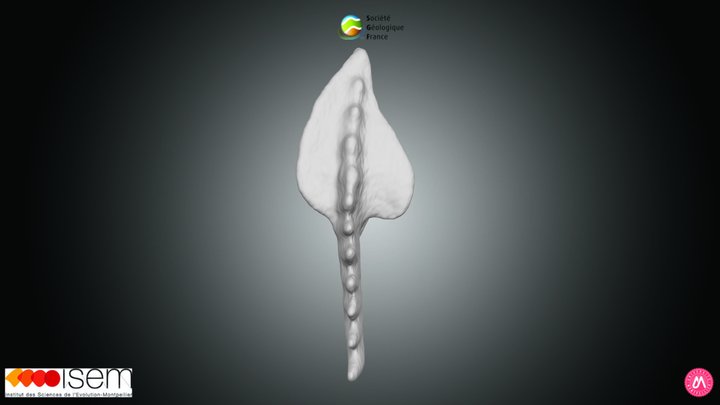
3D model
- Source
- Sketchfab
- Licence
- CC Attribution-NonCommercial-ShareAlike
- Commercial use
- the licence does not allow it
The description on this site
- Source
- Wikipedia, “Polygnathus”
- Licence
- CC BY-SA 4.0
This is what the site found, which is not the same as what exists.
Keep going
What may have been alongside itFormations of the DevonianThe world it lived on
Occurrence data from the Paleobiology Database, CC BY 4.0.