Phacops
Phacops is a genus of trilobites in the order Phacopida, family Phacopidae, that lived in Europe, northwestern Africa, North and South America and China from the Late Ordovician until the very end of the Devonian, with a broader time range described from the Late Ordovician. It was a rounded animal, with a globose head and large eyes, and probably fed on detritus. Phacops is often found rolled up ("volvation"), a biological defense mechanism that is widespread among smaller trilobites but further perfected in this genus.

RealGatba · CC BY-SA 4.0 · via Wikipedia/Commons. May be a photograph of a specimen, or an artist’s reconstruction — an interpretation of a skeleton, since colour and soft tissue are almost never preserved.
On record
Recorded, not inferred- Sits inside
- PhacopidaePBDB
- Diet
- carnivorePBDB, for Phacopina
- Life habit
- low-level epifaunalPBDB, for Trilobita
- Motility
- fast-movingPBDB, for Trilobita
- Vision
- well-developedPBDB, for Phacopidae
- Environment
- marinePBDB, for Trilobita
Time the record covers
At least 99 million years on record.
The record covers at least 458.2 Mya to 358.86 Mya. No occurrence read is dated outside 469.4 Mya to 353.7 Mya.
251 occurrences of Phacops on record, most of them in the Devonian. Bar height is expected occurrences, not a count: each fossil is spread across the span it is dated to, so a tall narrow bar means tight dating and a low wide one means loose.
When
251 occurrences- Ordovician10%
- Silurian6%
- Devonian84%
- Carboniferousunder 1%
These are dates about fossils, not the animal: the record can only begin after it arose and end before it died out, so either end may reach further. Shares are expected occurrences: a fossil dated to a span is counted partly in each period it straddles. More on what this infers.
Found in
109 formations
- Ludlowville Formation · Hamilton Group35
- Pilton Shales Formation10
- Wocklum Limestone Formation8
- Delorme Formation6
- McColley Canyon Formation5
- Chefar el Ahmar Formation5
Loading coastlines…
The named rock units Phacops has been recovered from, largest first. Drawn where the rock is now, not where it formed. 85 further formations hold fewer occurrences each and are not listed. 25 occurrences have no formation on record, which is common for older literature.
Phacops and its relatives
DevonianWhere Phacops and its relatives were recorded in the Devonian.
Found in the same rock
1,495 taxa- Fenestella43 sites
- Cyrtina36 sites
- Crinoidea33 sites
- Ambocoelia32 sites
- Favosites32 sites
- Aulocystis30 sites
- Greenops29 sites
- Rhipidomella29 sites
- Sulcoretepora29 sites
- Atrypa27 sites
- Pseudoatrypa26 sites
- Longispina24 sites
- Platyceras24 sites
- Nucleospira23 sites
- Actinopteria22 sites
- Athyris22 sites
- Elita22 sites
- Cypricardinia21 sites
- Mediospirifer21 sites
- Fistuliporidae19 sites
- Meristella19 sites
- Protoleptostrophia19 sites
- Bryozoa18 sites
- Chonetes18 sites
The Paleobiology Database records 233 sites for Phacops, and this reads all of them. The number is how many of those sites it was catalogued from too. The 24 sharing the most are listed.
This is not a list of everything alive at the time. It is only what has come out of the same ground as this animal and been written down.
Entered from
97 references- Faunal and Lithologic Cyclicity in the Centerfield Member (Middle Devonian: Hamilton Group) of Western New York: A Reinterpretation of Depositional History27
- Trilobites du Devonien (Emsien-Famennien) de la Rade de Brest (Massif Armoricain)15
- The Devonian of Celtiberia (Spain) and Devonian paleogeography of SW Europe10
- Edmonds et al., 198510
- Om de Chasmopskalken och Trinicleusskiffern motsvarande bildningarne I Skane10
- Trilobites at the Devonian-Carboniferous boundary8
- The Lower Palaeozoic fossils of the Northern Shan States, Burma. With a section of Ordovician cystidea by F. A. Bather [q.v.]8
- Korrelationen des Eifelium/Givetium-Grenzbereichs im Rheinischen Schiefergebirge6
- Paleoecology, origin, and significance of a shell-rich bed in the lowermost part of the Ludlowville Formation (Middle Devonian, central New York)6
- Phacops and other trilobites from Emsian age beds of the Delorme Formation, MacKenzie Mountains, Northwest Territories6
- Biotic Interaction Versus Abiotic Response as Mediators of Biodiversity in the Middle Devonian (Givetian) Upper Hamilton Group of New York State5
- Trilobite fauna at the Devonian-Carboniferous boundary in South China (S-Guizhou and N-Guangxi)5
Each of the 251 occurrences read was entered from one of these publications, ordered by how many each accounts for. This is not a search for papers mentioning the name. 85 further references are not listed. Entries link to doi.org where the Paleobiology Database holds an identifier, and to its own record where it does not. Relayed as the Paleobiology Database holds them, not checked against what they resolve to.
Media and terms
Media content2

Picture of Phacops
- Source
- Wikipedia/Commons
- Credit
- RealGatba
- Licence
- CC BY-SA 4.0
- Commercial use
- the licence allows it
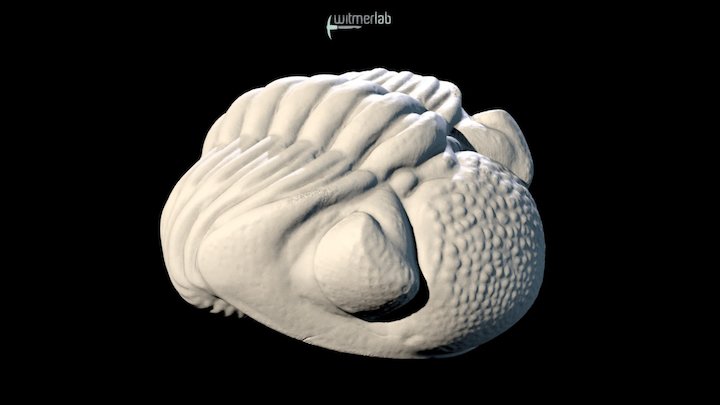
3D model
- Source
- Sketchfab
- Licence
- CC Attribution
- Commercial use
- cannot be read from the licence given — check the record
Smithsonian Open Access and MorphoSource were not reached for this taxon, so this list is what the others held rather than everything there is.
The description on this site
- Source
- Wikipedia, “Phacops”
- Licence
- CC BY-SA 4.0
This is what the site found, which is not the same as what exists.
Keep going
What may have been alongside itPhacopidae through timeFormations of the DevonianThe world it lived on
Occurrence data from the Paleobiology Database, CC BY 4.0. Emmrich 1839