Pandanus
Pandanus is a genus of monocots with about 578 accepted species. They are palm-like, dioecious trees and shrubs native to the Old World tropics and subtropics. Common names include pandan, screw palm and screw pine. The genus is classified in the order Pandanales, family Pandanaceae, and is the largest in the family.

B.navez · CC BY-SA 3.0 · via Wikipedia/Commons. May be a photograph of a specimen, or an artist’s reconstruction — an interpretation of a skeleton, since colour and soft tissue are almost never preserved.
On record
Recorded, not inferred- Also called
- pandanPBDB
- Sits inside
- PandanaceaePBDB
- Diet
- "photoautotroph"PBDB, for Angiospermae
Time the record covers
At least 81 million years on record.
The record covers at least 83.6 Mya to 1.8 Mya. No occurrence read is dated outside 85.7 Mya to 0 Mya.
6 occurrences of Pandanus on record, most of them in the Pleistocene. The Paleobiology Database records this as a living group. Bar height is expected occurrences, not a count: each fossil is spread across the span it is dated to, so a tall narrow bar means tight dating and a low wide one means loose.
When
6 occurrences- Late Cretaceous17%
- Eocene33%
- Pleistocene50%
- Holoceneunder 1%
These are dates about fossils, not the animal: the record can only begin after it arose and end before it died out, so either end may reach further. Shares are expected occurrences: a fossil dated to a span is counted partly in each period it straddles. More on what this infers.
Found in
1 formation
Loading coastlines…
The named rock units Pandanus has been recovered from, largest first. Drawn where the rock is now, not where it formed. 5 occurrences have no formation on record, which is common for older literature.
Pandanus and its relatives
PleistoceneWhere Pandanus and its relatives were recorded in the Pleistocene.
Found in the same rock
124 taxa- Asteraceae3 sites
- Cyperaceae3 sites
- Poaceae3 sites
- Acanthus2 sites
- Amaranthaceae2 sites
- Ammannia2 sites
- Anacardium2 sites
- Apiaceae2 sites
- Capparis2 sites
- Cerealia2 sites
- Chenopodiaceae2 sites
- Crotalaria2 sites
- Dipteracanthus2 sites
- Heritiera2 sites
- Hydrocera2 sites
- Liliaceae2 sites
- Malvaceae2 sites
- Myriophyllum2 sites
- Nymphoides2 sites
- Plantago2 sites
- Sonneratia2 sites
- Tinospora2 sites
- Typha2 sites
- Acalypha1 site
The Paleobiology Database records 6 sites for Pandanus, and this reads all of them. The number is how many of those sites it was catalogued from too. The 24 sharing the most are listed.
This is not a list of everything alive at the time. It is only what has come out of the same ground as this animal and been written down.
Entered from
5 references- A Catalogue of Fossil Plants from India Part 6: Cenozoic (Quaternary) Palynology and Palaeobotany2
- Presencia de dinosaurios en la Barranca Los Bonetes en el sur de México (Región de Tiquicheo, Estado de Michoacán) y sus implicaciones cronoestratigráficas [Presence of dinosaurs in the Barranca Los Bonetes in southern Mexico (Tiquicheo region, Michoacán state) and their chronostratigraphic implications]1
- A Catalogue of Fossil Plants from India Part 4: Cenozoic (Tertiary) Megafossils1
- Desert paleoenvironmental data from cave speleothems with examples from the Chihuahuan1
- Découverte d’une faune de mammifères dans le Lutétien supérieur de la Défense, à Puteaux, près Paris (Hauts-de-Seine)1
Each of the 6 occurrences read was entered from one of these publications, ordered by how many each accounts for. This is not a search for papers mentioning the name. Entries link to doi.org where the Paleobiology Database holds an identifier, and to its own record where it does not. Relayed as the Paleobiology Database holds them, not checked against what they resolve to.
Media and terms
Media content2
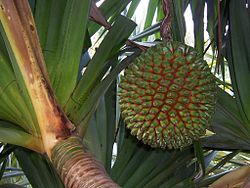
Picture of Pandanus
- Source
- Wikipedia/Commons
- Credit
- B.navez
- Licence
- CC BY-SA 3.0
- Commercial use
- the licence allows it
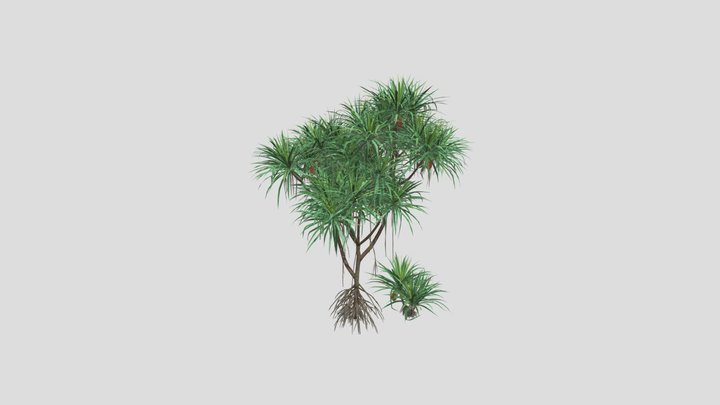
Smithsonian Open Access and MorphoSource were not reached for this taxon, so this list is what the others held rather than everything there is.
The description on this site
- Source
- Wikipedia, “Pandanus”
- Licence
- CC BY-SA 4.0
This is what the site found, which is not the same as what exists.
Keep going
What may have been alongside itPandanaceae through timeFormations of the PleistoceneThe world it lived on
Occurrence data from the Paleobiology Database, CC BY 4.0. Parkinson 1773