Otariidae
An eared seal, otariid, or otary, is any member of the marine mammal family Otariidae, one of three groupings of pinnipeds. They comprise 15 extant species in seven genera and are commonly known either as sea lions or fur seals, distinct from true seals (phocids) and the walrus (odobenids). Otariids are adapted to a semiaquatic lifestyle, feeding and migrating in the water, but breeding and resting on land or ice. They reside in subpolar, temperate, and equatorial waters throughout the Pacific and Southern Oceans, the southern Indian, and Atlantic Oceans. They are conspicuously absent in the north Atlantic.

User Bmh ca on en.wikipedia · CC BY-SA 3.0 · via Wikipedia/Commons. May be a photograph of a specimen, or an artist’s reconstruction — an interpretation of a skeleton, since colour and soft tissue are almost never preserved.
On record
Recorded, not inferred- Also called
- eared sealPBDB
- Sits inside
- OtarioideaPBDB
- Diet
- piscivorePBDB
- Life habit
- amphibiousPBDB, for Pinnipedia
- Motility
- actively mobilePBDB, for Osteichthyes
- Environment
- marinePBDB, for Pinnipedia
Time the record covers
At least 23 million years on record.
The record covers at least 23.04 Mya to 11.7 ka. No occurrence read is dated outside 27.3 Mya to 0 Mya.
329 occurrences of Otariidae on record. The Paleobiology Database records this as a living group. Bar height is expected occurrences, not a count: each fossil is spread across the span it is dated to, so a tall narrow bar means tight dating and a low wide one means loose.
When
329 occurrences- Oligoceneunder 1%
- Miocene15%
- Pliocene11%
- Pleistocene31%
- Holocene43%
These are dates about fossils, not the animal: the record can only begin after it arose and end before it died out, so either end may reach further. Shares are expected occurrences: a fossil dated to a span is counted partly in each period it straddles. More on what this infers.
Found in
62 formations
- Purisima Formation14
- Monterey Formation13
- Palos Verdes Sand Formation10
- Pisco Formation5
- Santa Margarita Formation5
- Port Orford Formation5
Loading coastlines…
The named rock units Otariidae has been recovered from, largest first. Drawn where the rock is now, not where it formed. 38 further formations hold fewer occurrences each and are not listed. 197 occurrences have no formation on record, which is common for older literature.
Found in the same rock
1,071 taxa- Arctocephalus townsendi59 sites
- Arctocephalus pusillus27 sites
- Eumetopias jubatus19 sites
- Balaenopteridae17 sites
- Delphinidae17 sites
- Cetacea16 sites
- Lupulella mesomelas15 sites
- Hystrix africaeaustralis14 sites
- Taurotragus oryx14 sites
- Callorhinus ursinus13 sites
- Procavia capensis13 sites
- Raphicerus13 sites
- Eumetopias12 sites
- Hippopotamus amphibius12 sites
- Mellivora capensis12 sites
- Pelea capreolus12 sites
- Bovidae11 sites
- Callorhinus gilmorei11 sites
- Carcharodon carcharias11 sites
- Enhydra lutris11 sites
- Galerella pulverulenta11 sites
- Homo sapiens11 sites
- Mysticeti11 sites
- Redunca arundinum11 sites
The Paleobiology Database records 289 sites for Otariidae, and this reads 240 of them. The number is how many of those sites it was catalogued from too. The 24 sharing the most are listed.
This is not a list of everything alive at the time. It is only what has come out of the same ground as this animal and been written down.
Entered from
144 references- A trans-Holocene archaeological record of Guadalupe fur seals (Arctocephalus townsendi) on the California coast60
- Quaternary vertebrates from Shiriya area, Shimokita Pininsula, northeastern Japan10
- Otarioid seals of the Neogene9
- Archaeological and Historical Evidence for an 18th-Century "Blip" in the Distribution of the Northern Fur Seal at Kodiak Island, Alaska8
- Sirenian evolution in the North Pacific Ocean8
- Middle and late Miocene marine mammal assemblages from the Monterey Formation of Orange County, California7
- A new marine vertebrate assemblage from the Late Neogene Purisima Formation in Central California, part II: Pinnipeds and Cetaceans7
- Review of fossil phocid and otariid seals from the southern and western coasts of South Africa7
- A catalogue of late Quaternary Vertebrates from California: Part Two, Mammals7
- The fur seal of South Georgia6
- Islands in the sea: extreme female natal site fidelity in the Australian sea lion, Neophoca cinerea5
- Historical and modern distribution and abundance of the New Zealand sea lion Phocarctos hookeri5
Each of the 329 occurrences read was entered from one of these publications, ordered by how many each accounts for. This is not a search for papers mentioning the name. 132 further references are not listed. Entries link to doi.org where the Paleobiology Database holds an identifier, and to its own record where it does not. Relayed as the Paleobiology Database holds them, not checked against what they resolve to.
Media and terms
Media content2

Picture of Otariidae
- Source
- Wikipedia/Commons
- Credit
- User Bmh ca on en.wikipedia
- Licence
- CC BY-SA 3.0
- Commercial use
- the licence allows it
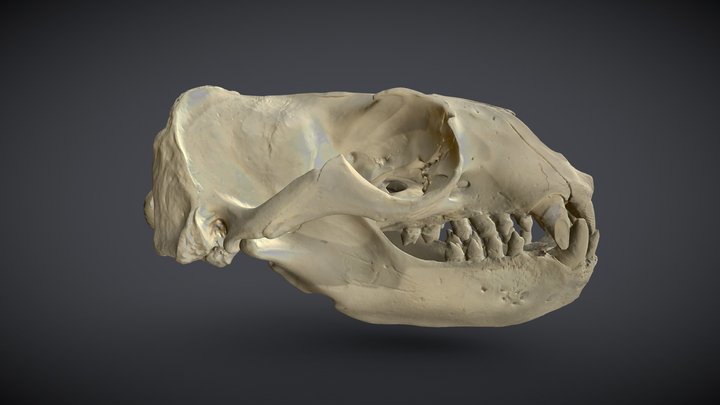
3D model
- Source
- Sketchfab
- Licence
- CC Attribution-NonCommercial-NoDerivs
- Commercial use
- the licence does not allow it
Smithsonian Open Access and MorphoSource were not reached for this taxon, so this list is what the others held rather than everything there is.
The description on this site
- Source
- Wikipedia, “Eared seal”
- Licence
- CC BY-SA 4.0
This is what the site found, which is not the same as what exists.
Keep going
What may have been alongside itOtarioidea through timeThe world it lived on
Occurrence data from the Paleobiology Database, CC BY 4.0. (Gray 1825)