Nummulites
A nummulite is a large lenticular fossil, characterised by its numerous coils, subdivided by septa into chambers. They are the shells of the fossil and present-day marine protozoan Nummulites, a type of foraminiferan. Nummulites commonly vary in diameter from 13 to 50 mm and are common in Eocene to Miocene marine rocks, particularly around southwest Asia and the Mediterranean in the area that once constituted the Tethys Ocean, such as Eocene limestones from Egypt or from Pakistan. Fossils up to six inches wide are found in the Middle Eocene rocks of Turkey. They are valuable as index fossils.

Wilson44691 · Public Domain · via Wikipedia/Commons. May be a photograph of a specimen, or an artist’s reconstruction — an interpretation of a skeleton, since colour and soft tissue are almost never preserved.
On record
Recorded, not inferred- Sits inside
- NummulitinaePBDB
- Diet
- omnivorePBDB, for Foraminifera
- Life habit
- semi-infaunalPBDB, for Foraminifera
- Motility
- stationaryPBDB, for Foraminifera
Time the record covers
At least 72 million years on record.
The record covers at least 72.2 Mya to 11.7 ka. No occurrence read is dated outside 85.7 Mya to 0 Mya.
649 occurrences of Nummulites on record, most of them in the Eocene. The Paleobiology Database records this as a living group. Bar height is expected occurrences, not a count: each fossil is spread across the span it is dated to, so a tall narrow bar means tight dating and a low wide one means loose.
When
649 occurrences- Late Cretaceousunder 1%
- Paleocene5%
- Eocene73%
- Oligocene17%
- Miocene4%
- Pleistoceneunder 1%
- Holoceneunder 1%
These are dates about fossils, not the animal: the record can only begin after it arose and end before it died out, so either end may reach further. Shares are expected occurrences: a fossil dated to a span is counted partly in each period it straddles. More on what this infers.
Found in
120 formations
- Marne di Priabona Formation66
- Qom Formation Formation22
- Dobranberg Formation Formation20
- Prang Formation · Sylhet Limestone Group19
- Gheldeis Formation · Hafún Group18
- El Bosque Formation16
Loading coastlines…
The named rock units Nummulites has been recovered from, largest first. Drawn where the rock is now, not where it formed. 96 further formations hold fewer occurrences each and are not listed. 171 occurrences have no formation on record, which is common for older literature.
Nummulites and its relatives
EoceneWhere Nummulites and its relatives were recorded in the Eocene.
Found in the same rock
1,685 taxa- Discocyclina61 sites
- Alveolina43 sites
- Assilina33 sites
- Operculina33 sites
- Orbitolites32 sites
- Rotalia26 sites
- Melobesioideae23 sites
- Miliolida23 sites
- Ostrea23 sites
- Lithothamnion22 sites
- Mesophyllum22 sites
- Lockhartia21 sites
- Corbula18 sites
- Sporolithon18 sites
- Glomalveolina14 sites
- Quinqueloculina14 sites
- Ranikothalia14 sites
- Asterocyclina13 sites
- Bryozoa13 sites
- Echinolampas13 sites
- Gastropoda13 sites
- Miscellanea13 sites
- Bivalvia12 sites
- Lepidocyclina12 sites
The Paleobiology Database records 375 sites for Nummulites, and this reads 240 of them. The number is how many of those sites it was catalogued from too. The 24 sharing the most are listed.
This is not a list of everything alive at the time. It is only what has come out of the same ground as this animal and been written down.
Entered from
153 references- Larger foraminiferal and coralline algal facies in an Upper Eocene storm-influenced, shallow-water carbonate platform (Colli Berici, north-eastern Italy)63
- An inventory of the marine and transitional Middle/Upper Eocene deposits of the Southeastern Pyrenean Foreland Basin (NE Spain)36
- Tawadros, 200134
- L'Oligocene e il Miocene della Somalia. Stratigrafia, Tettonica, Paleontologia (Macroforaminferi, Coralli, Molluschi)28
- Sedimentary facies and depositional environments of the Oligocene–early Miocene marine Qom Formation, Central Iran Back-Arc Basin, Iran (northeastern margin of the Tethyan Seaway)22
- Paleogene shallow-water larger foraminifers from holes 714A and 715A, Leg 115, Indian Ocean22
- Facies and palaeoecology of rhodoliths and acervulinid macroids in the Eocene of the Krappfeld (Austria)20
- Facies and coralline algae from Oligocene limestones in the Malaguide Complex (SE Spain)16
- Late Chattian platform carbonates with benthic foraminifera and coralline algae from the SE Iberian plate15
- Hunting Survey Corporation, LTD, 196113
- Skeletal assemblages and terrigenous input in the Eocene carbonate systems of the Nummulitic Limestone (NW Europe)12
- Coralline algae from the Prang Formation (middle-late Eocene) of the Lumshnong area, Jaintia Hills, Meghalaya12
Each of the 649 occurrences read was entered from one of these publications, ordered by how many each accounts for. This is not a search for papers mentioning the name. 141 further references are not listed. Entries link to doi.org where the Paleobiology Database holds an identifier, and to its own record where it does not. Relayed as the Paleobiology Database holds them, not checked against what they resolve to.
Media and terms
Media content2

Picture of Nummulites
- Source
- Wikipedia/Commons
- Credit
- Wilson44691
- Licence
- Public Domain
- Commercial use
- the licence allows it
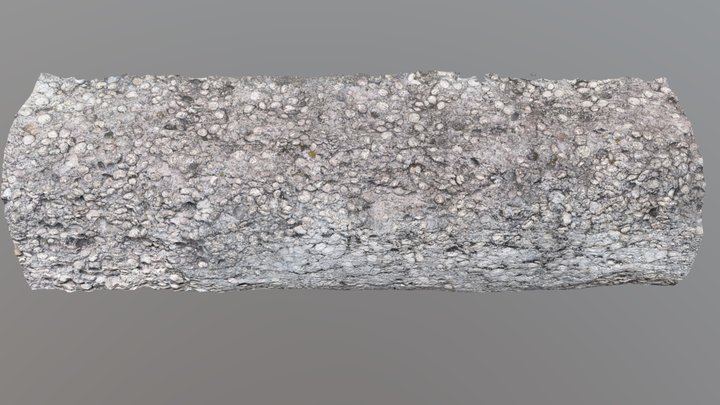
3D model
- Source
- Sketchfab
- Credit
- Tavernier Amaury
- Licence
- CC Attribution-NonCommercial-ShareAlike
- Commercial use
- the licence does not allow it
Smithsonian Open Access and MorphoSource were not reached for this taxon, so this list is what the others held rather than everything there is.
The description on this site
- Source
- Wikipedia, “Nummulite”
- Licence
- CC BY-SA 4.0
This is what the site found, which is not the same as what exists.
Keep going
What may have been alongside itNummulitinae through timeFormations of the EoceneThe world it lived on
Occurrence data from the Paleobiology Database, CC BY 4.0. Lamarck 1801