Ligustrum
A privet is a flowering plant in the genus Ligustrum. The genus contains about 50 species of erect, deciduous or evergreen shrubs or trees, with a native distribution from Europe to tropical and subtropical Asia, and with one species each native to Australia and north Africa. Some species have become widely naturalized or invasive where introduced. Privet was originally the name for the European semi-evergreen shrub Ligustrum vulgare, and later also for the more reliably evergreen Ligustrum ovalifolium and its hybrid Ligustrum × ibolium used extensively for privacy hedging, though now the name is applied to all members of the genus. The generic name was applied by Pliny the Elder to L. vulgare. It is often suggested that the name privet is related to private, but the Oxford English Dictionary states that there is no evidence to support this.

Frank Vincentz · CC BY-SA 3.0 · via Wikipedia/Commons. May be a photograph of a specimen, or an artist’s reconstruction — an interpretation of a skeleton, since colour and soft tissue are almost never preserved.
On record
Recorded, not inferred- Also called
- privetPBDB
- Sits inside
- OleaceaePBDB
- Diet
- "photoautotroph"PBDB, for Angiospermae
Time the record covers
At least 33 million years on record.
The record covers at least 33.9 Mya to 11.7 ka. No occurrence read is dated outside 66 Mya to 0 Mya.
10 occurrences of Ligustrum on record, most of them in the Miocene. The Paleobiology Database records this as a living group. Bar height is expected occurrences, not a count: each fossil is spread across the span it is dated to, so a tall narrow bar means tight dating and a low wide one means loose.
When
10 occurrencesThese are dates about fossils, not the animal: the record can only begin after it arose and end before it died out, so either end may reach further. Shares are expected occurrences: a fossil dated to a span is counted partly in each period it straddles. More on what this infers.
Found in
7 formations
- Okinoyama Formation · Ube Group2
- Itahana Formation · Tomioka Group1
- Chausuyama Formation1
- Ogawa Formation1
- Ohoka Formation1
- Bangmai Formation1
Loading coastlines…
The named rock units Ligustrum has been recovered from, largest first. Drawn where the rock is now, not where it formed. 2 occurrences have no formation on record, which is common for older literature.
Ligustrum and its relatives
MioceneWhere Ligustrum and its relatives were recorded in the Miocene.
Found in the same rock
253 taxa- Ilex6 sites
- Acer5 sites
- Alnus5 sites
- Cinnamomum5 sites
- Gleditsia5 sites
- Glyptostrobus europaeus5 sites
- Sophora5 sites
- Bambusites4 sites
- Celtis4 sites
- Deutzia sp.4 sites
- Maackia4 sites
- Metasequoia occidentalis4 sites
- Pterocarya4 sites
- Taxodium dubium4 sites
- Carex3 sites
- Carpinus3 sites
- Fagara3 sites
- Ficus tiliaefolia3 sites
- Leguminosites3 sites
- Litsea3 sites
- Magnolia3 sites
- Myrica3 sites
- Phragmites3 sites
- Pinus3 sites
The Paleobiology Database records 9 sites for Ligustrum, and this reads all of them. The number is how many of those sites it was catalogued from too. The 24 sharing the most are listed.
This is not a list of everything alive at the time. It is only what has come out of the same ground as this animal and been written down.
Entered from
6 references- Late Miocene and Pliocene Floras in Central Honshu, Japan4
- The Eocene flora of the Ube coal-field, southwest Honshu, Japan2
- A catalogue of Cenozoic megafossil plants in China1
- A Catalogue of Fossil Plants from India Part 6: Cenozoic (Quaternary) Palynology and Palaeobotany1
- A Catalogue of Fossil Plants from India Part 4: Cenozoic (Tertiary) Megafossils1
- Miocenska Flora ze Starych Gliwic na Slasku (Miocene Flora of Stare Gliwice in Upper Silesia)1
Each of the 10 occurrences read was entered from one of these publications, ordered by how many each accounts for. This is not a search for papers mentioning the name. Each entry links to the Paleobiology Database's own record for the work.
Media and terms
Media content2

Picture of Ligustrum
- Source
- Wikipedia/Commons
- Credit
- Frank Vincentz
- Licence
- CC BY-SA 3.0
- Commercial use
- the licence allows it
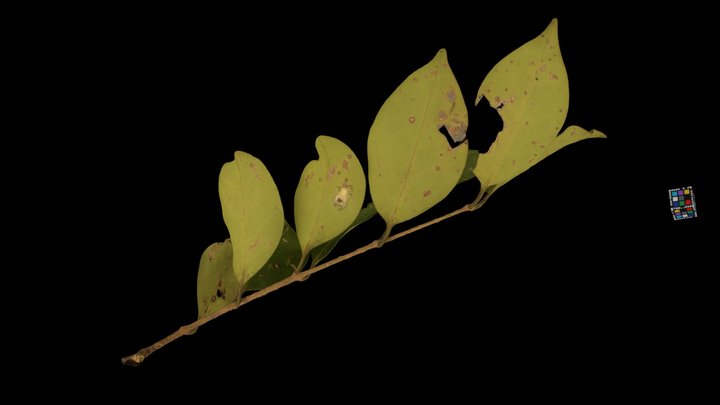
3D model
- Source
- Sketchfab
- Licence
- CC0 Public Domain
- Commercial use
- the licence allows it
Smithsonian Open Access and MorphoSource were not reached for this taxon, so this list is what the others held rather than everything there is.
The description on this site
- Source
- Wikipedia, “Privet”
- Licence
- CC BY-SA 4.0
This is what the site found, which is not the same as what exists.
Keep going
What may have been alongside itOleaceae through timeFormations of the MioceneThe world it lived on
Occurrence data from the Paleobiology Database, CC BY 4.0. Linnaeus 1753