Lepus americanus
The snowshoe hare, also called the varying hare or snowshoe rabbit, is a species of hare found in North America. The "snowshoe" moniker refers to the hare's large hind feet, which prevent it from sinking into soft snow, much like snowshoes.

Lepus_americanus_5459.JPG : Walter Siegmund (talk) derivative work: Wsiegmund · CC BY-SA 3.0 · via Wikipedia/Commons. May be a photograph of a specimen, or an artist’s reconstruction — an interpretation of a skeleton, since colour and soft tissue are almost never preserved.
On record
Recorded, not inferred- Also called
- snowshoe harePBDB
- Sits inside
- LepusPBDB
- Diet
- grazer, browserPBDB, for Leporidae
- Life habit
- ground dwellingPBDB, for Leporidae
- Motility
- actively mobilePBDB, for Osteichthyes
- Environment
- terrestrialPBDB, for Eutheria
Time the record covers
At least 198 thousand years on record.
The record covers at least 210 ka to 11.7 ka. No occurrence read is dated outside 2.58 Mya to 0 Mya.
24 occurrences of Lepus americanus on record, most of them in the Pleistocene. The Paleobiology Database records this as a living group. Bar height is expected occurrences, not a count: each fossil is spread across the span it is dated to, so a tall narrow bar means tight dating and a low wide one means loose.
When
24 occurrences- Pleistocene83%
- Holocene17%
These are dates about fossils, not the animal: the record can only begin after it arose and end before it died out, so either end may reach further. Shares are expected occurrences: a fossil dated to a span is counted partly in each period it straddles. More on what this infers.
Found in
1 formation
Loading coastlines…
The named rock units Lepus americanus has been recovered from, largest first. Drawn where the rock is now, not where it formed. 23 occurrences have no formation on record, which is common for older literature.
Lepus americanus and its relatives
PleistoceneWhere Lepus americanus and its relatives were recorded in the Pleistocene.
Found in the same rock
644 taxa- Tamiasciurus hudsonicus12 sites
- Odocoileus virginianus11 sites
- Canis latrans10 sites
- Castor canadensis10 sites
- Ondatra zibethicus10 sites
- Procyon lotor10 sites
- Microtus pennsylvanicus9 sites
- Sorex cinereus9 sites
- Tamias striatus9 sites
- Ursus americanus9 sites
- Vulpes vulpes9 sites
- Clethrionomys gapperi8 sites
- Equus8 sites
- Marmota monax8 sites
- Neogale vison8 sites
- Neotoma floridana8 sites
- Eptesicus fuscus7 sites
- Erethizon dorsatum7 sites
- Martes americana7 sites
- Mictomys borealis7 sites
- Peromyscus7 sites
- Peromyscus maniculatus7 sites
- Phenacomys intermedius7 sites
- Spermophilus tridecemlineatus7 sites
The Paleobiology Database records 23 sites for Lepus americanus, and this reads all of them. The number is how many of those sites it was catalogued from too. The 24 sharing the most are listed.
This is not a list of everything alive at the time. It is only what has come out of the same ground as this animal and been written down.
Entered from
22 references- Quaternary vertebrate localities of Virginia and their avian and mammalian fauna2
- Stratigraphic, Sedimentological and Faunal Evidence for the Occurrence of Pre-Sangamonian Artefacts in Northern Yukon2
- After Hopewell in Southern Québec1
- Implications of radiocarbon dates from Potter Creek Cave, Shasta County, California, USA1
- AMS-dated late Pleistocene taiga vole (Rodentia: Microtus xanthognathus) from northeast British Columbia, Canada: a cautionary lesson in chronology1
- Declining foraging returns from an inexhaustible resource? Abundance indices and beluga whaling in the western Canadian Arctic1
- Melrose Caverns: A Late Pleistocene Vertebrate Locality in Virginia, U.S.A.1
- Paleontology and historic field trip of the John Guilday Cave Preserve (Trout Rock)1
- Early Rancholabrean mammals from Salamander Cave, Black Hills, South Dakota1
- Mid-Wisconsinan vertebrates and their environment from January Cave, Alberta, Canada1
- Vertebrates of the Last Interglaciation in Canada: A Review, with New Data1
- Quaternary paleontology and paleocology of Crystal Ball Cave, Millard County, Utah: with emphasis on mammals and description of a new species of fossil skunk1
Each of the 24 occurrences read was entered from one of these publications, ordered by how many each accounts for. This is not a search for papers mentioning the name. 10 further references are not listed. Entries link to doi.org where the Paleobiology Database holds an identifier, and to its own record where it does not. Relayed as the Paleobiology Database holds them, not checked against what they resolve to.
Media and terms
Media content3

Picture of Lepus americanus
- Source
- Wikipedia/Commons
- Credit
- Lepus_americanus_5459.JPG : Walter Siegmund (talk) derivative work: Wsiegmund
- Licence
- CC BY-SA 3.0
- Commercial use
- the licence allows it
CT scan
- Source
- MorphoSource
- Credit
- AMNH Mammal Collections
- Licence
- not stated by the source
- Commercial use
- cannot be read from the licence given — check the record
- Specimen
- Lepus americanus · amnh:mammals:97648
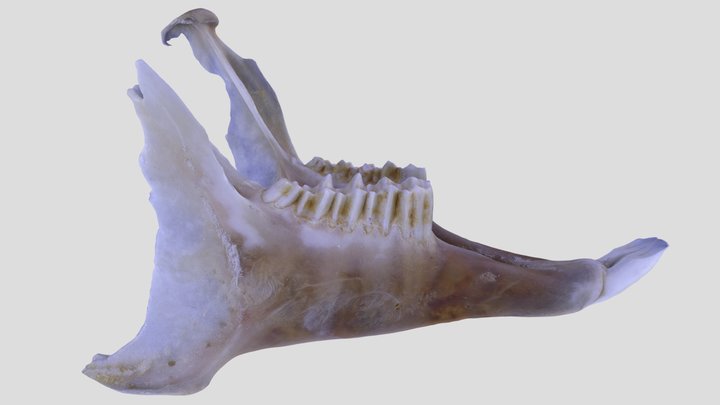
3D model
- Source
- Sketchfab
- Licence
- CC Attribution
- Commercial use
- cannot be read from the licence given — check the record
The description on this site
- Licence
- CC BY-SA 4.0
This is what the site found, which is not the same as what exists.
Keep going
What may have been alongside itLepus through timeFormations of the PleistoceneThe world it lived on
Occurrence data from the Paleobiology Database, CC BY 4.0. Erxleben 1777