Laurus
Laurus is a genus of evergreen trees or shrubs belonging to the laurel family. The genus contains three or more species, including the bay laurel or sweet bay, L. nobilis, widely cultivated as an ornamental plant and a culinary herb.

Frank Vincentz · CC BY-SA 3.0 · via Wikipedia/Commons. May be a photograph of a specimen, or an artist’s reconstruction — an interpretation of a skeleton, since colour and soft tissue are almost never preserved.
On record
Recorded, not inferred- Sits inside
- LauraceaePBDB
- Diet
- "photoautotroph"PBDB, for Angiospermae
Time the record covers
At least 97 million years on record.
The record covers at least 100.5 Mya to 2.58 Mya. No occurrence read is dated outside 106.3 Mya to 0 Mya.
62 occurrences of Laurus on record, most of them in the Eocene. The Paleobiology Database records this as a living group. Bar height is expected occurrences, not a count: each fossil is spread across the span it is dated to, so a tall narrow bar means tight dating and a low wide one means loose.
When
62 occurrences- Early Cretaceous2%
- Late Cretaceous11%
- Paleocene26%
- Eocene34%
- Oligocene2%
- Miocene22%
- Plioceneunder 1%
- Pleistocene3%
These are dates about fossils, not the animal: the record can only begin after it arose and end before it died out, so either end may reach further. Shares are expected occurrences: a fossil dated to a span is counted partly in each period it straddles. More on what this infers.
Found in
20 formations
- Sepulcher Formation13
- Latah Formation8
- Fort Union Formation6
- Lamar River Formation5
- Raton Formation3
- Aspen Shale Formation2
Loading coastlines…
The named rock units Laurus has been recovered from, largest first. Drawn where the rock is now, not where it formed. 8 occurrences have no formation on record, which is common for older literature.
Laurus and its relatives
EoceneWhere Laurus and its relatives were recorded in the Eocene.
Found in the same rock
805 taxa- Sequoia langsdorfii10 sites
- Cercidiphyllum8 sites
- Quercus7 sites
- Platanus guillelmae6 sites
- Sequoia6 sites
- Cissus marginata5 sites
- Diospyros primaeva5 sites
- Ficus5 sites
- Andromeda parlatorii4 sites
- Equisetum canaliculatum4 sites
- Ficus krausiana4 sites
- Juglans4 sites
- Juglans rugosa4 sites
- Leguminosites4 sites
- Myrica4 sites
- Phyllites4 sites
- Salix lesquereuxii4 sites
- Allantodiopsis erosa3 sites
- Ampelopsis acerifolia3 sites
- Aralia notata3 sites
- Bauhinia cretacea3 sites
- Betula3 sites
- Betula heteromorpha3 sites
- Betula largei3 sites
The Paleobiology Database records 49 sites for Laurus, and this reads all of them. The number is how many of those sites it was catalogued from too. The 24 sharing the most are listed.
This is not a list of everything alive at the time. It is only what has come out of the same ground as this animal and been written down.
Entered from
18 references- Fossil Flora of the Yellowstone National Park18
- Paleocene flora of the Rocky Mountains and Great Plains16
- Flora of the Latah formation of Spokane, Washington, and Coeur d'Alene, Idaho8
- Upper Cretaceous floras of the eastern Gulf region in Tennessee, Mississippi, Alabama, and Georgia3
- Kleinsäugerstratigraphie in der miozänen Hörnlischüttung (Ostschweiz); (Biostratigraphy of small mammals in the Hörnlischüttung of Miocene age (East Switzerland))2
- Étude sur les florès tertiaires de quelques gisements de lignite de l'Indochine et du Yunnan [Study on the Tertiary flora of some lignite deposits in Indochina and Yunnan]2
- The Upper Cretaceous and Eocene floras of South Carolina and Georgia2
- The Rauenberg fossil Lagerstätte (Baden-Württemberg, Germany): A window into early Oligocene marine and coastal ecosystems of Central Europe1
- Quantitative climate reconstructions of the late Miocene Xiaolongtan megaflora from Yunnan, southwest China1
- Die mittelmiozaenen und obermiozaenen Floren aus der Meuroer und Raunoer Folge in der Lausitz. III. Fundstellen und Palaeobiologie1
- La stratigraphie du remplissage de la Grotte du Vallonnet.1
- Angiosperms of the Northern Rocky Mountains: Albian to Campanian (Cretaceous) megafossil floras1
Each of the 62 occurrences read was entered from one of these publications, ordered by how many each accounts for. This is not a search for papers mentioning the name. 6 further references are not listed. Entries link to doi.org where the Paleobiology Database holds an identifier, and to its own record where it does not. Relayed as the Paleobiology Database holds them, not checked against what they resolve to.
Media and terms
Media content3

Picture of Laurus
- Source
- Wikipedia/Commons
- Credit
- Frank Vincentz
- Licence
- CC BY-SA 3.0
- Commercial use
- the licence allows it
CT scan
- Source
- MorphoSource
- Licence
- not stated by the source
- Commercial use
- cannot be read from the licence given — check the record
- Specimen
- "Laurus" macrocarpa · UF:Paleobotany:53142
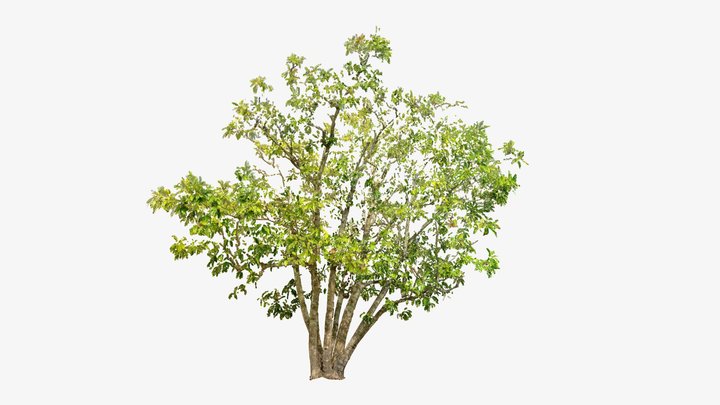
3D model
- Source
- Sketchfab
- Credit
- Brendan Harmon
- Licence
- CC Attribution
- Commercial use
- cannot be read from the licence given — check the record
The description on this site
- Source
- Wikipedia, “Laurus”
- Licence
- CC BY-SA 4.0
This is what the site found, which is not the same as what exists.
Keep going
What may have been alongside itLauraceae through timeFormations of the EoceneThe world it lived on
Occurrence data from the Paleobiology Database, CC BY 4.0. Linnaeus 1753