Cercidiphyllum
Cercidiphyllum is a genus containing two species of plants, both commonly called katsura. They are the sole members of the monotypic family Cercidiphyllaceae. The genus is native to Japan and China and unrelated to Cercis (redbuds).

Uploaded by MPF · Public Domain · via Wikipedia/Commons. May be a photograph of a specimen, or an artist’s reconstruction — an interpretation of a skeleton, since colour and soft tissue are almost never preserved.
On record
Recorded, not inferred- Also called
- katsuraPBDB
- Sits inside
- CercidiphyllaceaePBDB
- Diet
- "photoautotroph"PBDB, for Angiospermae
Time the record covers
At least 69 million years on record.
The record covers at least 72.2 Mya to 2.58 Mya. No occurrence read is dated outside 100.5 Mya to 774 ka.
262 occurrences of Cercidiphyllum on record, most of them in the Paleocene. The Paleobiology Database records this as a living group, and the chart stops with its fossils rather than at the present. Bar height is expected occurrences, not a count: each fossil is spread across the span it is dated to, so a tall narrow bar means tight dating and a low wide one means loose.
When
262 occurrences- Late Cretaceous15%
- Paleocene54%
- Eocene20%
- Oligocene4%
- Miocene5%
- Plioceneunder 1%
- Pleistoceneunder 1%
These are dates about fossils, not the animal: the record can only begin after it arose and end before it died out, so either end may reach further. Shares are expected occurrences: a fossil dated to a span is counted partly in each period it straddles. More on what this infers.
Found in
47 formations
- Fort Union Formation94
- Hell Creek Formation28
- Willwood Formation22
- Golden Valley Formation12
- John Day Formation5
- Challis Volcanics Formation5
Loading coastlines…
The named rock units Cercidiphyllum has been recovered from, largest first. Drawn where the rock is now, not where it formed. 23 further formations hold fewer occurrences each and are not listed. 34 occurrences have no formation on record, which is common for older literature.
Cercidiphyllum and its relatives
PaleoceneWhere Cercidiphyllum and its relatives were recorded in the Paleocene.
Found in the same rock
845 taxa- Metasequoia occidentalis63 sites
- Ampelopsis acerifolia55 sites
- Dicotyledoneae53 sites
- Glyptostrobus europaeus44 sites
- Platanus raynoldsii37 sites
- Hicoria antiquora32 sites
- Alnus27 sites
- Populus24 sites
- Acer23 sites
- Eucommia23 sites
- Equisetum22 sites
- Beringiaphyllum cupanioides19 sites
- Ginkgo adiantoides19 sites
- Platanus19 sites
- Averrhoites affinis18 sites
- Dryophyllum subfalcatum18 sites
- Glyptostrobus18 sites
- Taxodium18 sites
- Cocculus flabella17 sites
- Ficus artocarpoides17 sites
- Ulmus17 sites
- Vitis17 sites
- Celastrus16 sites
- Nordenskioldia borealis16 sites
The Paleobiology Database records 222 sites for Cercidiphyllum, and this reads all of them. The number is how many of those sites it was catalogued from too. The 24 sharing the most are listed.
This is not a list of everything alive at the time. It is only what has come out of the same ground as this animal and been written down.
Entered from
40 references- Paleocene flora of the Rocky Mountains and Great Plains59
- Plant and mammal diversity in the Paleocene to Early Eocene of the Bighorn Basin53
- Megaflora of the Hell Creek and lower Fort Union Formations in the western Dakotas: Vegetational response to climate change, the Cretaceous-Tertiary boundary event, and rapid marine transgression41
- Stratigraphy and paleobotany of the Golden Valley Formation (Early Tertiary) of western North Dakota12
- A Middle Eocene Flora from the Central Sierra Nevada9
- Late Paleocene-early Eocene climate changes in southwestern Wyoming: Paleobotanical analysis7
- A catalogue of Cenozoic megafossil plants in China7
- Palynological dating of Upper Cretaceous to middle Eocene strata in the Sagavanirktok and Canning formations, North Slope of Alaska6
- The Oligocene Bridge Creek flora of the John Day Formation, Oregon6
- Decoupled plant and insect diversity after the end-Cretaceous extinction5
- Die mittelmiozaenen und obermiozaenen Floren aus der Meuroer und Raunoer Folge in der Lausitz. III. Fundstellen und Palaeobiologie5
- The Eocene Germer Basin Flora of South-Central Idaho5
Each of the 262 occurrences read was entered from one of these publications, ordered by how many each accounts for. This is not a search for papers mentioning the name. 28 further references are not listed. Entries link to doi.org where the Paleobiology Database holds an identifier, and to its own record where it does not. Relayed as the Paleobiology Database holds them, not checked against what they resolve to.
Media and terms
Media content2

Picture of Cercidiphyllum
- Source
- Wikipedia/Commons
- Credit
- Uploaded by MPF
- Licence
- Public Domain
- Commercial use
- the licence allows it
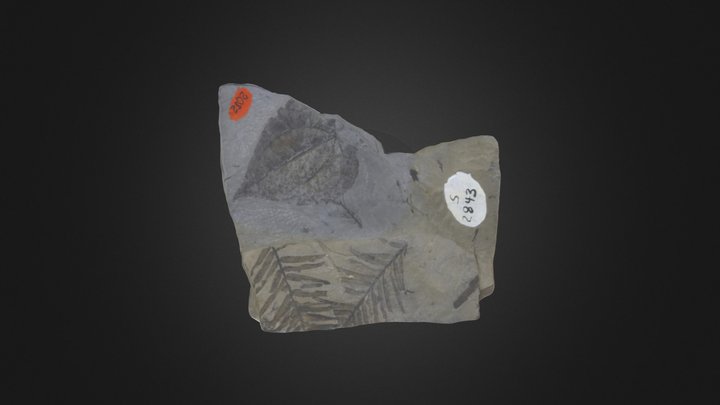
3D model
- Source
- Sketchfab
- Licence
- CC0 Public Domain
- Commercial use
- the licence allows it
The description on this site
- Licence
- CC BY-SA 4.0
This is what the site found, which is not the same as what exists.
Keep going
What may have been alongside itCercidiphyllaceae through timeFormations of the PaleoceneThe world it lived on
Occurrence data from the Paleobiology Database, CC BY 4.0. Siebold and Zuccarini 1846