Juresania
Juresania is an extinct genus of brachiopod that existed from the Carboniferous to the Permian.

Yale Peabody Museum · CC0 · via GBIF. May be a photograph of a specimen, or an artist’s reconstruction — an interpretation of a skeleton, since colour and soft tissue are almost never preserved.
On record
Recorded, not inferred- Sits inside
- JuresaniiniPBDB
- Diet
- suspension feederPBDB, for Productidina
- Life habit
- low-level epifaunalPBDB, for Productidina
- Motility
- stationaryPBDB, for Productidina
- Vision
- blindPBDB, for Strophomenata
- Environment
- marinePBDB, for Lophophorata
Time the record covers
At least 88 million years on record.
The record covers at least 342.9 Mya to 254.14 Mya. No occurrence read is dated outside 358.86 Mya to 251.902 Mya.
205 occurrences of Juresania on record, most of them in the Permian. Bar height is expected occurrences, not a count: each fossil is spread across the span it is dated to, so a tall narrow bar means tight dating and a low wide one means loose.
When
205 occurrences- Carboniferous28%
- Permian72%
These are dates about fossils, not the animal: the record can only begin after it arose and end before it died out, so either end may reach further. Shares are expected occurrences: a fossil dated to a span is counted partly in each period it straddles. More on what this infers.
Found in
61 formations
- Khuff Formation38
- Wood Siding Formation · Wabaunsee Group11
- Gaptank Formation10
- Grenola Limestone Formation · Council Grove Group7
- Foraker Limestone Formation · Council Grove Group7
- Graham Formation · Cisco Group5
Loading coastlines…
The named rock units Juresania has been recovered from, largest first. Drawn where the rock is now, not where it formed. 37 further formations hold fewer occurrences each and are not listed. 25 occurrences have no formation on record, which is common for older literature.
Juresania and its relatives
PermianWhere Juresania and its relatives were recorded in the Permian.
Found in the same rock
1,329 taxa- Crinoidea35 sites
- Derbyia32 sites
- Linoproductus31 sites
- Neochonetes granulifer30 sites
- Composita subtilita28 sites
- Neospirifer dunbari26 sites
- Composita22 sites
- Linoproductus antonioi17 sites
- Trepostomata16 sites
- Hustedia mormoni15 sites
- Punctospirifer kentuckensis15 sites
- Reticulatia huecoensis15 sites
- Aviculopecten14 sites
- Crurithyris expansa14 sites
- Hystriculina wabashensis14 sites
- Dielasma13 sites
- Fusulinidae13 sites
- Bryozoa12 sites
- Crurithyris12 sites
- Derbyia crassa12 sites
- Derbyia diversa12 sites
- Echinoidea12 sites
- Linoproductus prattenianus12 sites
- Perigeyerella raffaellae12 sites
The Paleobiology Database records 200 sites for Juresania, and this reads all of them. The number is how many of those sites it was catalogued from too. The 24 sharing the most are listed.
This is not a list of everything alive at the time. It is only what has come out of the same ground as this animal and been written down.
Entered from
55 references- Stratigraphy and Paleontology of the Uppermost Pennsylvanian and Lowermost Permian Rocks in Kansas37
- Taxonomy and quantitative biochronology of Guadalupian brachiopods from the Khuff Formation, southeastern Oman28
- Permian Brachiopods of West Texas, VI16
- Permian climatic and paleogeographic changes in northern Gondwana: the Khuff Formation of interior Oman10
- T.D. Olszewski''s Ph.D. - Penn State University8
- On some brachiopods of the Family Buxtoniidae7
- Upper Paleozoic of Peru6
- Artinskian-Kungurian (Early Permian) brachiopod faunas from the Tarim Basin, Northwest China, Part 1: Biostratigraphy and systematics of Productida5
- The brachiopods and the boundary of Late Carboniferous-Early Permian in Longlin region, Guangxi5
- Guadalupian brachiopods from western Taurus, Turkey4
- Kalashnikov, 19934
- Brachiopoda and Mollusca from the Productus limestones of the Salt Range4
Each of the 205 occurrences read was entered from one of these publications, ordered by how many each accounts for. This is not a search for papers mentioning the name. 43 further references are not listed. Entries link to doi.org where the Paleobiology Database holds an identifier, and to its own record where it does not. Relayed as the Paleobiology Database holds them, not checked against what they resolve to.
Media and terms
Media content2
Picture of Juresania
- Source
- GBIF
- Credit
- Yale Peabody Museum
- Licence
- CC0
- Commercial use
- the licence allows it
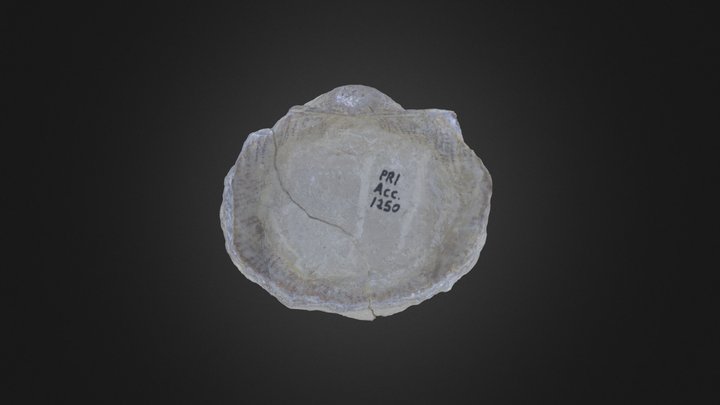
3D model
- Source
- Sketchfab
- Licence
- CC0 Public Domain
- Commercial use
- the licence allows it
The description on this site
- Source
- Wikipedia, “Juresania”
- Licence
- CC BY-SA 4.0
This is what the site found, which is not the same as what exists.
Keep going
What may have been alongside itJuresaniini through timeFormations of the PermianThe world it lived on
Occurrence data from the Paleobiology Database, CC BY 4.0. (Fredericks 1928)