Heterodon
Heterodon is a genus of harmless colubrid snakes endemic to North America. They are stout with upturned snouts and are perhaps best known for their characteristic threat displays. Three species are currently recognized. Members of the genus are commonly known as hognose snakes, hog-nosed snakes, North American hog-nosed snakes, and colloquially puff adders.

Dawson at en.wikipedia · CC BY-SA 2.5 · via Wikipedia/Commons. May be a photograph of a specimen, or an artist’s reconstruction — an interpretation of a skeleton, since colour and soft tissue are almost never preserved.
On record
Recorded, not inferred- Also called
- hog-nosed snakePBDB
- Sits inside
- XenodontinaePBDB
- Diet
- carnivorePBDB
- Life habit
- ground dwellingPBDB
- Motility
- actively mobilePBDB, for Osteichthyes
- Environment
- terrestrialPBDB, for Amniota
Time the record covers
At least 9.3 million years on record.
The record covers at least 9.4 Mya to 11.7 ka. No occurrence read is dated outside 23.04 Mya to 0 Mya.
72 occurrences of Heterodon on record, most of them in the Pleistocene. The Paleobiology Database records this as a living group. Bar height is expected occurrences, not a count: each fossil is spread across the span it is dated to, so a tall narrow bar means tight dating and a low wide one means loose.
When
72 occurrences- Miocene11%
- Pliocene9%
- Pleistocene57%
- Holocene22%
These are dates about fossils, not the animal: the record can only begin after it arose and end before it died out, so either end may reach further. Shares are expected occurrences: a fossil dated to a span is counted partly in each period it straddles. More on what this infers.
Found in
11 formations
- Kingsdown Formation6
- Rexroad Formation5
- Alamosa Formation4
- Long Pine Formation2
- Crooked Creek Formation2
- McPherson Formation2
Loading coastlines…
The named rock units Heterodon has been recovered from, largest first. Drawn where the rock is now, not where it formed. 46 occurrences have no formation on record, which is common for older literature.
Heterodon and its relatives
PleistoceneWhere Heterodon and its relatives were recorded in the Pleistocene.
Found in the same rock
1,010 taxa- Thamnophis30 sites
- Coluber constrictor20 sites
- Bufo18 sites
- Lampropeltis getulus17 sites
- Rana17 sites
- Nerodia16 sites
- Rana pipiens16 sites
- Equus15 sites
- Thamnophis sirtalis13 sites
- Agkistrodon12 sites
- Ambystoma tigrinum12 sites
- Bufo woodhousei12 sites
- Microtus pennsylvanicus12 sites
- Nerodia sipedon12 sites
- Elaphe obsoleta11 sites
- Eumeces11 sites
- Odocoileus virginianus11 sites
- Elaphe vulpina10 sites
- Lampropeltis triangulum10 sites
- Pituophis melanoleucus10 sites
- Spermophilus tridecemlineatus10 sites
- Camelops9 sites
- Chaetodipus hispidus9 sites
- Geomys9 sites
The Paleobiology Database records 64 sites for Heterodon, and this reads all of them. The number is how many of those sites it was catalogued from too. The 24 sharing the most are listed.
This is not a list of everything alive at the time. It is only what has come out of the same ground as this animal and been written down.
Entered from
37 references- A succession of Pliocene and Pleistocene snake faunas from the High Plains of the United States15
- A mass stranding of cetaceans caused by naval sonar in the Bahamas10
- Middle Pleistocene (late Irvingtonian: Nebraskan) climatic changes in south-central Colorado4
- Hemphillian (late Miocene) snakes from Nebraska, with comments on Arikareean through Blancan snakes of midcontinental North America3
- Herpetofauna of the Rancholabrean Schulze Cave local fauna of Texas2
- Herpetofaunas of the Big Springs and Hornet's Nest quarries (northeastern Nebraska, Pleistocene: Late Blancan)2
- Herpetofauna of the Sandahl Local fauna (Pleistocene: Illinoian) of Kansas2
- Catalog of Living Whales2
- The fossil snakes of Florida2
- The Pleistocene vertebrate fauna of Reddick, Florida2
- Amphibians and reptiles from the Pleistocene (Illinoian) of Williston, Florida2
- Determining the ages of sub-fossil cetacean remains, found in the Carse of Stirling, Scotland1
Each of the 72 occurrences read was entered from one of these publications, ordered by how many each accounts for. This is not a search for papers mentioning the name. 25 further references are not listed. Entries link to doi.org where the Paleobiology Database holds an identifier, and to its own record where it does not. Relayed as the Paleobiology Database holds them, not checked against what they resolve to.
Media and terms
Media content3

Picture of Heterodon
- Source
- Wikipedia/Commons
- Credit
- Dawson at en.wikipedia
- Licence
- CC BY-SA 2.5
- Commercial use
- the licence allows it
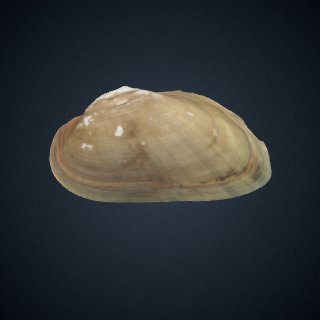
3D scan
- Source
- Smithsonian
- Licence
- CC0 — this site’s default, not the record’s
- Commercial use
- the licence allows it
- Specimen
- Alasmidonta heterodon
CT scan
- Source
- MorphoSource
- Licence
- In Copyright
- Commercial use
- cannot be read from the licence given — check the record
- Specimen
- HETERODON PLATYRHINOS · UMMZ:Herps:183628
The description on this site
- Source
- Wikipedia, “Heterodon”
- Licence
- CC BY-SA 4.0
This is what the site found, which is not the same as what exists.
Keep going
What may have been alongside itXenodontinae through timeFormations of the PleistoceneThe world it lived on
Occurrence data from the Paleobiology Database, CC BY 4.0. Latreille 1801