Hadrosaurus
Hadrosaurus is a genus of hadrosaurid ornithopod dinosaurs that lived in North America during the Late Cretaceous Period in what is now the Woodbury Formation in New Jersey about 83.6 to 77.9 million years ago. The holotype specimen was found in fluvial marine sedimentation, meaning that the corpse of the animal was transported by a river and washed out to sea. Some fossils are found in the Tar Heel/Coachman Formation.

Jim, the Photographer from Springfield PA, United States of America · CC BY 2.0 · via Wikipedia/Commons. May be a photograph of a specimen, or an artist’s reconstruction — an interpretation of a skeleton, since colour and soft tissue are almost never preserved.
On record
Recorded, not inferred- Sits inside
- BrachylophosauriniPBDB
- Diet
- herbivorePBDB, for Ornithopoda
- Life habit
- ground dwelling, gregariousPBDB, for Ornithischia
- Motility
- actively mobilePBDB, for Ornithischia
- Environment
- terrestrialPBDB, for Ornithischia
- Length
- 9 mWikidata
Time the record covers
At most 20 million years on record.
Every occurrence read is dated to somewhere between 85.7 Mya and 66 Mya, and nothing in the dating separates them, so that window is what the record shows rather than a span.
9 occurrences of Hadrosaurus on record, most of them in the Late Cretaceous. Bar height is expected occurrences, not a count: each fossil is spread across the span it is dated to, so a tall narrow bar means tight dating and a low wide one means loose.
When
9 occurrences- Late Cretaceous100%
These are dates about fossils, not the animal: the record can only begin after it arose and end before it died out, so either end may reach further. Shares are expected occurrences: a fossil dated to a span is counted partly in each period it straddles. More on what this infers.
Found in
7 formations
- Marshalltown Formation · Matawan Group1
- Woodbury Formation · Matawan Group1
- Navesink Formation · Monmouth Group1
- Frenchman Formation1
- Zhuravlevskaya Formation1
- Oldman Formation · Belly River Group1
Loading coastlines…
The named rock units Hadrosaurus has been recovered from, largest first. Drawn where the rock is now, not where it formed. 2 occurrences have no formation on record, which is common for older literature.
Hadrosaurus and its relatives
Late CretaceousWhere Hadrosaurus and its relatives were recorded in the Late Cretaceous.
Found in the same rock
172 taxa- Ischyrhiza mira3 sites
- Crocodylia2 sites
- Cubitostrea tecticosta2 sites
- Dryptosaurus2 sites
- Exogyra (Exogyra) costata2 sites
- Hadrosauridae2 sites
- Mosasaurus2 sites
- Pantrionychidae2 sites
- Scapanorhynchus texanus2 sites
- Squalicorax kaupi2 sites
- Trionychidae2 sites
- Turritella2 sites
- Acipenser1 site
- Acutostrea plumosa1 site
- Adocus beatus1 site
- Agerostrea1 site
- Agerostrea mesenterica1 site
- Agerostrea ungulatus1 site
- Albanerpetontidae1 site
- Allognathosuchus1 site
- Amia fragosa1 site
- Anguidae1 site
- Ankylosauria1 site
- Anomia1 site
The Paleobiology Database records 9 sites for Hadrosaurus, and this reads all of them. The number is how many of those sites it was catalogued from too. The 24 sharing the most are listed.
This is not a list of everything alive at the time. It is only what has come out of the same ground as this animal and been written down.
Entered from
9 references- Dinozavri severnoi Yevrazii: Novye dannye o sostave kompleksov, ekologii i paleobiogeografii [Dinosaurs of northern Eurasia: new data about assemblages, ecology, and paleobiogeography]1
- The Cretaceous/Tertiary mass extinction event in the North Atlantic coastal plain1
- Alphadon (Marsupialia) and Multituberculata (Allotheria) in the Cretaceous of eastern North America1
- Paleontology, biostratigraphy, and depositional environments of the Cretaceous-Tertiary transition in the New Jersey coastal plain1
- Mesozoic vertebrate life in Alberta and British Columbia1
- Cretaceous vertebrate fauna from Phoebus Landing, North Carolina1
- On the transition beds of the Saskatchewan district1
- [The specimen of a large phalanx of an extinct reptile]1
- [On the bones of a huge herbivorous saurian near Haddonfield]1
Each of the 9 occurrences read was entered from one of these publications, ordered by how many each accounts for. This is not a search for papers mentioning the name. Entries link to doi.org where the Paleobiology Database holds an identifier, and to its own record where it does not. Relayed as the Paleobiology Database holds them, not checked against what they resolve to.
Media and terms
Media content3

Picture of Hadrosaurus
- Source
- Wikipedia/Commons
- Credit
- Jim, the Photographer from Springfield PA, United States of America
- Licence
- CC BY 2.0
- Commercial use
- the licence allows it
CT scan
- Source
- MorphoSource
- Licence
- In Copyright
- Commercial use
- cannot be read from the licence given — check the record
- Specimen
- Hadrosaurus sp · pss-mae:MAE:19-46
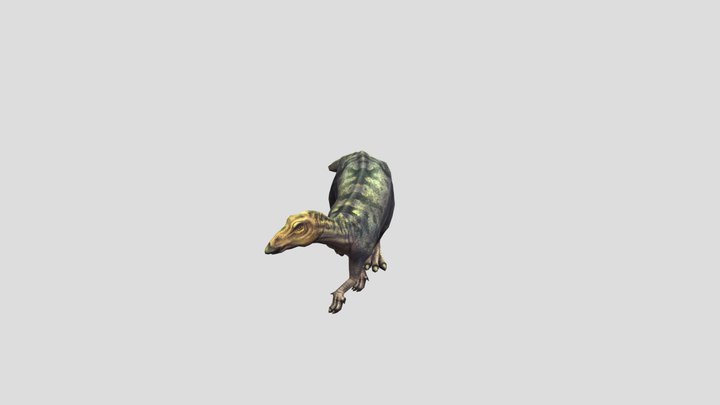
Smithsonian Open Access was not reached for this taxon, so this list is what the others held rather than everything there is.
The description on this site
- Source
- Wikipedia, “Hadrosaurus”
- Licence
- CC BY-SA 4.0
This is what the site found, which is not the same as what exists.
Keep going
What may have been alongside itBrachylophosaurini through timeFormations of the Late CretaceousThe world it lived on
Occurrence data from the Paleobiology Database, CC BY 4.0. Leidy 1858