Gryposaurus
Gryposaurus was a genus of duckbilled dinosaur that lived about 80 to 75 million years ago, in the Late Cretaceous of North America. Named species of Gryposaurus are known from the Dinosaur Park Formation in Alberta, Canada, and two formations in the United States: the Lower Two Medicine Formation in Montana and the Kaiparowits Formation of Utah. A possible additional species from the Javelina Formation in Texas may extend the temporal range of the genus to 66 million years ago.

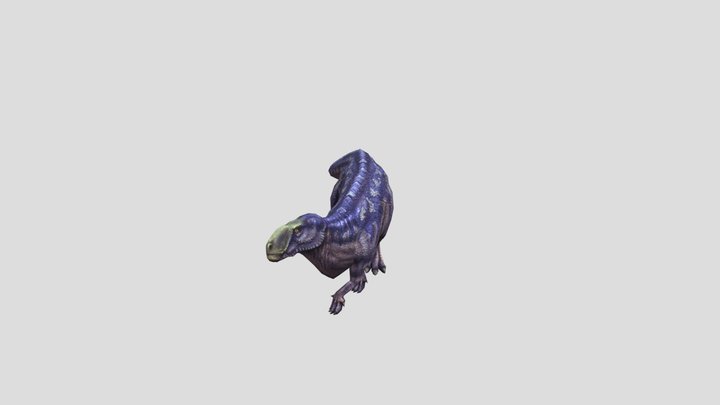
Berkeley T. Compton · CC BY-SA 2.0 · via Wikipedia/Commons. May be a photograph of a specimen, or an artist’s reconstruction — an interpretation of a skeleton, since colour and soft tissue are almost never preserved.
On record
Recorded, not inferred- Sits inside
- KritosauriniPBDB
- Diet
- herbivorePBDB, for Ornithopoda
- Life habit
- ground dwelling, gregariousPBDB, for Ornithischia
- Motility
- actively mobilePBDB, for Ornithischia
- Environment
- terrestrialPBDB, for Ornithischia
- Length
- 10 mWikidata
Time the record covers
At least 127 million years on record.
The record covers at least 199.5 Mya to 72.2 Mya. No occurrence read is dated outside 201.4 Mya to 66 Mya.
31 occurrences of Gryposaurus on record, most of them in the Late Cretaceous. Bar height is expected occurrences, not a count: each fossil is spread across the span it is dated to, so a tall narrow bar means tight dating and a low wide one means loose.
When
31 occurrencesThese are dates about fossils, not the animal: the record can only begin after it arose and end before it died out, so either end may reach further. Shares are expected occurrences: a fossil dated to a span is counted partly in each period it straddles. More on what this infers.
Found in
10 formations
- Dinosaur Park Formation · Belly River Group11
- Lufeng Formation8
- Kaiparowits Formation4
- Two Medicine Formation · Montana Group2
- Oldman Formation · Belly River Group1
- Bearpaw Shale Formation · Montana Group1
Loading coastlines…
The named rock units Gryposaurus has been recovered from, largest first. Drawn where the rock is now, not where it formed.
Gryposaurus and its relatives
Late CretaceousWhere Gryposaurus and its relatives were recorded in the Late Cretaceous.
Found in the same rock
120 taxa- Gyposaurus sinensis9 sites
- Yunnanosaurus huangi7 sites
- Lufengosaurus huenei6 sites
- Lufengosaurus magnus6 sites
- Sinosaurus triassicus6 sites
- Hadrosauridae4 sites
- Lukousaurus yini4 sites
- Ornithomimidae4 sites
- Yunnanosaurus robustus4 sites
- Ankylosauridae3 sites
- Crocodylia3 sites
- Lambeosaurinae3 sites
- Pterosauria3 sites
- Theropoda3 sites
- Archosauria2 sites
- Bienotherium yunnanense2 sites
- Ceratopsia2 sites
- Ceratopsidae2 sites
- Champsosaurus2 sites
- Coelophysoidea2 sites
- Crocodyliformes2 sites
- Hypsilophodontidae2 sites
- Lepisosteidae2 sites
- Lufengosaurus2 sites
The Paleobiology Database records 31 sites for Gryposaurus, and this reads all of them. The number is how many of those sites it was catalogued from too. The 24 sharing the most are listed.
This is not a list of everything alive at the time. It is only what has come out of the same ground as this animal and been written down.
Entered from
23 references- The geographic and stratigraphic distribution of articulated and associated dinosaur remains5
- Further notes on Gyposaurus sinensis Young3
- A juvenile hadrosaur maxilla from the Dinosaur Park Formation (Campanian) of Dinosaur Provincial Park (Alberta, Canada)2
- The non-therapsid reptiles of the Lufeng Basin, Yunnan, China2
- Hadrosaurian dinosaurs from the Maastrichtian Javelina Formation, Big Bend National Park, Texas1
- The ‘duck-billed’ dinosaurs of Careless Creek (Upper Cretaceous of Montana, USA), with comments on hadrosaurid ontogeny1
- Ornithopod dinosaurs from the Grand Staircase-Escalante National Monument region, Utah, and their role in paleobiogeographic and macroevolutionary studies1
- Review of Late Cretaceous ankylosaurian dinosaurs from the Grand Staircase region, southern Utah1
- Skeletal morphology of Kritosaurus navajovius (Dinosauria: Hadrosauridae) from the Late Cretaceous of the North American south-west, with an evaluation of the phylogenetic systematics and biogeography of Kritosaurini1
- Cranial and appendicular ontogeny of Bactrosaurus johnsoni, a hadrosauroid dinosaur from the Late Cretaceous of northern China1
- Late Cretaceous ornithopod dinosaurs from the Kaiparowits Plateau, Grand Staircase-Escalante National Monument, Utah1
- The braincase and skull of Gryposaurus notabilis (Dinosauria, Hadrosauridae), with a taxonomic revision of the genus1
Each of the 31 occurrences read was entered from one of these publications, ordered by how many each accounts for. This is not a search for papers mentioning the name. 11 further references are not listed. Entries link to doi.org where the Paleobiology Database holds an identifier, and to its own record where it does not. Relayed as the Paleobiology Database holds them, not checked against what they resolve to.
Media and terms
Media content2

Picture of Gryposaurus
- Source
- Wikipedia/Commons
- Credit
- Berkeley T. Compton
- Licence
- CC BY-SA 2.0
- Commercial use
- the licence allows it
Smithsonian Open Access and MorphoSource were not reached for this taxon, so this list is what the others held rather than everything there is.
The description on this site
- Source
- Wikipedia, “Gryposaurus”
- Licence
- CC BY-SA 4.0
This is what the site found, which is not the same as what exists.
Keep going
What may have been alongside itKritosaurini through timeFormations of the Late CretaceousThe world it lived on
Occurrence data from the Paleobiology Database, CC BY 4.0. Lambe 1914