Ornithomimidae
Ornithomimidae is a family of theropod dinosaurs which bore a superficial resemblance to modern ostriches. Ornithomimids were cursorial, omnivorous or herbivorous dinosaurs known mainly from the Late Cretaceous Period of Laurasia, though they have also been reported from the Lower Cretaceous Wonthaggi Formation of Australia.

Sebastian Bergmann from Siegburg, Germany · CC BY-SA 2.0 · via Wikipedia/Commons. May be a photograph of a specimen, or an artist’s reconstruction — an interpretation of a skeleton, since colour and soft tissue are almost never preserved.
On record
Recorded, not inferred- Also called
- ornithomimidPBDB
- Sits inside
- OrnithomimosauriaPBDB
- Diet
- herbivore, omnivorePBDB, for Ornithomimosauria
- Life habit
- ground dwelling, gregariousPBDB, for Ornithomimosauria
- Motility
- actively mobilePBDB, for Ornithomimosauria
- Environment
- terrestrialPBDB, for Ornithomimosauria
Time the record covers
At least 49 million years on record.
The record covers at least 121.4 Mya to 72.2 Mya. No occurrence read is dated outside 143.1 Mya to 66 Mya.
259 occurrences of Ornithomimidae on record, most of them in the Late Cretaceous. Bar height is expected occurrences, not a count: each fossil is spread across the span it is dated to, so a tall narrow bar means tight dating and a low wide one means loose.
When
259 occurrencesThese are dates about fossils, not the animal: the record can only begin after it arose and end before it died out, so either end may reach further. Shares are expected occurrences: a fossil dated to a span is counted partly in each period it straddles. More on what this infers.
Found in
56 formations
- Nemegt Formation35
- Dinosaur Park Formation · Belly River Group19
- Horseshoe Canyon Formation · Edmonton Group17
- Bissekty Formation17
- Hell Creek Formation · Montana Group13
- Lance Formation11
Loading coastlines…
The named rock units Ornithomimidae has been recovered from, largest first. Drawn where the rock is now, not where it formed. 32 further formations hold fewer occurrences each and are not listed. 10 occurrences have no formation on record, which is common for older literature.
Ornithomimidae and its relatives
Late CretaceousWhere Ornithomimidae and its relatives were recorded in the Late Cretaceous.
Found in the same rock
918 taxa- Hadrosauridae60 sites
- Theropoda51 sites
- Trionychidae48 sites
- Tyrannosauridae43 sites
- Crocodylia36 sites
- Ceratopsidae26 sites
- Champsosaurus26 sites
- Dromaeosauridae22 sites
- Baenidae21 sites
- Ornithomimus21 sites
- Testudinata20 sites
- Ankylosauridae19 sites
- Dinosauria19 sites
- Osteichthyes19 sites
- Sauropoda18 sites
- Basilemys17 sites
- Cyclurus fragosus15 sites
- Lepisosteidae15 sites
- Myledaphus bipartitus15 sites
- Adocus14 sites
- Gallimimus bullatus14 sites
- Saurornitholestes14 sites
- Ankylosauria13 sites
- Gallimimus13 sites
The Paleobiology Database records 252 sites for Ornithomimidae, and this reads 240 of them. The number is how many of those sites it was catalogued from too. The 24 sharing the most are listed.
This is not a list of everything alive at the time. It is only what has come out of the same ground as this animal and been written down.
Entered from
132 references- Ostrich dinosaurs from the late Cretaceous of western Canada20
- Ornithomimidae (Dinosauria: Theropoda) from the Bissekty Formation (Upper Cretaceous: Turonian) of Uzbekistan15
- Dinosaurs, the age of the Fruitland and Kirtland Formations, and the Cretaceous-Tertiary boundary in the San Juan Basin, New Mexico12
- A new dinosaur, Gallimimus bullatus n. gen., n. sp. (Ornithomimidae) from the Upper Cretaceous of Mongolia12
- Diversity of Late Cretaceous dinosaurs from Mexico7
- Vertebrate biostratigraphy of the Hell Creek Formation in southwestern North Dakota and northwestern South Dakota7
- Vertebrate faunal changes through Lancian and Puercan time in southern Wyoming6
- Theropod dinosaurs from Late Cretaceous deposits in the northeastern Aral Sea region, Kazakhstan5
- Report on the Japan–Mongolia Joint Paleontological Expedition to the Gobi desert, 19945
- Dinozavri severnoi Yevrazii: Novye dannye o sostave kompleksov, ekologii i paleobiogeografii [Dinosaurs of northern Eurasia: new data about assemblages, ecology, and paleobiogeography]5
- Narrative of the Korea-Mongolian International Dinosaur expeditions (KID) 2006–2010 with scientific results4
- Faunal composition and significance of high-diversity, mixed bonebeds containing Agujaceratops mariscalensis and other dinosaurs, Aguja Formation (Upper Cretaceous), Big Bend, Texas4
Each of the 259 occurrences read was entered from one of these publications, ordered by how many each accounts for. This is not a search for papers mentioning the name. 120 further references are not listed. Entries link to doi.org where the Paleobiology Database holds an identifier, and to its own record where it does not. Relayed as the Paleobiology Database holds them, not checked against what they resolve to.
Media and terms
Media content3

Picture of Ornithomimidae
- Source
- Wikipedia/Commons
- Credit
- Sebastian Bergmann from Siegburg, Germany
- Licence
- CC BY-SA 2.0
- Commercial use
- the licence allows it
Structured light scan
- Source
- MorphoSource
- Licence
- not stated by the source
- Commercial use
- cannot be read from the licence given — check the record
- Specimen
- Ornithomimidae indet. · dmnh:epv:150680
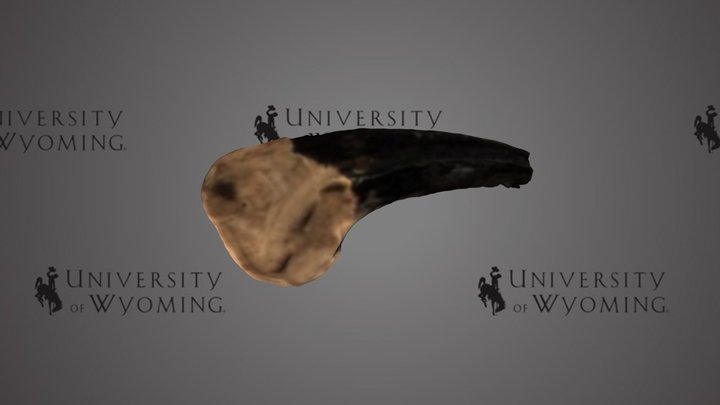
3D model
- Source
- Sketchfab
- Licence
- CC Attribution-NonCommercial
- Commercial use
- the licence does not allow it
The description on this site
- Licence
- CC BY-SA 4.0
This is what the site found, which is not the same as what exists.
Keep going
What may have been alongside itOrnithomimosauria through timeFormations of the Late CretaceousThe world it lived on
Occurrence data from the Paleobiology Database, CC BY 4.0. Marsh 1890