Glassia

via iDigBio · CC0 · via iDigBio. May be a photograph of a specimen, or an artist’s reconstruction — an interpretation of a skeleton, since colour and soft tissue are almost never preserved.
On record
Recorded, not inferred- Sits inside
- GlassiidaePBDB
- Diet
- suspension feederPBDB, for Atrypida
- Life habit
- epifaunalPBDB, for Atrypida
- Motility
- stationaryPBDB, for Atrypida
- Vision
- blindPBDB, for Rhynchonellata
- Environment
- marinePBDB, for Lophophorata
Time the record covers
At least 52 million years on record.
The record covers at least 440.5 Mya to 387.95 Mya. No occurrence read is dated outside 443.1 Mya to 382.31 Mya.
120 occurrences of Glassia on record, most of them in the Silurian. Bar height is expected occurrences, not a count: each fossil is spread across the span it is dated to, so a tall narrow bar means tight dating and a low wide one means loose.
When
120 occurrencesThese are dates about fossils, not the animal: the record can only begin after it arose and end before it died out, so either end may reach further. Shares are expected occurrences: a fossil dated to a span is counted partly in each period it straddles. More on what this infers.
Found in
41 formations
- Roberts Mountain Formation14
- Much Wenlock Formation11
- Tangxiang Formation8
- Road River Formation6
- Whittaker Formation6
- Cape Phillips Formation5
Loading coastlines…
The named rock units Glassia has been recovered from, largest first. Drawn where the rock is now, not where it formed. 17 further formations hold fewer occurrences each and are not listed. 24 occurrences have no formation on record, which is common for older literature.
Glassia and its relatives
SilurianWhere Glassia and its relatives were recorded in the Silurian.
Found in the same rock
947 taxa- Gypidula38 sites
- Dalejina35 sites
- Howellella35 sites
- Nucleospira32 sites
- Atrypa29 sites
- Leptaena27 sites
- Isorthis25 sites
- Cyrtina21 sites
- Skenidioides21 sites
- Schizophoria19 sites
- Atrypa reticularis18 sites
- Salopina17 sites
- Salopina submurifer17 sites
- Dolerorthis16 sites
- Eospirifer16 sites
- Septatrypa16 sites
- Resserella15 sites
- Reticulariopsis15 sites
- Dicaelosia nitida14 sites
- Amphistrophia13 sites
- Crinoidea13 sites
- Fardenia (Coolinia)13 sites
- Plectodonta12 sites
- Skenidioides robertsensis12 sites
The Paleobiology Database records 105 sites for Glassia, and this reads all of them. The number is how many of those sites it was catalogued from too. The 24 sharing the most are listed.
This is not a list of everything alive at the time. It is only what has come out of the same ground as this animal and been written down.
Entered from
43 references- Pridolian and early Gedinnian age brachiopods from the Roberts Mountains Formation of central Nevada19
- Brachiopod assemblages from the Much Wenlock Limestone Formation of England and Wales9
- Brachiopods and their relation to facies development in the lower and Middle Devonian of Nandan, Guangxi, South China9
- Wenlockian to Pragian brachiopod communities of the northern Canadian Cordillera8
- New data on the stratigraphy and correlation of the South - East Baltic Wenlockian and Ludlovian (Silurian)7
- Wenlockian (Silurian) brachiopods of the Cape Phillips Formation, Baillie Hamilton Island, Arctic Canada: part I5
- Trilobite assemblages of the North Atlantic Region4
- The Silurian fauna of the Sandpile Group of northern British Columbia4
- Silurian communities of the Oslo Region, Norway3
- Brachiopod communities of the Lithuanian Silurian3
- Yukon Territory3
- Upper Silurian and Lower Devonian brachiopods of Royal Creek, Yukon Canada. Part 1. Orthoida, Strophomenida, Pentamerida, Rhynchonellida3
Each of the 120 occurrences read was entered from one of these publications, ordered by how many each accounts for. This is not a search for papers mentioning the name. 31 further references are not listed. Entries link to doi.org where the Paleobiology Database holds an identifier, and to its own record where it does not. Relayed as the Paleobiology Database holds them, not checked against what they resolve to.
Media and terms
Media content2
Picture of Glassia
- Source
- iDigBio
- Credit
- via iDigBio
- Licence
- CC0
- Commercial use
- the licence allows it
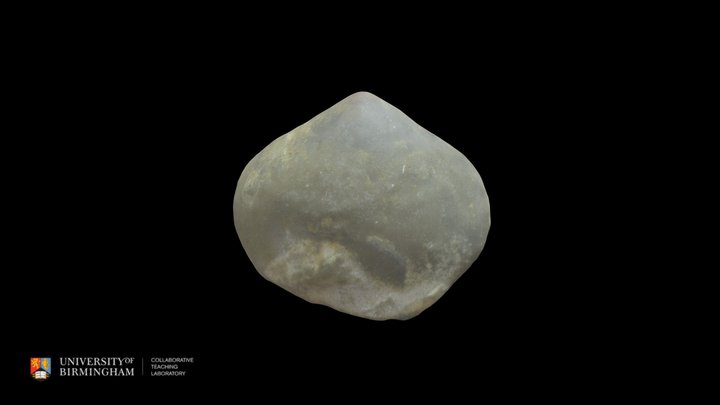
3D model
- Source
- Sketchfab
- Licence
- CC Attribution
- Commercial use
- cannot be read from the licence given — check the record
Smithsonian Open Access was not reached for this taxon, so this list is what the others held rather than everything there is.
This is what the site found, which is not the same as what exists.
Keep going
What may have been alongside itGlassiidae through timeFormations of the SilurianThe world it lived on
Occurrence data from the Paleobiology Database, CC BY 4.0. Davidson 1881