Galagidae
Galagos, also known as bush babies or nagapies, are small nocturnal primates native to continental, sub-Sahara Africa, and make up the family Galagidae. They are considered a sister group of the Lorisidae.

Jacobmacmillan · CC BY-SA 4.0 · via Wikipedia/Commons. May be a photograph of a specimen, or an artist’s reconstruction — an interpretation of a skeleton, since colour and soft tissue are almost never preserved.
On record
Recorded, not inferred- Also called
- galagoPBDB
- Sits inside
- LorisoideaPBDB
- Diet
- insectivore, frugivorePBDB
- Life habit
- arborealPBDB, for Primates
- Motility
- actively mobilePBDB, for Osteichthyes
- Environment
- terrestrialPBDB, for Eutheria
Time the record covers
At least 33 million years on record.
The record covers at least 33.9 Mya to 11.7 ka. No occurrence read is dated outside 37.71 Mya to 0 Mya.
23 occurrences of Galagidae on record, most of them in the Pleistocene. The Paleobiology Database records this as a living group. Bar height is expected occurrences, not a count: each fossil is spread across the span it is dated to, so a tall narrow bar means tight dating and a low wide one means loose.
When
23 occurrencesThese are dates about fossils, not the animal: the record can only begin after it arose and end before it died out, so either end may reach further. Shares are expected occurrences: a fossil dated to a span is counted partly in each period it straddles. More on what this infers.
Found in
9 formations
- Shungura Formation · Omo Group4
- Olduvai Formation2
- Humbu Formation · Peninj Group2
- Kanapoi Formation1
- Maboko Formation1
- Vogel River Series Formation1
Loading coastlines…
The named rock units Galagidae has been recovered from, largest first. Drawn where the rock is now, not where it formed. 9 occurrences have no formation on record, which is common for older literature.
Galagidae and its relatives
PleistoceneWhere Galagidae and its relatives were recorded in the Pleistocene.
Found in the same rock
543 taxa- Hystrix8 sites
- Thallomys8 sites
- Tatera7 sites
- Epimys (Aethomys)6 sites
- Galago6 sites
- Reptilia6 sites
- Bovidae5 sites
- Clarias5 sites
- Deinotherium bozasi5 sites
- Dendromus5 sites
- Galago senegalensis5 sites
- Hipparion5 sites
- Mus5 sites
- Paraxerus5 sites
- Potamochoerus porcus5 sites
- Tragelaphus strepsiceros5 sites
- Aepyceros melampus4 sites
- Amphibia4 sites
- Equus4 sites
- Lepus4 sites
- Saccostomus4 sites
- Thryonomys swinderianus4 sites
- Tragelaphus4 sites
- Tragelaphus scriptus4 sites
The Paleobiology Database records 22 sites for Galagidae, and this reads all of them. The number is how many of those sites it was catalogued from too. The 24 sharing the most are listed.
This is not a list of everything alive at the time. It is only what has come out of the same ground as this animal and been written down.
Entered from
19 references- The Omo Micromammals: Systematics and Paleoecology of Early Man Sites from Ethiopia3
- La faune des depots pleistocenes de Ouest du lac Natron (Tanzanie) interpretation biostratigraphique2
- The Prehistory of Eastern Zambia2
- A new species of Nyanzachoerus (Mammalia, Artiodactyla, Suidae, Tetraconodontinae) from the upper Miocene Nakali Formation, Kenya1
- Indications for a humid climate in the Western Desert of Egypt 11–10 Myr ago: evidence from Galagidae (Primates, Mammalia)1
- Early Pliocene Tetrapod Remains from Kanapoi, Lake Turkana Basin, Kenya1
- New Catarrhine fossils from Moroto II, Early Middle Miocene (ca 17.5 Ma) Uganda1
- Fossil evidence for an ancient divergence of lorises and galagos1
- Discovery of the Smallest Fayum Egyptian Primates (Anchomomyini, Adapidae)1
- New species of bushbaby from the Middle Miocene of Maboko Island, Kenya1
- New hominoid fossils from the early Miocene site of Songhor, Kenya1
- Les faunes de vertebres quaternaires en Afrique centrale1
Each of the 23 occurrences read was entered from one of these publications, ordered by how many each accounts for. This is not a search for papers mentioning the name. 7 further references are not listed. Entries link to doi.org where the Paleobiology Database holds an identifier, and to its own record where it does not. Relayed as the Paleobiology Database holds them, not checked against what they resolve to.
Media and terms
Media content2

Picture of Galagidae
- Source
- Wikipedia/Commons
- Credit
- Jacobmacmillan
- Licence
- CC BY-SA 4.0
- Commercial use
- the licence allows it
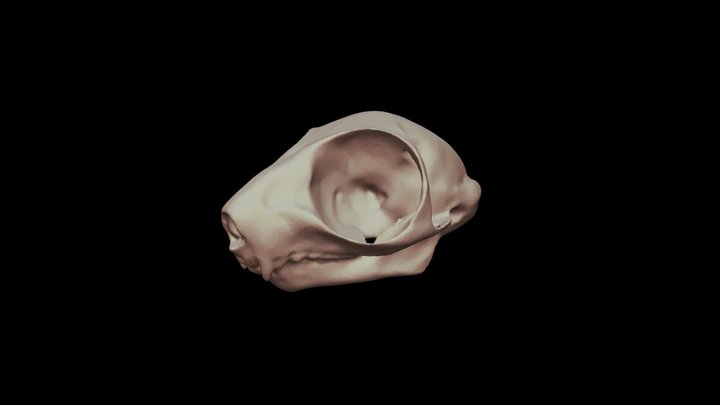
3D model
- Source
- Sketchfab
- Credit
- upeshnepal1
- Licence
- CC Attribution-NonCommercial-NoDerivs
- Commercial use
- the licence does not allow it
The description on this site
- Source
- Wikipedia, “Galago”
- Licence
- CC BY-SA 4.0
This is what the site found, which is not the same as what exists.
Keep going
What may have been alongside itLorisoidea through timeFormations of the PleistoceneThe world it lived on
Occurrence data from the Paleobiology Database, CC BY 4.0. (Mivart 1864)