Felis catus
The cat, also called domestic cat and house cat, is a small domesticated carnivorous mammal. It is a member of Felidae, the family of mammals in the order Carnivora also colloquially referred to as cats. It is an obligate carnivore, requiring a predominantly meat-based diet. Its retractable claws are adapted to killing small prey species such as mice and rats. It has a strong, flexible body, quick reflexes, and sharp teeth, and its night vision and sense of smell are well developed. It is a social species, but a solitary hunter and a crepuscular predator. Cat communication includes meowing, purring, trilling, hissing, growling, grunting, body language, and scent marking. It can hear sounds too faint or too high in frequency for human ears, such as those made by small mammals. It secretes and perceives pheromones. Cat intelligence is evident in its ability to adapt, learn through observation, and solve problems. The domestic cat is the only domesticated species of the family Felidae.

Karin Langner-Bahmann , upload von Martin Bahmann · CC BY-SA 3.0 · via Wikipedia/Commons. May be a photograph of a specimen, or an artist’s reconstruction — an interpretation of a skeleton, since colour and soft tissue are almost never preserved.
On record
Recorded, not inferred- Also called
- catPBDB
- Sits inside
- FelisPBDB
- Diet
- carnivorePBDB, for Felidae
- Life habit
- scansorialPBDB, for Felidae
- Motility
- actively mobilePBDB, for Osteichthyes
- Environment
- terrestrialPBDB, for Eutheria
Time the record covers
At least 762 thousand years on record.
The record covers at least 774 ka to 11.7 ka. No occurrence read is dated outside 2.58 Mya to 0 Mya.
4 occurrences of Felis catus on record. The Paleobiology Database records this as a living group. Bar height is expected occurrences, not a count: each fossil is spread across the span it is dated to, so a tall narrow bar means tight dating and a low wide one means loose.
When
4 occurrences- Pleistocene25%
- Holocene75%
These are dates about fossils, not the animal: the record can only begin after it arose and end before it died out, so either end may reach further. Shares are expected occurrences: a fossil dated to a span is counted partly in each period it straddles. More on what this infers.
Found in the same rock
122 taxa- Canis familiaris4 sites
- Bos taurus3 sites
- Capra hircus3 sites
- Cervus elaphus3 sites
- Equus3 sites
- Lepus3 sites
- Oryctolagus cuniculus3 sites
- Aegypius monachus2 sites
- Alectoris rufa2 sites
- Equus caballus2 sites
- Meles meles2 sites
- Ovis2 sites
- Ovis aries2 sites
- Sus2 sites
- Sus scrofa2 sites
- Accipitridae1 site
- Acipenser1 site
- aff. Candidula sp.1 site
- Alces1 site
- Anancus arvernensis1 site
- Anatidae1 site
- Anser1 site
- Apodemus1 site
- Arvicola terrestris1 site
The Paleobiology Database records 4 sites for Felis catus, and this reads all of them. The number is how many of those sites it was catalogued from too. The 24 sharing the most are listed.
This is not a list of everything alive at the time. It is only what has come out of the same ground as this animal and been written down.
Entered from
4 references- Animal remains from 17th century Carnide, Lisbon, Portugal.1
- Entre veados e ovelhas, um dromedário e uma baleia de permeio: arqueozoologia em Mértola desde a Idade do Ferro até ´Época Medieval1
- The Kor & Bot collection revisited, with a biostratigraphic interpretation of the Early Pleistocene Oosterschelde Fauna (Oosterschelde Estuary, the Netherlands)1
- Das faunas às populações – Relexos islâmicos do Castelo de Paderne1
Each of the 4 occurrences read was entered from one of these publications, ordered by how many each accounts for. This is not a search for papers mentioning the name. Each entry links to the Paleobiology Database's own record for the work.
Media and terms
Media content2
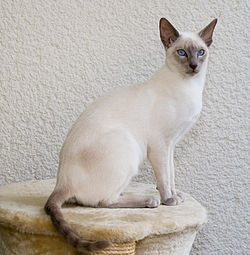
Picture of Felis catus
- Source
- Wikipedia/Commons
- Credit
- Karin Langner-Bahmann , upload von Martin Bahmann
- Licence
- CC BY-SA 3.0
- Commercial use
- the licence allows it
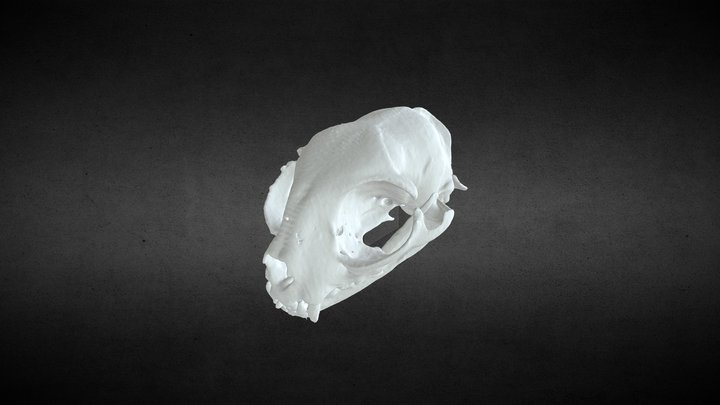
3D model
- Source
- Sketchfab
- Licence
- CC Attribution
- Commercial use
- cannot be read from the licence given — check the record
Smithsonian Open Access and MorphoSource were not reached for this taxon, so this list is what the others held rather than everything there is.
The description on this site
- Source
- Wikipedia, “Cat”
- Licence
- CC BY-SA 4.0
This is what the site found, which is not the same as what exists.
Keep going
What may have been alongside itFelis through timeThe world it lived on
Occurrence data from the Paleobiology Database, CC BY 4.0. Linnaeus 1758