Eusmilia

Stickpen · Public Domain · via Wikidata/Commons. May be a photograph of a specimen, or an artist’s reconstruction — an interpretation of a skeleton, since colour and soft tissue are almost never preserved.
On record
Recorded, not inferred- Sits inside
- MeandrinidaePBDB
- Diet
- photosymbiotic, suspension feederPBDB, for Faviina
- Life habit
- colonial, clonalPBDB, for Faviina
- Motility
- stationary, attachedPBDB, for Faviina
- Vision
- blindPBDB, for Anthozoa
- Environment
- marinePBDB, for Scleractinia
Time the record covers
At least 23 million years on record.
The record covers at least 23.04 Mya to 11.7 ka. No occurrence read is dated outside 27.3 Mya to 0 Mya.
60 occurrences of Eusmilia on record, most of them in the Pleistocene. The Paleobiology Database records this as a living group. Bar height is expected occurrences, not a count: each fossil is spread across the span it is dated to, so a tall narrow bar means tight dating and a low wide one means loose.
When
60 occurrences- Oligocene7%
- Miocene3%
- Pliocene11%
- Pleistocene66%
- Holocene13%
These are dates about fossils, not the animal: the record can only begin after it arose and end before it died out, so either end may reach further. Shares are expected occurrences: a fossil dated to a span is counted partly in each period it straddles. More on what this infers.
Found in
15 formations
- Moin Formation · Limon Group9
- Isla Colon Formation · Bocas del Toro Group7
- Ironshore Formation7
- Urraca Formation3
- Manchioneal Formation · Coastal Group2
- Blakeley Formation2
Loading coastlines…
The named rock units Eusmilia has been recovered from, largest first. Drawn where the rock is now, not where it formed. 21 occurrences have no formation on record, which is common for older literature.
Eusmilia and its relatives
PleistoceneWhere Eusmilia and its relatives were recorded in the Pleistocene.
Found in the same rock
218 taxa- Agaricia agaricites20 sites
- Colpophyllia natans17 sites
- Siderastrea siderea17 sites
- Manicina areolata15 sites
- Stephanocoenia intersepta15 sites
- Acropora cervicornis14 sites
- Porites astreoides13 sites
- Dichocoenia stokesi12 sites
- Agaricia lamarcki10 sites
- Pseudodiploria strigosa9 sites
- Leptoseris cucullata8 sites
- Montastrea cavernosa8 sites
- Orbicella annularis8 sites
- Placocyathus variabilis8 sites
- Stephanocoenia duncani8 sites
- Agaricia undata7 sites
- Madracis decactis7 sites
- Madracis myriaster7 sites
- Porites furcata7 sites
- Porites porites7 sites
- Agaricia grahamae6 sites
- Caulastrea portoricensis6 sites
- Diploria labyrinthiformis6 sites
- Madracis6 sites
The Paleobiology Database records 27 sites for Eusmilia, and this reads all of them. The number is how many of those sites it was catalogued from too. The 24 sharing the most are listed.
This is not a list of everything alive at the time. It is only what has come out of the same ground as this animal and been written down.
Entered from
27 references- Pliocene to Pleistocene reef coral assemblages in the Limon Group of Costa Rica11
- Neogene reef coral assemblages of the Bocas del Toro region, Panama: the rise of Acropora palmata9
- Coral associations of the Pleistocene Ironshore Formation, Grand Cayman7
- Taxonomic vetting of Pleistocene coral occurrence data4
- Coral growth rates from the Holocene Canada Honda fossil reef, southwestern Dominican Republic: comparisons with modern counterparts in high sedimentation settings4
- Coral assemblages and reef environments in the Bahamas Drilling Project cores2
- Relict shelf-edge Holocene coral reef: southeast coast of Florida2
- Fossil corals from central America, Cuba, and Porto Rico, with an account of the American Tertiary, Pleistocene, and Recent coral reefs2
- Broad-scale patterns in Pleistocene coral reef communities from the Caribbean: implications for ecology and management1
- Late Pliocene to Holocene platform evolution in northern Belize, and comparison with coeval deposits in southern Belize and the Bahamas1
- Ecological persistence interrupted in Caribbean coral reefs1
- Overlapping species boundaries and hybridization within the Montastrea "annularis" reef coral complex in the Pleistocene of the Bahama Islands1
Each of the 60 occurrences read was entered from one of these publications, ordered by how many each accounts for. This is not a search for papers mentioning the name. 15 further references are not listed. Entries link to doi.org where the Paleobiology Database holds an identifier, and to its own record where it does not. Relayed as the Paleobiology Database holds them, not checked against what they resolve to.
Media and terms
Media content2
Picture of Eusmilia
- Source
- Wikidata/Commons
- Credit
- Stickpen
- Licence
- Public Domain
- Commercial use
- the licence allows it
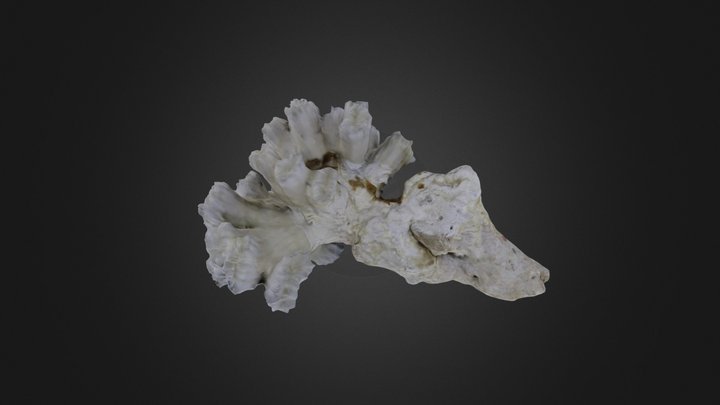
3D model
- Source
- Sketchfab
- Licence
- CC0 Public Domain
- Commercial use
- the licence allows it
Smithsonian Open Access and MorphoSource were not reached for this taxon, so this list is what the others held rather than everything there is.
This is what the site found, which is not the same as what exists.
Keep going
What may have been alongside itMeandrinidae through timeFormations of the PleistoceneThe world it lived on
Occurrence data from the Paleobiology Database, CC BY 4.0. Milne-Edwards and Haime 1848