Dryomys
Dryomys is a genus of dormouse. Collectively the members of the genus are referred to as forest dormice, although the type species also goes by the common name forest dormouse. The genus name comes from the Greek δρῦς (drûs) "oak" and μῦς (mûs) "mouse".

Dodoni · CC BY-SA 3.0 · via Wikipedia/Commons. May be a photograph of a specimen, or an artist’s reconstruction — an interpretation of a skeleton, since colour and soft tissue are almost never preserved.
On record
Recorded, not inferred- Sits inside
- DryomyinaePBDB
- Diet
- herbivorePBDB, for Rodentia
- Life habit
- ground dwellingPBDB, for Rodentia
- Motility
- actively mobilePBDB, for Osteichthyes
- Environment
- terrestrialPBDB, for Eutheria
Time the record covers
At least 27 million years on record.
The record covers at least 27.3 Mya to 11.7 ka. No occurrence read is dated outside 33.9 Mya to 0 Mya.
17 occurrences of Dryomys on record, most of them in the Pleistocene. The Paleobiology Database records this as a living group. Bar height is expected occurrences, not a count: each fossil is spread across the span it is dated to, so a tall narrow bar means tight dating and a low wide one means loose.
When
17 occurrences- Oligocene12%
- Miocene18%
- Pliocene7%
- Pleistocene58%
- Holocene6%
These are dates about fossils, not the animal: the record can only begin after it arose and end before it died out, so either end may reach further. Shares are expected occurrences: a fossil dated to a span is counted partly in each period it straddles. More on what this infers.
Found in
1 formation
- Lower Freshwater Molasse Formation · Molasse Group1
Loading coastlines…
The named rock units Dryomys has been recovered from, largest first. Drawn where the rock is now, not where it formed. 16 occurrences have no formation on record, which is common for older literature.
Dryomys and its relatives
PleistoceneWhere Dryomys and its relatives were recorded in the Pleistocene.
Found in the same rock
241 taxa- Microtus8 sites
- Apodemus7 sites
- Apodemus mystacinus6 sites
- Mesocricetus6 sites
- Microtus arvalis6 sites
- Myodes6 sites
- Ochotona6 sites
- Arvicola5 sites
- Lagurus5 sites
- Spalax5 sites
- Apodemus sylvaticus4 sites
- Chiroptera4 sites
- Cricetulus migratorius4 sites
- Crocidura4 sites
- Glis glis4 sites
- Lepus4 sites
- Mimomys4 sites
- Sicista subtilis4 sites
- Spermophilus4 sites
- Vulpes vulpes4 sites
- Bufo viridis3 sites
- Chionomys nivalis3 sites
- Citellus3 sites
- Cricetus cricetus3 sites
The Paleobiology Database records 17 sites for Dryomys, and this reads all of them. The number is how many of those sites it was catalogued from too. The 24 sharing the most are listed.
This is not a list of everything alive at the time. It is only what has come out of the same ground as this animal and been written down.
Entered from
15 references- The micromammals of the Quaternary deposits from Cave A, Loutra Almopias (Pella, Northern Greece): Stratigraphy-Taphonomy-Paleoenvironment2
- The Villafranchian mammalian faunas and biochronology of Greece2
- Plio-Pleistocene amphibians and reptiles from Central Turkey: new faunas and faunal records with comments on their biochronological position based on small mammals1
- Gliridae (Rodentia, Mammalia) from the Late Miocene fissure filling Biancone 1 (Gargano, Province of Foggia, Italy)1
- Biochronology of the Pleistocene deposits at Betfia (Bihor, Romania)1
- I giacimenti Quaternari di vertebrati fossili nell'Italia Nord-Orientale1
- Premiere decouverte d'un site a mammiferes pleistocenes dans une fissure karstique en Anatolie centrale1
- The dental pattern of the Dormice Dryomys, Myomimits, Microdymmys and Peridyromys1
- Late Pleistocene small mammals from Arnissa (Macedonia, Greece)1
- New microstratigraphic horizons in the vertebrate chronology of the Hungarian Pleistocene1
- Eine Mittelpleistozäne Nager-Fauna von der Insel Chios, Ägais (Mammalia, Rodentia)1
- Rongeurs nouveaux de l'Oligocène Moyen d'Espagne1
Each of the 17 occurrences read was entered from one of these publications, ordered by how many each accounts for. This is not a search for papers mentioning the name. 3 further references are not listed. Entries link to doi.org where the Paleobiology Database holds an identifier, and to its own record where it does not. Relayed as the Paleobiology Database holds them, not checked against what they resolve to.
Media and terms
Media content3
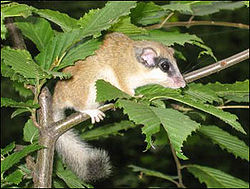
Picture of Dryomys
- Source
- Wikipedia/Commons
- Credit
- Dodoni
- Licence
- CC BY-SA 3.0
- Commercial use
- the licence allows it
CT scan
- Source
- MorphoSource
- Credit
- AMNH Mammal Collections
- Licence
- In Copyright
- Commercial use
- cannot be read from the licence given — check the record
- Specimen
- Dryomys nitedula · AMNH:M:206584
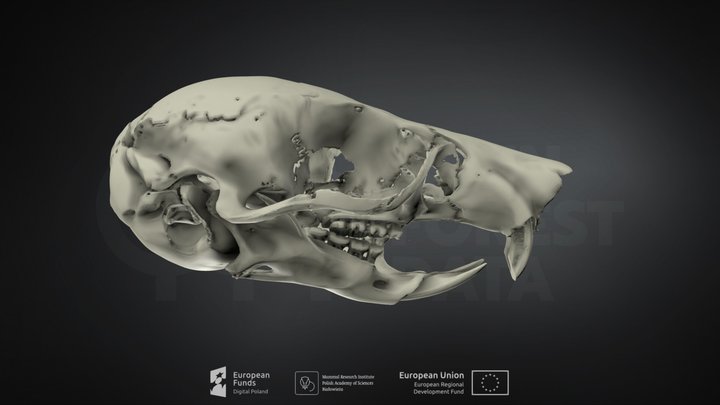
3D model
- Source
- Sketchfab
- Licence
- CC Attribution
- Commercial use
- cannot be read from the licence given — check the record
Smithsonian Open Access was not reached for this taxon, so this list is what the others held rather than everything there is.
The description on this site
- Source
- Wikipedia, “Dryomys”
- Licence
- CC BY-SA 4.0
This is what the site found, which is not the same as what exists.
Keep going
What may have been alongside itDryomyinae through timeFormations of the PleistoceneThe world it lived on
Occurrence data from the Paleobiology Database, CC BY 4.0. Thomas 1906