Diplocraterion
Diplocraterion is an ichnogenus describing vertical U-shaped burrows having a spreite between the two limbs of the U. The spreite of an individual Diplocraterion trace can be either protrusive or retrusive. Some ichnospecies have both types. The presence/absence of funnel-shaped openings should not be used as an ichnotaxobase due to the high probability that the upper portions of the trace may have been eroded away. Observation of the orientation of Diplocraterion in the field is frequently used to determine the way up of rock strata at outcrop.

Jstuby at en.wikipedia · Public Domain · via Wikipedia/Commons. May be a photograph of a specimen, or an artist’s reconstruction — an interpretation of a skeleton, since colour and soft tissue are almost never preserved.
On record
Recorded, not inferred- Sits inside
- IchnofossilsPBDB
Time the record covers
At least 372 million years on record.
The record covers at least 516 Mya to 143.1 Mya. No occurrence read is dated outside 538.8 Mya to 125.77 Mya.
31 occurrences of Diplocraterion on record, most of them in the Cambrian. Bar height is expected occurrences, not a count: each fossil is spread across the span it is dated to, so a tall narrow bar means tight dating and a low wide one means loose.
When
31 occurrences- Cambrian45%
- Ordovician13%
- Devonian3%
- Early Jurassic10%
- Middle Jurassic6%
- Late Jurassic17%
- Early Cretaceous6%
These are dates about fossils, not the animal: the record can only begin after it arose and end before it died out, so either end may reach further. Shares are expected occurrences: a fossil dated to a span is counted partly in each period it straddles. More on what this infers.
Found in
17 formations
- Laeso Formation8
- Kap Leslie Formation4
- Mickwitzia Sandstone Formation2
- Hardeberga Formation2
- Beach Formation · Bell Island Group2
- File Haidar Formation1
Loading coastlines…
The named rock units Diplocraterion has been recovered from, largest first. Drawn where the rock is now, not where it formed. 1 occurrence has no formation on record, which is common for older literature.
Diplocraterion and its relatives
CambrianWhere Diplocraterion and its relatives were recorded in the Cambrian.
Found in the same rock
181 taxa- Chondrites7 sites
- Camptonectes5 sites
- Teichichnus5 sites
- Buchia mosquensis4 sites
- Cruziana4 sites
- Diplichnites4 sites
- Planolites4 sites
- Rhizocorallium4 sites
- Rusophycus4 sites
- Ammonoidea3 sites
- Astarte3 sites
- Entolium orbiculare3 sites
- Grammatodon3 sites
- Isocyprina3 sites
- Liostrea3 sites
- Mickwitzia monilifera3 sites
- Mickwitzia pretiosa3 sites
- Mobergella3 sites
- Modiolus3 sites
- Oxytoma3 sites
- Paleomerus3 sites
- Pleuromya3 sites
- Protolyellia3 sites
- Spatangopsis3 sites
The Paleobiology Database records 20 sites for Diplocraterion, and this reads all of them. The number is how many of those sites it was catalogued from too. The 24 sharing the most are listed.
This is not a list of everything alive at the time. It is only what has come out of the same ground as this animal and been written down.
Entered from
15 references- Substrate control of lower cambrian trace fossils from bornholm, Denmark10
- Genesis and environmental significance of Upper Cretaceous shell concentrations from the Cauvery Basin, southern India3
- Ichnology of the Upper Cambrian? to Lower Ordovician Bell Island and Wabana groups of eastern Newfoundland, Canada3
- Predation by early Cambrian trilobites on infaunal worms - evidence from the Swedish Mickwitzia Sandstone3
- Conformable Late Jurassic (Oxfordian) to Early Cretaceous Strata, northern Bowser Basin, British Columbia: a sedimentological and paleontological model2
- Dinosaur tracks from the Jurassic-Cretaceous boundary Tuchengzi Formation (Hebei Province, China) used as building stones in the Chengde imperial summer resort: age, ichnology, and1
- Redescription of Drepanopterus abonensis (Chelicerata: Eurypterida: Stylonurina) From The Late Devonian Of Portishead, UK1
- New cyclocystoid (phylum echinodermata) from Anticosti Island, Quebec, and its bearing on cyclocystoid life modes1
- Middle and Late Jurassic dinosaur fossil-bearing horizons: implications for dinosaur paleoecology, northeastern Bighorn Basin, Wyoming1
- Trace fossils of the Jurassic, Blue Lias, Lyme Regis, Southern England1
- Unpublished data1
- Lower and Middle Jurassic woods of the Cleveland Basin ( North Yorkshire), England1
Each of the 31 occurrences read was entered from one of these publications, ordered by how many each accounts for. This is not a search for papers mentioning the name. 3 further references are not listed. Entries link to doi.org where the Paleobiology Database holds an identifier, and to its own record where it does not. Relayed as the Paleobiology Database holds them, not checked against what they resolve to.
Media and terms
Media content2

Picture of Diplocraterion
- Source
- Wikipedia/Commons
- Credit
- Jstuby at en.wikipedia
- Licence
- Public Domain
- Commercial use
- the licence allows it
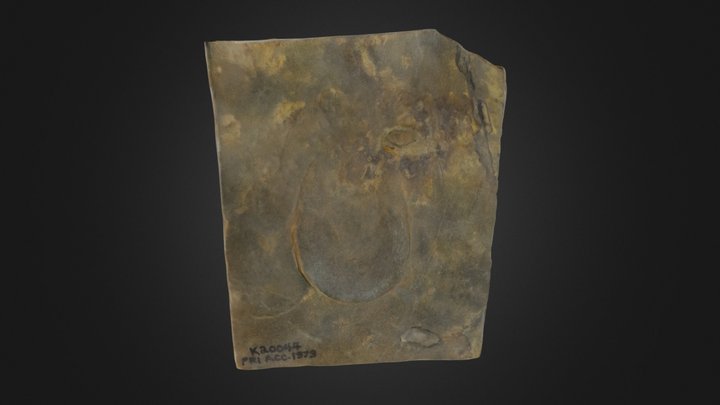
3D model
- Source
- Sketchfab
- Licence
- CC0 Public Domain
- Commercial use
- the licence allows it
The description on this site
- Licence
- CC BY-SA 4.0
This is what the site found, which is not the same as what exists.
Keep going
What may have been alongside itIchnofossils through timeFormations of the CambrianThe world it lived on
Occurrence data from the Paleobiology Database, CC BY 4.0. Torell 1870