Dalbergia
Dalbergia is a large genus of small to medium-size trees, shrubs and lianas in the pea family, Fabaceae, subfamily Faboideae. It was recently assigned to the informal monophyletic Dalbergia clade : the Dalbergieae. The genus has a wide distribution, native to the tropical regions of Central and South America, Africa, Madagascar and Southern Asia.

Uncredited · Public Domain · via Wikipedia/Commons. May be a photograph of a specimen, or an artist’s reconstruction — an interpretation of a skeleton, since colour and soft tissue are almost never preserved.
On record
Recorded, not inferred- Sits inside
- FabaceaePBDB
- Diet
- "photoautotroph"PBDB, for Angiospermae
Time the record covers
At least 47 million years on record.
The record covers at least 51.1 Mya to 3.6 Mya. No occurrence read is dated outside 56 Mya to 774 ka.
29 occurrences of Dalbergia on record, most of them in the Miocene. The Paleobiology Database records this as a living group, and the chart stops with its fossils rather than at the present. Bar height is expected occurrences, not a count: each fossil is spread across the span it is dated to, so a tall narrow bar means tight dating and a low wide one means loose.
When
29 occurrences- Eocene36%
- Oligoceneunder 1%
- Miocene55%
- Pliocene6%
- Pleistocene2%
These are dates about fossils, not the animal: the record can only begin after it arose and end before it died out, so either end may reach further. Shares are expected occurrences: a fossil dated to a span is counted partly in each period it straddles. More on what this infers.
Found in
8 formations
- Willwood Formation8
- Lower Churia Formation · Siwalik Group4
- Bangmai Formation3
- Xiaolongtan Formation2
- Lower Formation · Siwalik Group2
- Haridwar Formation · Siwalik Group1
Loading coastlines…
The named rock units Dalbergia has been recovered from, largest first. Drawn where the rock is now, not where it formed. 7 occurrences have no formation on record, which is common for older literature.
Dalbergia and its relatives
MioceneWhere Dalbergia and its relatives were recorded in the Miocene.
Found in the same rock
593 taxa- Cassia6 sites
- Bumelia4 sites
- Dicotyledoneae4 sites
- Myrica4 sites
- Platanus4 sites
- Platanus guillelmae4 sites
- Smilax4 sites
- Alnus3 sites
- Capparis3 sites
- Cercidiphyllum3 sites
- Cyathea3 sites
- Dipterocarpus siwalicus3 sites
- Dombeya novimundi3 sites
- Ficus3 sites
- Ficus precunea3 sites
- Flacourtiaceae3 sites
- Glyptostrobus europaeus3 sites
- Inga3 sites
- Litsea3 sites
- Mangifera someshwarica3 sites
- Monocotyledoneae3 sites
- Myrcia3 sites
- Nothaphoebe3 sites
- Pithecolobium3 sites
The Paleobiology Database records 23 sites for Dalbergia, and this reads all of them. The number is how many of those sites it was catalogued from too. The 24 sharing the most are listed.
This is not a list of everything alive at the time. It is only what has come out of the same ground as this animal and been written down.
Entered from
15 references- Plant and mammal diversity in the Paleocene to Early Eocene of the Bighorn Basin8
- Angiospermous fossil leaves from the Siwalik foreland basins and their palaeoclimatic implications6
- A catalogue of Cenozoic megafossil plants in China3
- Middle Miocene flora from Siwalik foreland basin of Uttarakhand, India and its phytogeographic and palaeoclimatic implications1
- Quantitative reconstruction of the Late Miocene monsoon climates of southwest China: A case study of the Lincang flora from Yunnan Province1
- Floral diversity during Plio-Pleistocene Siwalik sedimentation (Kimin Formation) in Arunachal Pradesh, India, and its palaeoclimatic significance1
- Quantitative climate reconstructions of the late Miocene Xiaolongtan megaflora from Yunnan, southwest China1
- A Catalogue of Indian Fossil Plants1
- Fossil Plants of the Tertiary Beaverhead Basins in Southwestern Montana1
- A Middle Eocene Flora from the Central Sierra Nevada1
- A Miocene flora from the gorge of the Yumuri River, Matanzas, Cuba1
- Tertiary flora from the Rio Pichileufu, Argentina1
Each of the 29 occurrences read was entered from one of these publications, ordered by how many each accounts for. This is not a search for papers mentioning the name. 3 further references are not listed. Entries link to doi.org where the Paleobiology Database holds an identifier, and to its own record where it does not. Relayed as the Paleobiology Database holds them, not checked against what they resolve to.
Media and terms
Media content2

Picture of Dalbergia
- Source
- Wikipedia/Commons
- Credit
- nobody named on the record
- Licence
- Public Domain
- Commercial use
- the licence allows it
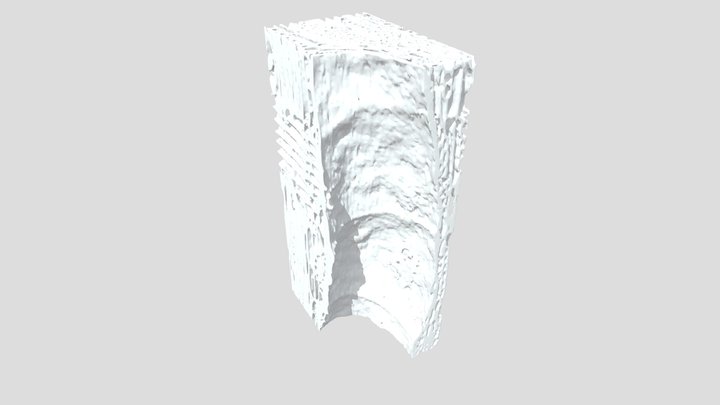
Smithsonian Open Access and MorphoSource were not reached for this taxon, so this list is what the others held rather than everything there is.
The description on this site
- Source
- Wikipedia, “Dalbergia”
- Licence
- CC BY-SA 4.0
This is what the site found, which is not the same as what exists.
Keep going
What may have been alongside itFabaceae through timeFormations of the MioceneThe world it lived on
Occurrence data from the Paleobiology Database, CC BY 4.0. Linnaeus 1782